
Chemical manufacturing involves complex processes where safety, efficiency, and equipment reliability are critical. From raw material handling to reaction processes and storage systems, every stage requires careful technical planning. This is where a Chemical Plant Consultant plays an important role in helping businesses develop practical and efficient industrial facilities.
In the United Kingdom, chemical manufacturers operate under strict operational and safety requirements. A well-designed plant must support production goals while maintaining process reliability, environmental responsibility, and long-term operational efficiency.
Understanding The Role Of A Chemical Plant Consultant
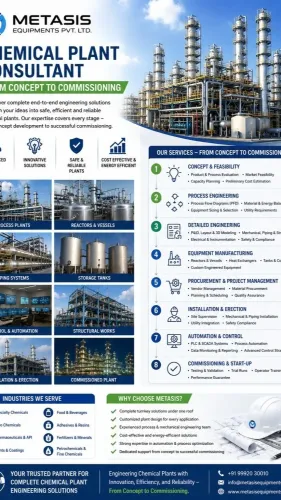
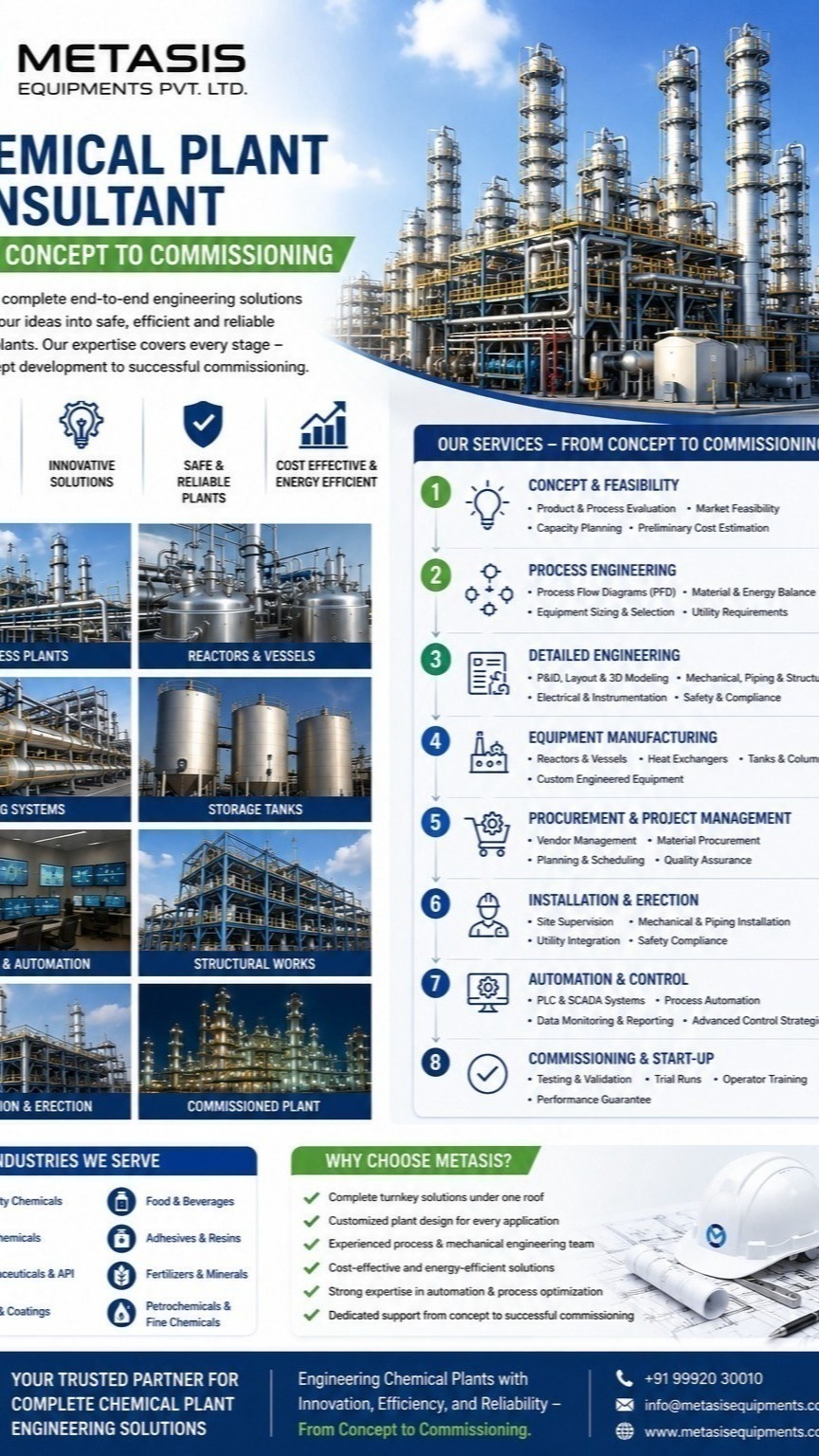
A chemical plant consultant provides technical guidance throughout different stages of plant development. Their role is to analyse manufacturing requirements and create solutions that match production objectives.
Key areas of involvement include:
Process design and engineering
Chemical reaction analysis
Equipment selection
Plant expansion planning
Production optimisation
Safety improvement studies
Material handling solutions
By evaluating the complete production process, consultants help businesses avoid design issues that may affect future operations.
Importance Of Process Design In Chemical Plants
A chemical plant is a connected system where every component affects overall performance. Reactors, storage tanks, conveyors, mixers, and process skids must work together efficiently.
During the design phase, consultants evaluate:
Raw material properties
Reaction requirements
Temperature and pressure conditions
Production capacity
Storage needs
Waste management considerations
This approach helps create systems that are easier to operate and maintain.
Selecting Suitable Chemical Processing Equipment
Equipment selection is one of the most important decisions in chemical plant development. Different processes require different engineering solutions.
For example:
Chemical reactors must match reaction conditions and production requirements.
Storage systems must be designed according to material characteristics.
Conveyors must handle materials safely and efficiently.
Mixing systems must provide consistent product quality.
A chemical reactor manufacturer or process equipment supplier needs to understand the application before developing a suitable solution.
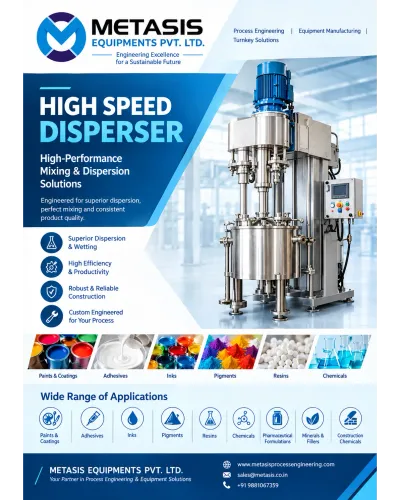
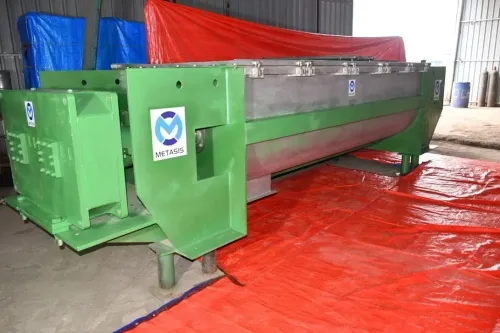
Metasis Equipments Pvt Ltd works with industries requiring specialised equipment such as reactors, mixers, conveyors, storage systems, and process skid solutions.
Improving Safety Through Better Engineering
Safety is a major consideration in chemical manufacturing. Proper engineering helps minimise risks associated with chemical handling, pressure systems, temperature control, and material movement.
Consultants support safety-focused design through:
Process hazard evaluation
Equipment compatibility assessment
Proper layout planning
Controlled material transfer systems
Operational improvement recommendations
A carefully designed plant provides better control over production activities.
Supporting Plant Expansion And Scale-Up
Many companies begin with smaller production facilities and later require expansion. Moving from pilot-scale operations to commercial manufacturing requires detailed evaluation.
A plant scale-up consultant helps determine:
Additional equipment requirements
Increased production capacity
Process modifications
Utility requirements
Space planning
This prevents businesses from facing unexpected challenges during expansion.
Choosing The Right Engineering Partner
Selecting a consultant with practical equipment knowledge can improve project outcomes. Engineering decisions should consider not only design concepts but also real-world manufacturing conditions.
For chemical industries across the United Kingdom, technical expertise in process engineering, equipment manufacturing, and industrial integration can support better project planning.
Metasis Equipments Pvt Ltd combines engineering knowledge with manufacturing experience to assist businesses developing chemical plants and industrial processing systems. A structured approach helps companies build facilities that are efficient, scalable, and prepared for future requirements.