
Yes, but only when the conveyor is designed around the actual chemical, its hazards, its flow behaviour, and the required process duty. By the end, you can separate a suitable chemical screw conveyor from a standard bulk conveyor, prepare a useful equipment brief, and identify when another transfer or dosing technology is safer and more accurate.
Key takeaways
- Match conveyor selection to flow behaviour, moisture, temperature, abrasiveness and contamination risk.
- Specify screw flights, shaft, trough and seals against the chemical’s compatibility data.
- Separate conveying from dosing with a controlled feeder and independent mass-flow verification.
- Require containment, dust control, guarding, isolation and Australian compliance documentation.
When is a screw conveyor suitable for a chemical plant material?
A screw conveyor manufacturer can handle many chemical-plant solids, including sludges, crystals, pellets, flakes, and powders, when the material behaviour and operating duty suit the equipment. “Chemical” is not a material specification.
1. Confirm the duty before selecting the machine: bulk density, particle-size distribution, moisture, temperature, abrasiveness, corrosiveness, toxicity, flammability, caking or bridging tendency, conveying distance, throughput, and operating pressure.
2. Match the screw to flow behaviour. Free-flowing solids often suit a conventional shafted screw, while cohesive or damp powders can form arches, ratholes, plugs, or deposits at the inlet and end seals.
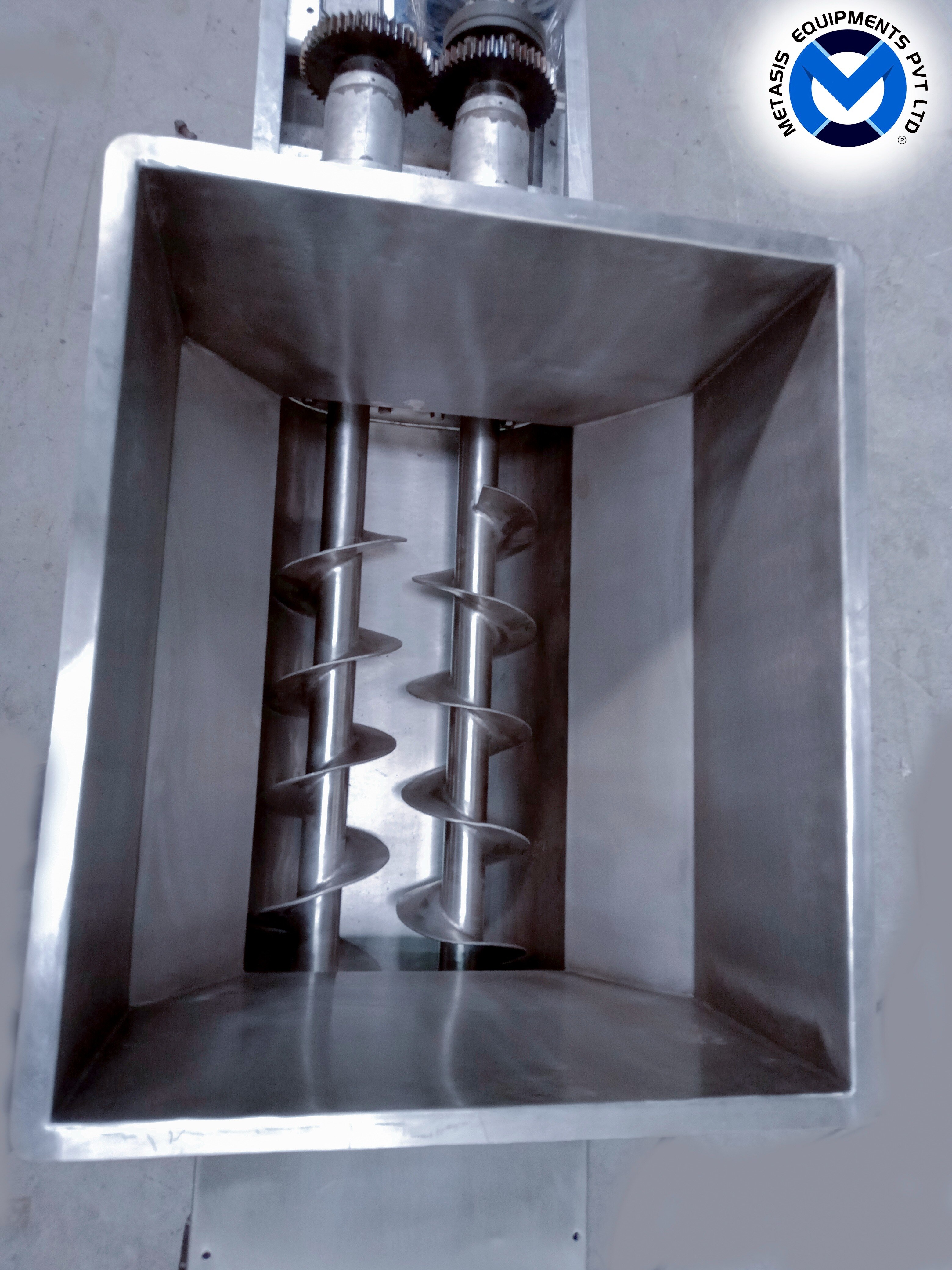
A screw conveyor for powder handling may need a live-bottom hopper, twin screws, agitation, vibration, heating, mass-flow hopper geometry, or a revised inlet transition.
3. Check product damage as well as movement. Excessive speed, compression, heat, segregation, attrition, or long residence time can ruin a fragile powder or alter blend uniformity. Ask for a material trial when particle integrity or blend uniformity is a critical quality attribute.
A chemical screw conveyor is therefore a process-specific machine, not a universal category. State whether you need conveying or controlled feeding: reactor addition may require a variable-speed metering screw, weigh hopper, or loss-in-weight feeder rather than a standard conveyor.
How do chemical compatibility and screw construction determine the design?
Design starts with the actual chemical, concentration, water content, impurities, cleaning chemicals, temperature range, corrosion mechanism, abrasion rate, and contamination limit. Match every wetted and exposed component, including flights, trough, shaft, seals, bearings, liners, welds, and fasteners. A generic chemical screw conveyor specification is not enough.
| Option | What it suits | Main limitation |
|---|---|---|
| Carbon steel | Dry, non-corrosive solids | Moisture or chemical attack can cause rapid rusting and product contamination |
| 304 stainless steel | Clean, mildly corrosive duties | Poor choice for chloride-bearing or aggressive wet service |
| 316 or 316L stainless steel | Many chloride and process-chemical duties | Not universal for strongly acidic, alkaline, hot, or contaminated streams |
| Duplex stainless steel | Higher strength and chloride resistance | Higher cost and more demanding fabrication |
| Nickel alloy | Severe chemical exposure | High material cost and difficult fabrication |
| Polymer or ceramic lining | Targeted corrosion or abrasion control | Temperature, impact, support, repair, and adhesion limits |
Choose solid-flight, ribbon, cut-flight, paddle, twin-shaft, or shaftless construction from flowability, mixing, stickiness, fragility, and torque. A shaftless screw reduces central-shaft interference in sludge-like material but depends on a suitable liner and has distinct wear, torque, and support limits.
Specify the wear strategy with the acceptable maintenance interval:
- Use replaceable flight edges, hardened flights, wear liners, or ceramic surfaces for abrasive solids.
- Check whether harder surfaces increase contamination, reduce corrosion resistance, complicate welding, or damage downstream equipment.
- Confirm temperature, impact, and repair limits before selecting a polymer-lined or non-metallic component.
How should the conveyor be sized, configured, and separated from a dosing system?
Size it from a measured duty, then specify the geometry and separate material transport from controlled dosing.
1. Give the manufacturer bulk density, particle-size distribution, moisture, mass-flow rate, capacity in tonnes per hour or cubic metres per hour, conveyor length, temperature, and start-stop frequency. State whether the screw runs horizontal, inclined, or vertical, including the inclination angle, inlet arrangement, outlet arrangement, and operating pressure.
Inclination changes fill level, capacity, power demand, and rollback risk.
2. Select flights for material behaviour, not the label chemical screw conveyor. Variable-pitch or stepped-pitch flights control filling and drawdown near an inlet; ribbon flights suit sticky or aerated material. Multiple screws or a live-bottom feeder help prevent bridging across a wide hopper.
A screw conveyor for powder handling may also need agitation, heating, vibration, or mass-flow hopper geometry.
3. Separate conveying from dosing in the specification. A standard conveyor moves material between process points; a screw feeder controls withdrawal from a hopper. Reactor or blender addition may require a variable-speed metering screw, weigh hopper, or loss-in-weight feeder because screw speed alone does not guarantee accuracy.
A rotary valve can isolate pressure and meter free-flowing powder, but it can shear or compact sensitive solids. Pneumatic transfer provides enclosed movement over suitable distances but adds air, filtration, wear, and dust-control demands. Use pumps for liquids and slurries with suitable viscosity and solids content.
What containment and hazard controls must a chemical-plant screw conveyor include?
Containment starts with the process duty, not the cover design. A chemical screw conveyor for toxic vapour, inert gas, vacuum, or pressure service needs a defined casing pressure and documented flange, cover, and shaft-seal construction. A bolted trough cover alone does not prove gas-tight service.
| Service | Specify before selection | Required controls |
|---|---|---|
| Toxic vapour or inert gas | Casing pressure, seal type, purge or barrier gas | Leakage detection, sealed ends, relief or isolation |
| Vacuum or pressure | Design pressure and flange rating | Inspection ports, drainage, leak collection |
| Powder transfer | Dust-tight joints and extraction rate | Extraction at charging and discharge points |
Keep bearings outside the product zone where possible, and use an internal layout that operators can inspect, clean, and drain. Otherwise, deposits around seals or bearings can turn a small leak into a contamination or exposure event.
For combustible powders, complete a dust hazard assessment and define the site hazardous-area classification before choosing the machine. Check:
- Zoning, ignition-source control, grounding and bonding, and dust-tight construction
- Hot-surface limits, temperature monitoring, explosion venting or suppression, and explosion isolation
- The AS/NZS 60079 series, including AS/NZS 60079.10.2 for dust-area classification where relevant
Do not treat motor certification as approval of the complete conveyor. Rubbing flights, bearings, misalignment, foreign objects, and accumulated dust can create ignition sources. Have site approvers review the equipment dossier, hazardous-area classification, risk assessment, electrical documentation, and pressure-equipment requirements. ATEX, IECEx, or Australian compliance cannot be inferred from the conveyor name alone.
What should you require from a screw conveyor manufacturer for chemical plants in Australia?
A purchase package from a screw conveyor manufacturer for chemical plants Australia should prove how the machine will perform, not merely show its outline and motor rating.
1. Require duty calculations covering throughput, bulk density, fill assumptions, conveying distance, inclination, temperature, start-stop frequency, torque, and motor selection. The drawings must identify screw geometry, pitch, flight type, wear allowance, liner specification, seal type, purge arrangement, guarding, temperature limits, and cleanability.
2. Require materials certificates, weld procedures or weld records, surface-finish details, inspection and test records, and pressure- or leak-test results where applicable. Add hazardous-area documentation, equipment dossier, risk-assessment inputs, spare-parts list, maintenance intervals, Australian site approvals, and commissioning responsibilities.
3. Check every interface: dust collection, inerting, weighing, upstream and downstream equipment, controls, alarms, isolation, and commissioning signals. A screw conveyor manufacturer that cannot define these boundaries can leave expensive gaps between the conveyor and the process.
4. Ask how the supplier will validate your material before installation. A laboratory or site trial can expose caking, segregation, degradation, heat generation, or seal buildup before those problems reach the plant.
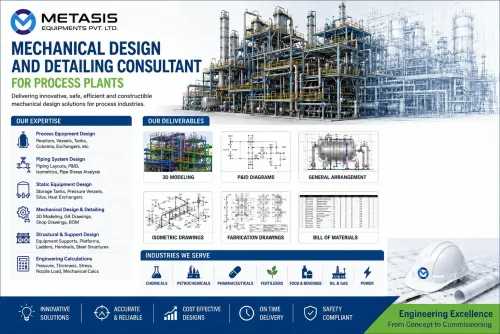
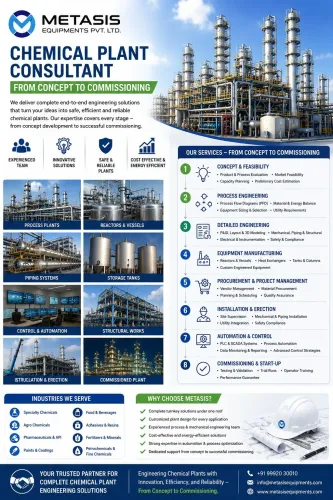
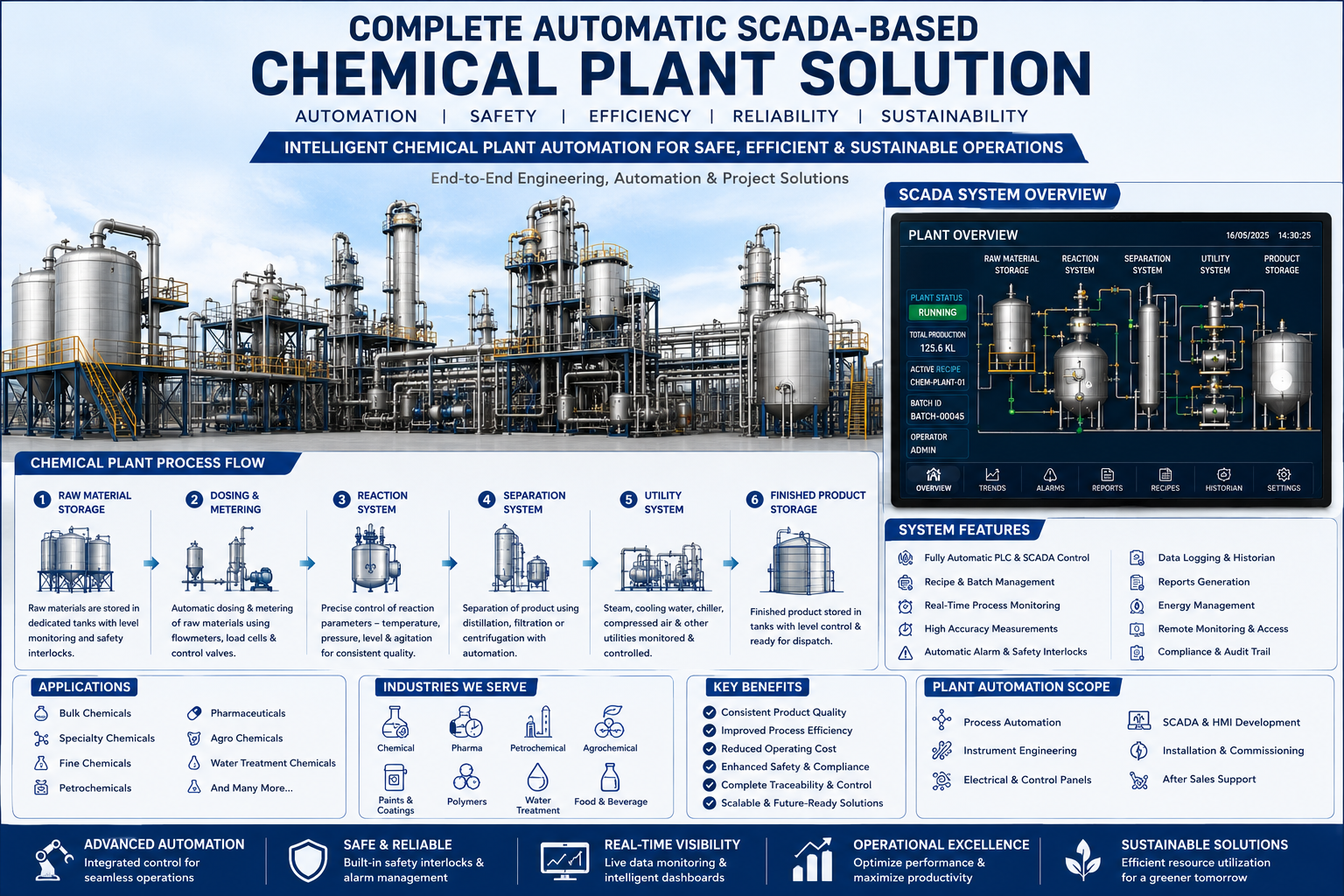
Metasis Equipments Pvt Ltd can be considered when one supplier must connect screw-conveyor design with dosing, mixing, containment, bulk-solid handling, and wider process-system interfaces. Evaluate that capability against the duty brief, chemical compatibility review, Australian approvals, and required records—not against a generic stainless-steel specification.
Related products
 | Screw Conveyor Global Leader in Custom Screw Conveyor Solutions Metasis Equipments Pvt. Ltd. View product → |
 | Engineering Process System Metasis Equipments Pvt. Ltd. – Engineering Excellence in Process Solutions Metasis Equipments Pvt. Ltd. View product → |
Frequently asked questions
When is a screw conveyor suitable for a chemical plant material?
Use one for compatible sludges, crystals, pellets, flakes and powders when the material’s flow behaviour, temperature, moisture and conveying duty suit screw transport. Chemical identity alone does not establish suitability.
How do chemical compatibility and screw construction determine the design?
Check the material’s concentration, temperature and exposure time against the construction materials, welds, liners, seals and surface finish. Select flight geometry and shaft construction for the material’s abrasiveness, compressibility and tendency to bridge or degrade.
How should a chemical screw conveyor be sized and separated from dosing equipment?
Size it from required mass flow, bulk density, conveying length, inclination, fill level, screw speed and starting torque. Use a dedicated feeder for accurate dosing, with the conveyor providing transport rather than relying on speed alone for final accuracy.
What containment and hazard controls must a chemical-plant screw conveyor include?
Specify closed covers, sealed inlet and discharge points, suitable shaft seals, dust extraction where needed, guards, emergency stops, lockout points, inspection access and controls for corrosion, toxic exposure, combustible dust and chemical spills.
What should you require from a screw conveyor manufacturer for chemical plants in Australia?
Request a duty specification, material compatibility review, capacity and power calculations, drawings, weld and surface-finish details, seal information, testing records, maintenance instructions and documentation showing how the design meets Australian site and safety requirements.
Related products
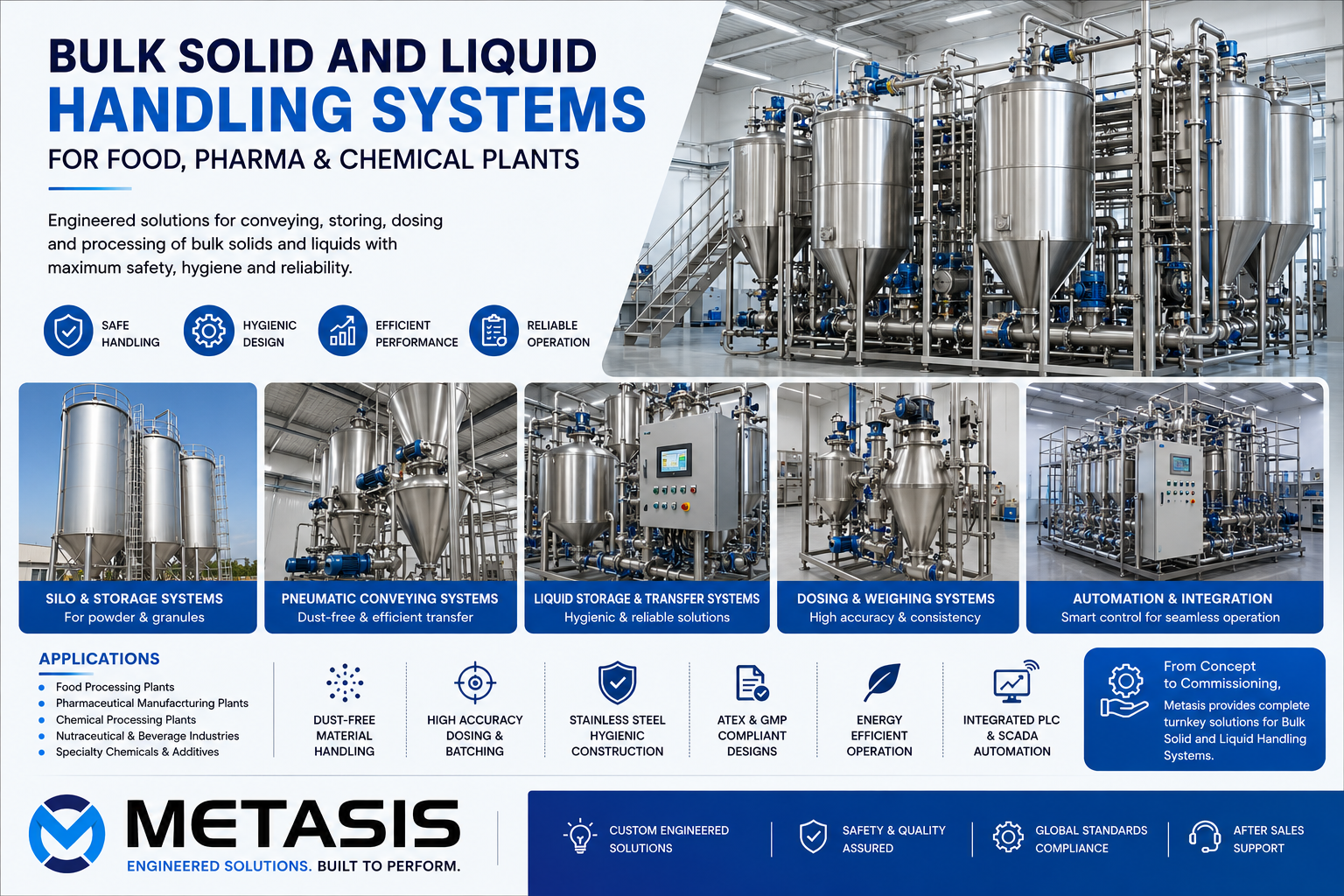 | Engineering Process System Bulk Solid and Liquid Handling Systems Bulk Solid and Liquid Handling Systems For Food, Pharma & Chemical Plants At Metasis Equipments Pvt. View product → |
 | Engineering Consultant Expert Chemical Plant Engineering & Process Consultancy Metasis Equipments Pvt. Ltd. is a trusted Chemical Plant Consultant offering comprehensive engineering, design, process optimization, and turnkey... View product → |