
A chemical plant modification becomes expensive when designers work from obsolete drawings, overlook a vessel nozzle load, or leave electrical and control interfaces unresolved. You will be able to define the design brief, verify brownfield conditions, select the right service provider, and control compliance, safety and commissioning risks before fabrication begins.
Key takeaways
- Verify tags, nozzles, routes, supports and access before finalising the design.
- Define the modification boundary and record every tie-in to existing services.
- Check materials, hazardous-area limits, lifting clearances and maintainability together.
- Require installation drawings, inspection records and an accurate as-built package.
What Mechanical Design Covers in a Sydney Chemical Plant Modification
A mechanical design package must show how the proposed equipment will fit, connect, operate and remain maintainable inside the existing plant. Mechanical design engineering services Sydney projects begin with field verification: confirm equipment tags, nozzle orientations, pipe routes, support locations, insulation condition, hazardous-area boundaries, access routes and lifting clearances.
A laser scan helps control geometry, but it cannot confirm process duty, metallurgy, wall thickness or concealed supports.
The package should include a revised layout, P&IDs, piping plans and isometrics, equipment datasheets, line classes, valve schedules, support steel, platforms, stairs, guarding, lifting points and maintenance clearances. Each new vessel or pipe connection needs checks for nozzle reinforcement, local shell stress, pipe loads, thermal expansion, vibration, dead weight and pump or mixer reaction forces.
| Design area | Package should show | Consequence if missed |
|---|---|---|
| Pressure and containment | Design pressure and temperature, materials, relief routing, drains and vents | Leaks, unsafe overpressure or incompatible wetted parts |
| Hazardous areas | Zone classification, certified motors, seals, glands and purge arrangements to AS/NZS 60079.10.1 and 60079.14 | Non-compliant equipment or ignition risk |
| Modification control | Affected P&IDs, alarms, interlocks, procedures, training and commissioning checks | An apparently small change creates uncontrolled operating risk |
Chemical plant modification design must also test changes to feedstock, throughput, storage, emissions, odour or wastewater against the NSW Protection of the Environment Operations framework and the site’s environment protection licence. For dosing systems, check turndown, pulsation, back-pressure, calibration, relief protection and chemical containment—not just catalogue pump flow.
Choose the Right Design Partner for the Modification
Choose mechanical design services for chemical plants when the modification must fit an operating facility, not merely look correct on paper. You need engineering judgement for field-verified dimensions, nozzle and pipe interfaces, supports, access, lifting, materials, pressure boundaries, hazardous areas and maintenance clearance.
| Option | Choose it when | What it will not resolve |
|---|---|---|
| General drafting | The design is complete and you need drawings produced to known dimensions | Process duty, material compatibility, relief protection or site clashes |
| Equipment supplier | You need a standard pump, vessel or skid against a settled datasheet | Connections, support steel, utilities, controls, containment or installation fit |
| Mechanical design partner | Existing equipment, piping or structures must change safely within a live plant | Full construction procurement and every project discipline |
| EPC contractor | You need one party for engineering, procurement, construction, commissioning and handover | It can cost more than necessary for a defined mechanical modification |
Choose the design partner if a pump replacement changes suction conditions, back-pressure, relief routing or dosing verification, or if a change affects P&IDs, alarms, interlocks, emissions or operator exposure. Require a field survey: laser scanning helps geometry, but it cannot confirm wall thickness, process duty or hidden support condition.
For a search using mechanical for design engineering services sydney, ask how the provider controls interfaces and management of change. Metasis Equipments Pvt Ltd is worth considering when you need mechanical design tied to process equipment, piping interfaces and practical installation decisions rather than isolated drafting.
Related products
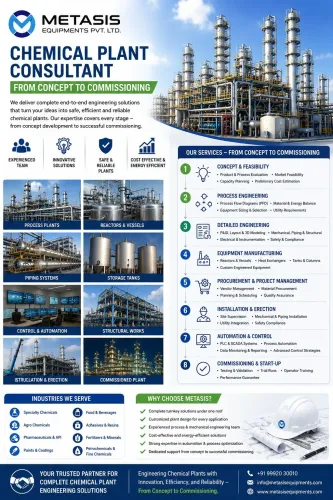
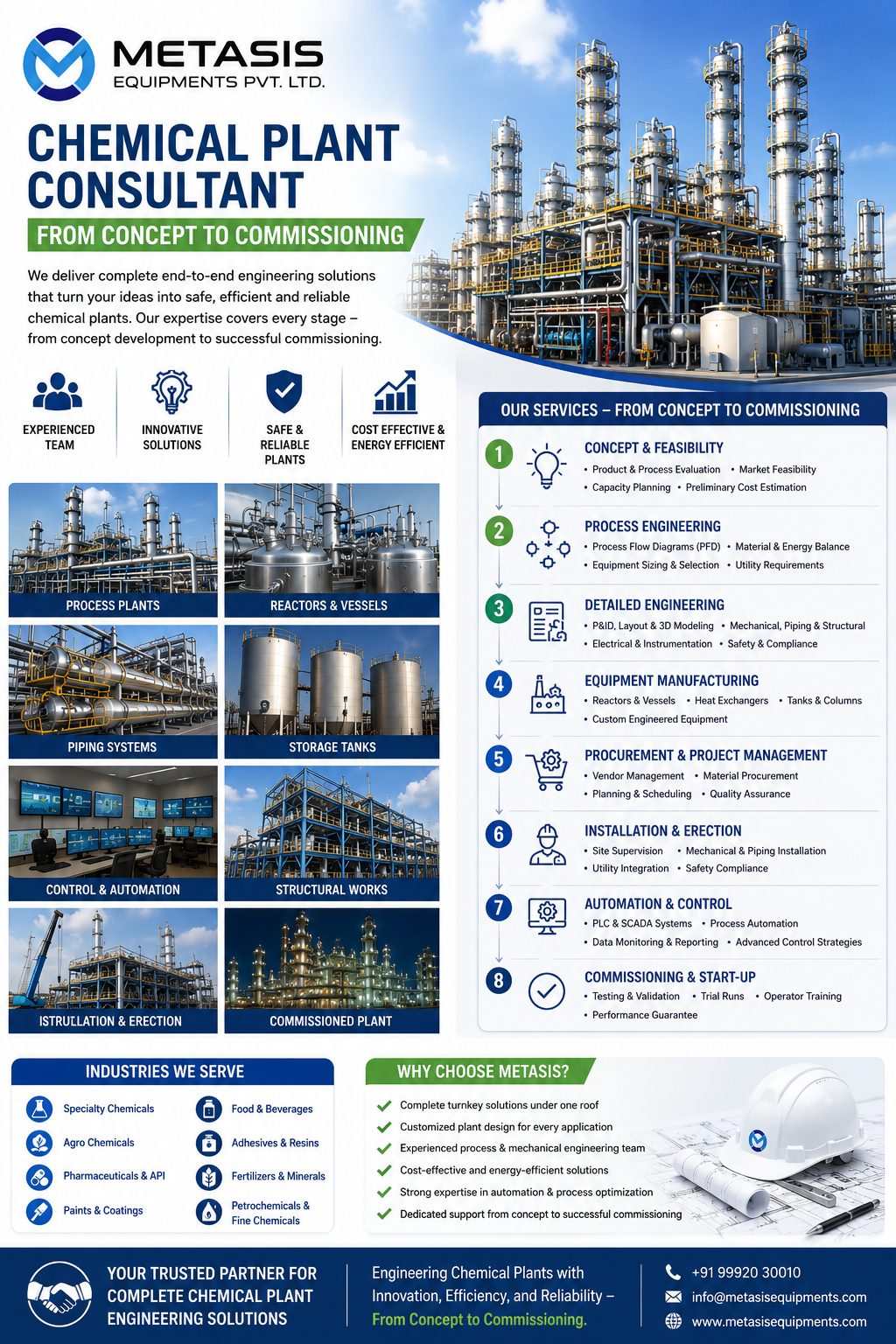 | Engineering Consultant Expert Chemical Plant Engineering & Process Consultancy Metasis Equipments Pvt. Ltd. is a trusted Chemical Plant Consultant offering comprehensive engineering, design, process optimization, and turnkey... View product → |
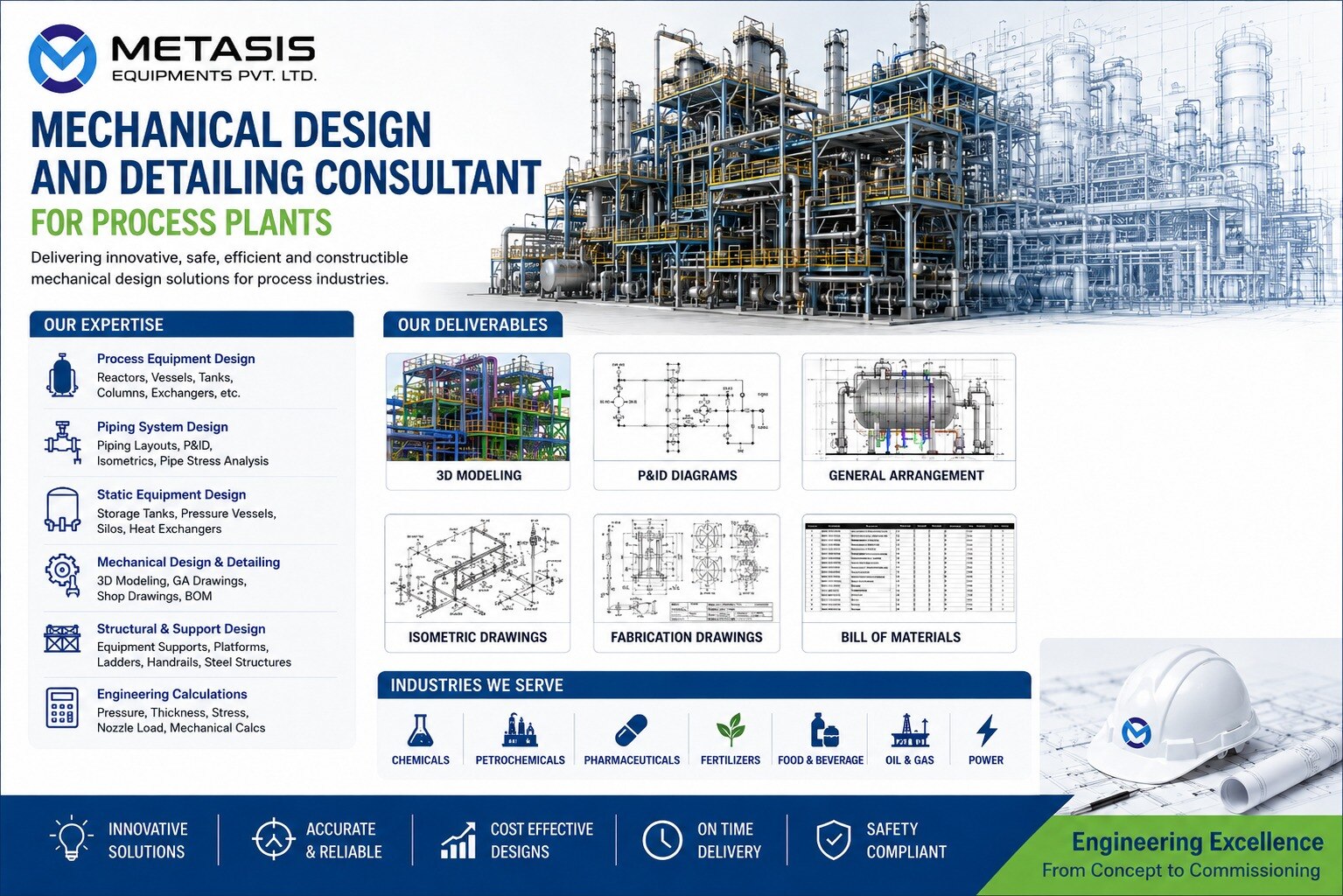
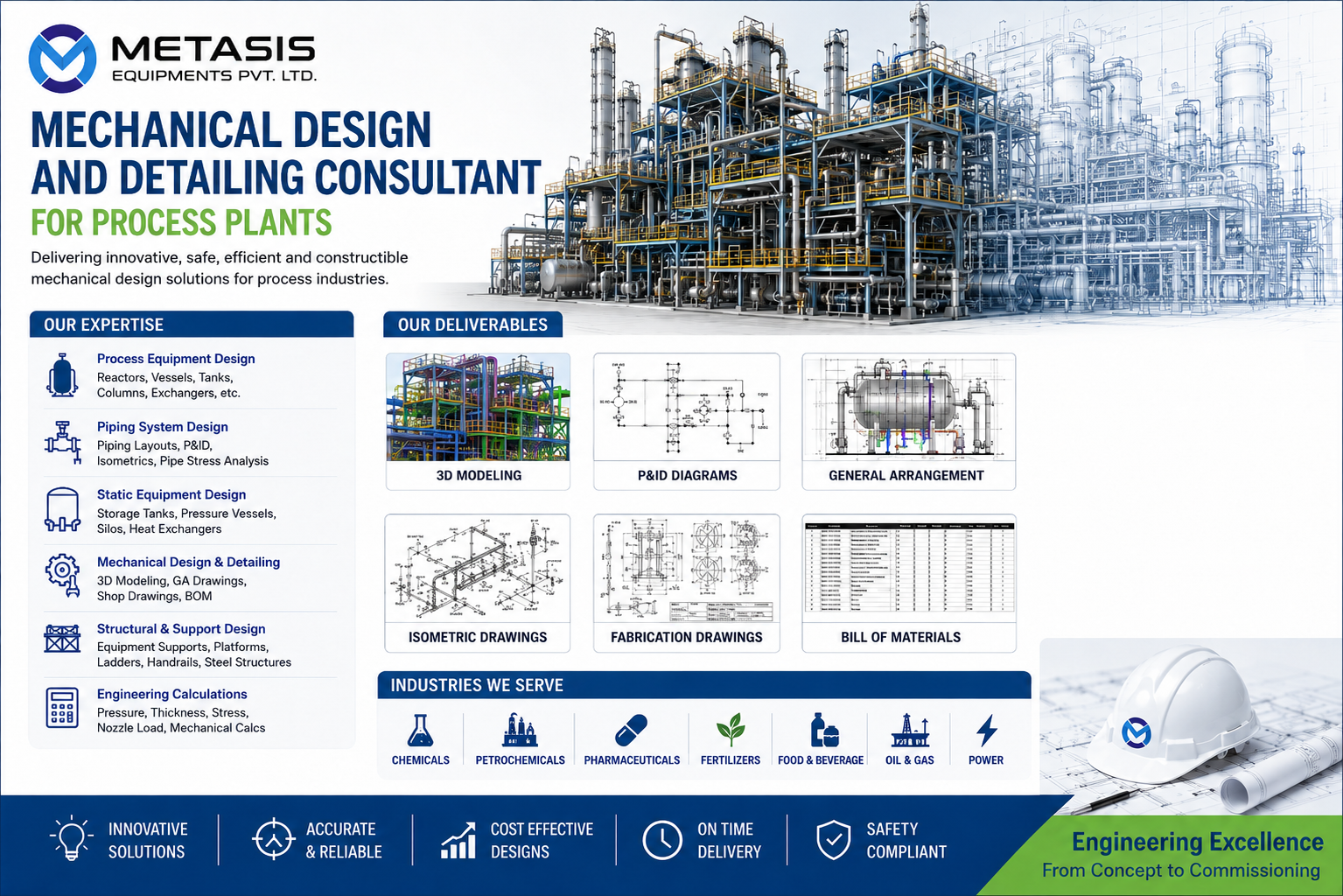 | Engineering Consultant Mechanical & Detailing Consultant for Process Industry Precision Engineering. Detailed Design. Reliable Execution. Metasis Equipments Pvt. Ltd. View product → |
Start with a Verified Brief, Survey and Modification Boundary
Do not release chemical plant modification design work until the brief, existing records and site conditions agree. Legacy drawings provide a starting point, not proof of current geometry or equipment condition.
1. Confirm the process basis: process flow diagrams, P&IDs, equipment datasheets, line lists, design pressures and temperatures, flow rates, chemical compatibility, utility capacities, hazardous-area classification and shutdown constraints.
2. Define the modification boundary on marked-up P&IDs and a plot plan. Identify every tie-in, isolation point, demolition item, temporary work, battery limit and interface with piping, electrical, instrumentation, PLC or DCS logic, civil works and operations.
3. Verify the field conditions. Record equipment tags, nozzle orientations and elevations, pipe routes, support locations, insulation and cladding condition, access, maintenance and lifting clearances, platforms, guarding, buried services and hazardous-area boundaries. A laser scan improves geometry capture but cannot confirm wall thickness, metallurgy, process duty or hidden-support condition.
4. Check every new connection for nozzle reinforcement, local shell stress, pipe loads, thermal expansion, vibration, dead weight and support-steel capacity. For dosing systems, verify minimum stable flow, turndown, viscosity, back-pressure, pulsation, relief routing, containment and calibration method.
5. Test the approval boundary. Changes to feedstock, throughput, storage, venting, wastewater, odour or emissions may affect the NSW Protection of the Environment Operations framework and the site’s environment protection licence. Check dangerous-goods segregation, bund capacity, drainage isolation and fire requirements; AS 1940 is relevant for flammable liquids.
This disciplined input gives process equipment design in Sydney a reliable basis for procurement, fabrication and installation. Missing records become site changes, delays and unsafe assumptions.
Control Interfaces, Materials and Australian Compliance
Treat every tie-in as a controlled interface, not a drafting exercise. A hydraulically suitable connection can still overstress a vessel nozzle, support steel or vibrating pump discharge. Mechanical design services for chemical plants must reconcile process duty, structural loads, materials, hazardous areas and operating access.
1. Freeze the process basis. Record changed flow, pressure, temperature, batch size, chemical concentration and relief loads, then update affected P&IDs, line lists, operating procedures, alarms, interlocks and commissioning checks.
2. Verify the mechanical boundary in the field. Confirm nozzle orientation, pipe routing, support locations, insulation condition, access, lifting clearance and equipment tags. A laser scan captures geometry; it does not prove wall thickness, metallurgy, hidden supports or buried services.
3. Select materials against the actual chemical, concentration, temperature and cleaning method. Specify corrosion allowance, linings, wetted-part metallurgy, gasket type, bolt material and compatibility for seals and mechanical seals. Include these decisions in datasheets and the materials schedule.
4. Use the hazardous-area dossier, not the phrase “explosion proof”. Check the zone under AS/NZS 60079.10.1 and installation requirements under AS/NZS 60079.14, including motors, instruments, junction boxes, cable glands, seals and purge systems.
5. Close the regulatory loop before issuing drawings. Check pressure-equipment duties against AS 1210, guarding against AS/NZS 4024, and environmental changes against the site’s NSW Protection of the Environment Operations Act licence. Increased throughput, storage, venting, odour or wastewater can require an EPL variation or emission controls.
Chemical plant modification design should finish with a signed interface register covering piping, electrical power, instrumentation, PLC or DCS logic, utilities, civil works and operations. Attach inspection and test plans, FAT/SAT requirements, load calculations and commissioning responsibilities so unresolved decisions do not become site rework.
Take the Design from Review to Installation and As-Built Handover
After concept approval, freeze the design basis and run a multidisciplinary review before issuing fabrication drawings. Confirm the verified survey, design pressures and temperatures, materials, hazardous-area dossier, maintenance clearances, lifting path and shutdown window. Record every accepted deviation.
Move through controlled deliverables in this order:
- Issue approved P&IDs, equipment datasheets, general arrangements, nozzle schedules, piping isometrics, support details and access-platform drawings.
- Complete constructability and safety reviews, including isolation points, guarding, chemical containment, relief routing and installation tolerances.
- Release procurement specifications with the inspection and test plan, FAT requirements, certificates, gasket and materials schedules, spare parts and PLC or DCS interface points.
- Inspect fabrication, witness FAT where specified, then verify dimensions, weld records, pressure tests and coating before shipment.
- Support installation with hold-point inspections, red-line mark-ups, loop checks, SAT, leak testing, rotation checks, calibration and controlled commissioning.
Do not close the job at mechanical completion. Reconcile field changes against P&IDs, line lists, equipment tags, cable and instrument schedules, operating procedures, alarms, interlocks and training records. Manage the change under the site’s management-of-change process; altered throughput, chemicals or venting can affect relief capacity, emissions and the NSW environment protection licence.
When comparing process equipment design sydney providers, or searching for mechanical for design engineering services sydney, ask for this complete handover trail—not drawings alone. A final dossier should include signed test records, certificates, manuals, spare-parts data, commissioning results and an as-built model or drawing set.
Frequently asked questions
What does mechanical design cover in a Sydney chemical plant modification?
It covers equipment fit, nozzle and pipe connections, supports, access, lifting clearances, maintainability, insulation interfaces and hazardous-area boundaries.
How should you start a chemical plant modification design?
Create a verified brief, survey the existing plant, confirm equipment tags and dimensions, and mark the modification boundary and every tie-in.
What should you check when selecting a design partner?
Check experience with process equipment, brownfield surveys, plant interfaces, Australian compliance, constructability reviews and as-built documentation.
What belongs in the final handover package?
Include approved drawings, installation details, inspection and test records, equipment information, marked-up changes and accurate as-built drawings.
Related product
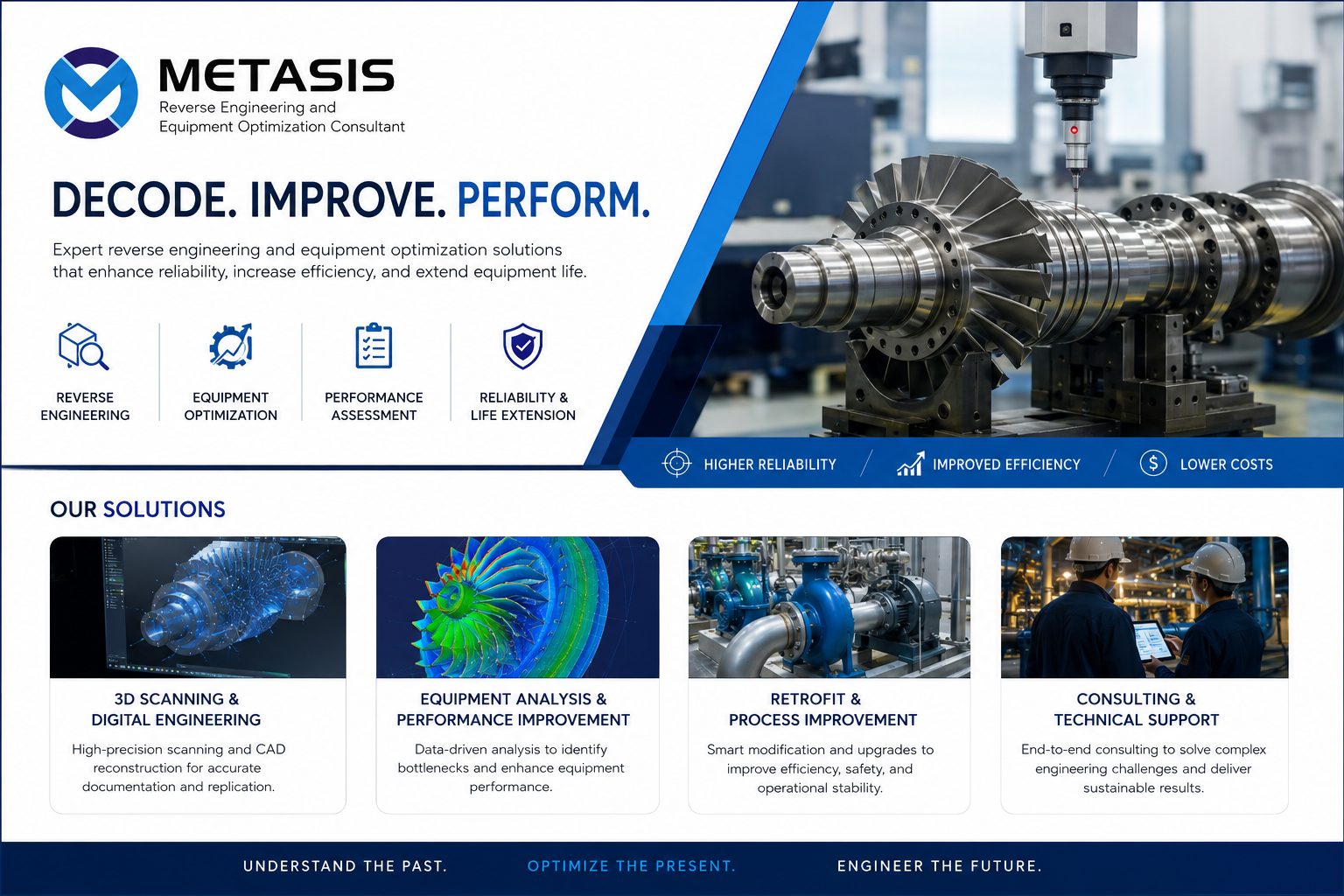 | Engineering Consultant Reverse Engineering & Process Optimization Consultant Re-Engineer. Optimize. Improve Performance. Metasis Equipments Pvt. Ltd. View product → |