
A spice plant conveyor is not selected by diameter or motor size alone: seed shape, powder flow, cleaning method, dust risk and recipe accuracy all change the specification. By the end, you will know which equipment belongs in the supply package, how to check its capacity, and what to demand before accepting a quotation for a London installation.
Key takeaways
- Use dosing screws when controlled feed rate matters.
- Check spice flowability, moisture and abrasiveness before selecting a screw.
- Specify capacity, trough geometry, pitch, speed and outlet arrangement.
- Request material certificates, FAT records, drawings and cleaning instructions.
Where the screw conveyor fits in a spice plant
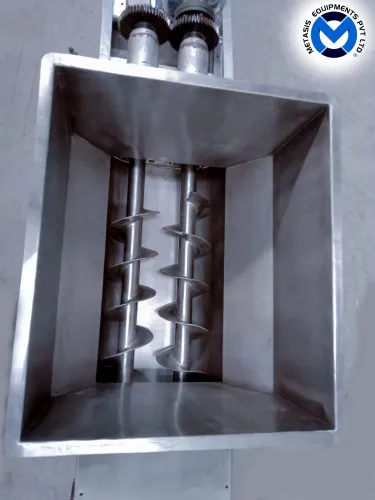
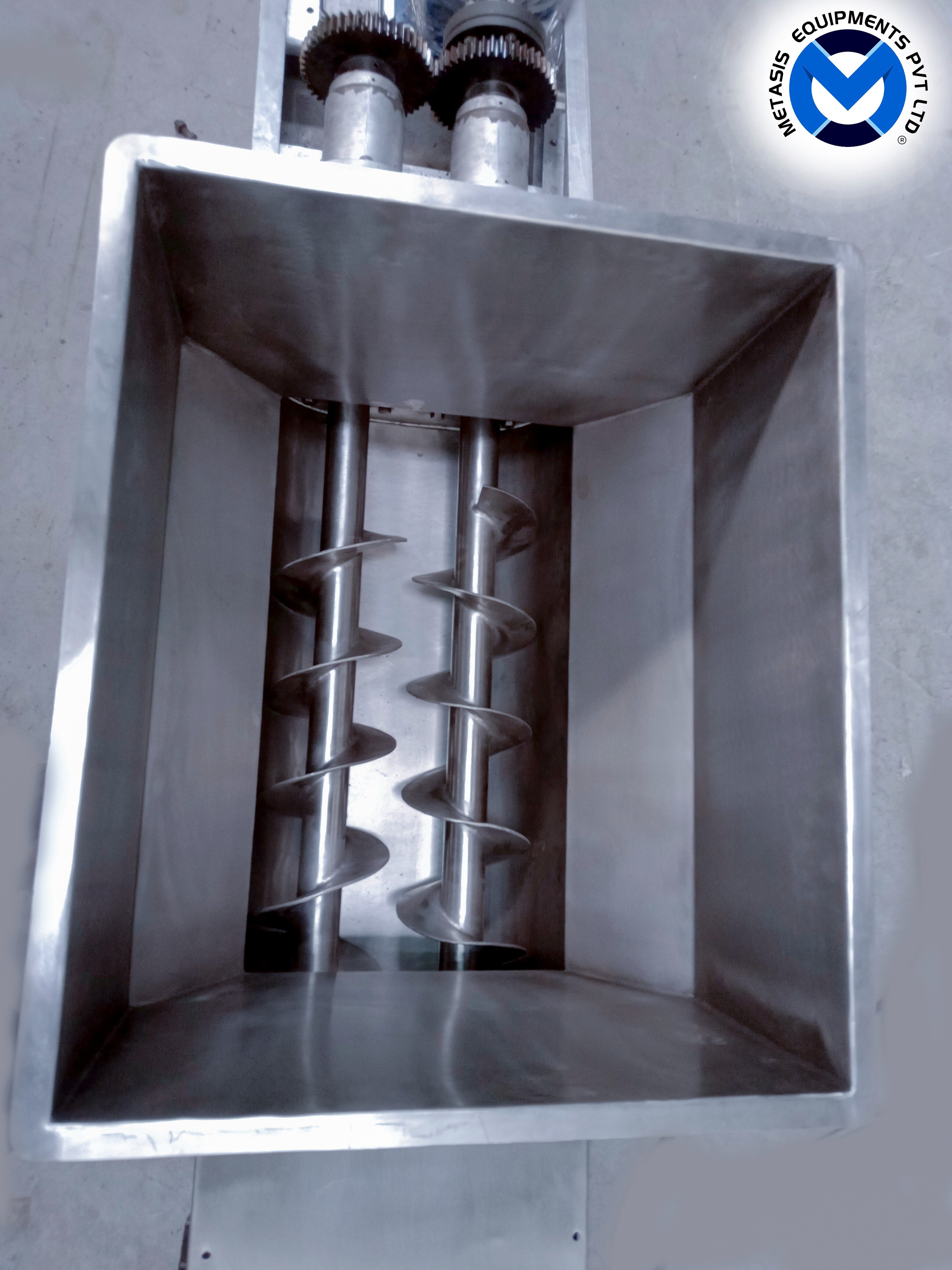
A screw conveyor can sit below a raw-material hopper, between a grinder and sifter, beneath a blender discharge, or upstream of a packing line. In each position, it transfers spice while controlling residence time; a dosing screw also regulates feed rate.
A screw mixer has a different job: it deliberately creates ingredient movement to combine materials, so aggressive mixing flights in a transfer conveyor can disturb blend uniformity.
1. Map each transfer point. Record the upstream outlet, downstream inlet, elevation, required rate and available space. This prevents a conveyor ending short of the sifter or discharging above the packer’s permitted inlet.
2. Confirm the duty. State whether the machine conveys, doses, or mixes, and identify whether dust extraction, magnets, metal detection, load cells or PLC/HMI signals connect at each interface. Spice plant conveyor equipment must also account for guards, seals and safe access around rotating parts.
3. Define the supply boundary. A packaged supply from a screw conveyor manufacturer for spice plants in London can include screw flighting, trough or tubular casing, end plates, bearings, seals, gearbox, motor, guards, inlets, outlets, supports, inspection covers, controls and commissioning documents.
List every included item and state whether the quotation covers only the conveyor, its interfaces, or a complete process-system package.
Confirm who supplies structural steel, extraction ducting, electrical cabling, installation, integration and commissioning. “Complete” has no useful meaning unless those boundaries appear in the quotation.
Which spice materials suit the screw, and which expose its limits
Whole seeds such as cumin, coriander and mustard, plus granular chilli flakes, are comparatively straightforward when the inlet stays flooded and does not bridge. Fine powders are less forgiving: they can arch over the inlet, aerate during filling, compact in a partly filled screw, flood the discharge and deliver an inconsistent rate.
| Material | Main risk | Design consequence |
|---|---|---|
| Whole seeds or granules | Bridging at a poorly fed inlet | Use a suitable flooded inlet and confirm pitch |
| Fine pepper or paprika powder | Arching, aeration and discharge flooding | Test inlet geometry, fill ratio and speed |
| Salt-heavy seasoning | Moisture uptake and caking | Provide access for buildup removal; choose trough or tube clearances carefully |
| Oily or hygroscopic ingredients | Smearing, adhesion and hardened deposits | Specify cleanable surfaces, seals and inspection access |
| Sticky blends | Buildup and torque increase | Check liner, flight clearance and loaded start-up |
| Fragile botanicals | Particle breakage from impact and shear | Use gentle speed and avoid aggressive flighting |
A screw conveyor for spice processing is a conveying device, not automatically a mixer. Aggressive mixing flights, overfilling, high speed or long residence time can disturb blend uniformity and damage delicate leaves; use them only when mixing is the defined duty.
Do not select geometry from bulk density alone. Trial the actual recipe to establish pitch, fill ratio, speed and inlet arrangement, recording bridging, caking, residue, torque and mass-flow stability.
How to specify capacity, geometry and speed
Verify capacity from the screw’s working volume, not its model name or headline kg/h figure. Capacity depends on volume per revolution, rpm, fill level and bulk density, with corrections for incline and flow behaviour. Separate theoretical capacity from continuous capacity and peak capacity; only the latter two describe production performance.
Ask a screw conveyor manufacturer in London to state:
- Bulk-density range, moisture, particle-size distribution and flowability
- Required mass rate, screw diameter, pitch, length and incline
- Loading percentage, rpm range and duty cycle
- Whether the quoted rate is theoretical, continuous or peak
- Capacity at start-up, normal running and the maximum specified rate
A variable-speed drive changes volumetric delivery, but open-loop rpm does not guarantee mass-flow accuracy. Aeration, flooding, density changes and cohesive powders can make the kg/h drift, so recipe dosing may require weigh-hopper or loss-in-weight feedback. Test the loaded conveyor with the real spice blend, including start-up, torque, discharge residuals and the full operating range.
Construction choice affects handling:
| Option | Suitable duty | Constraint |
|---|---|---|
| Shafted | Many free-flowing powders and granules | The shaft and bearings need hygienic protection |
| Shaftless | Sticky or difficult materials | Specify a suitable liner and flight-support arrangement |
Do not infer dosing accuracy from speed alone, or accept an empty-conveyor test; either approach can conceal bridging, flooding and segregation.
What hygienic, cleanable and dust-controlled construction requires
Specify dry cleaning, vacuum cleaning or wet washdown before you approve the design; each method changes the required construction. Your spice plant conveyor equipment specification should name the following:
1. Food-contact stainless-steel grade, product-contact elastomers, weld finish and surface-finish requirement. Require crevice-minimised joints, drainability for wet cleaning, and seals that neither shed fragments nor retain spice residue.
2. Inspection-cover design and access points for dry brushing, vacuum tools and washdown. Place bearings outside the product zone where the duty permits, prevent lubricant ingress, and require inspection and seal replacement without dismantling the whole line.
3. Changeover controls for allergens and strong flavours: clean-out access, removable flights where justified, a documented dead-zone review, recorded purge quantities and verification before releasing the next recipe.
4. Dust control as part of the package, including enclosed transfers, extraction connections, vent filters, earthing and bonding. Fine powder escaping at covers or shaft seals creates both contamination and combustible-dust risks.
5. A site-specific combustible-dust assessment, zone classification and review against DSEAR 2002 and applicable UK equipment conformity requirements. Do not infer suitability from a conveyor model or from another factory’s zoning.
6. Guards for flights, shafts and couplings; interlocks on inspection covers; emergency stops; and lockable isolation points coordinated with connected machinery.
An industrial screw conveyor supplier should show these details on drawings and the cleaning procedure, not leave them as verbal assurances. A hygienic design that cannot be opened, cleaned and safely isolated is incomplete.
What to put in a London quotation, FAT and handover package
A quotation from a screw conveyor manufacturer for spice plants in London must define the equipment, interfaces and site constraints, not just state a kg/h figure.
Require layout drawings, load and support data, motor and electrical details, extraction connection sizes, access-cover locations, hygienic zoning, cleaning instructions, spare-parts lists, risk assessments and clear installation and commissioning boundaries.
Use this procurement procedure:
- Record London site conditions: delivery restrictions, lifting routes, floor loading, working-at-height access, available electrical supply, permitted noise limits and coordination with the plant fire strategy.
- Mark every included interface. State whether the package includes load cells, metal detection or magnet interfaces, PLC/HMI integration, operator training, validation support, installation supervision and commissioning. “Turnkey” is not a sufficient scope description.
- Require the FAT to use the actual spice or a representative material. Test specified throughput, loaded start-up, residual product, cleanability, dust leakage, torque, noise, guards, interlocks, emergency stops and upstream/downstream integration.
- Obtain the handover pack: approved drawings, electrical schematics, manuals, risk assessments, cleaning procedure, calibration records, spare-parts list and training sign-off.
Metasis Equipments Pvt Ltd can be approached as one industrial screw conveyor supplier for a scope discussion, but compare its submission against every screw conveyor manufacturer in London using the same performance basis, FAT evidence and interface responsibilities. Empty-conveyor testing hides bridging, flooding and excessive torque.
Related products
 | Screw Conveyor Global Leader in Custom Screw Conveyor Solutions Metasis Equipments Pvt. Ltd. View product → |
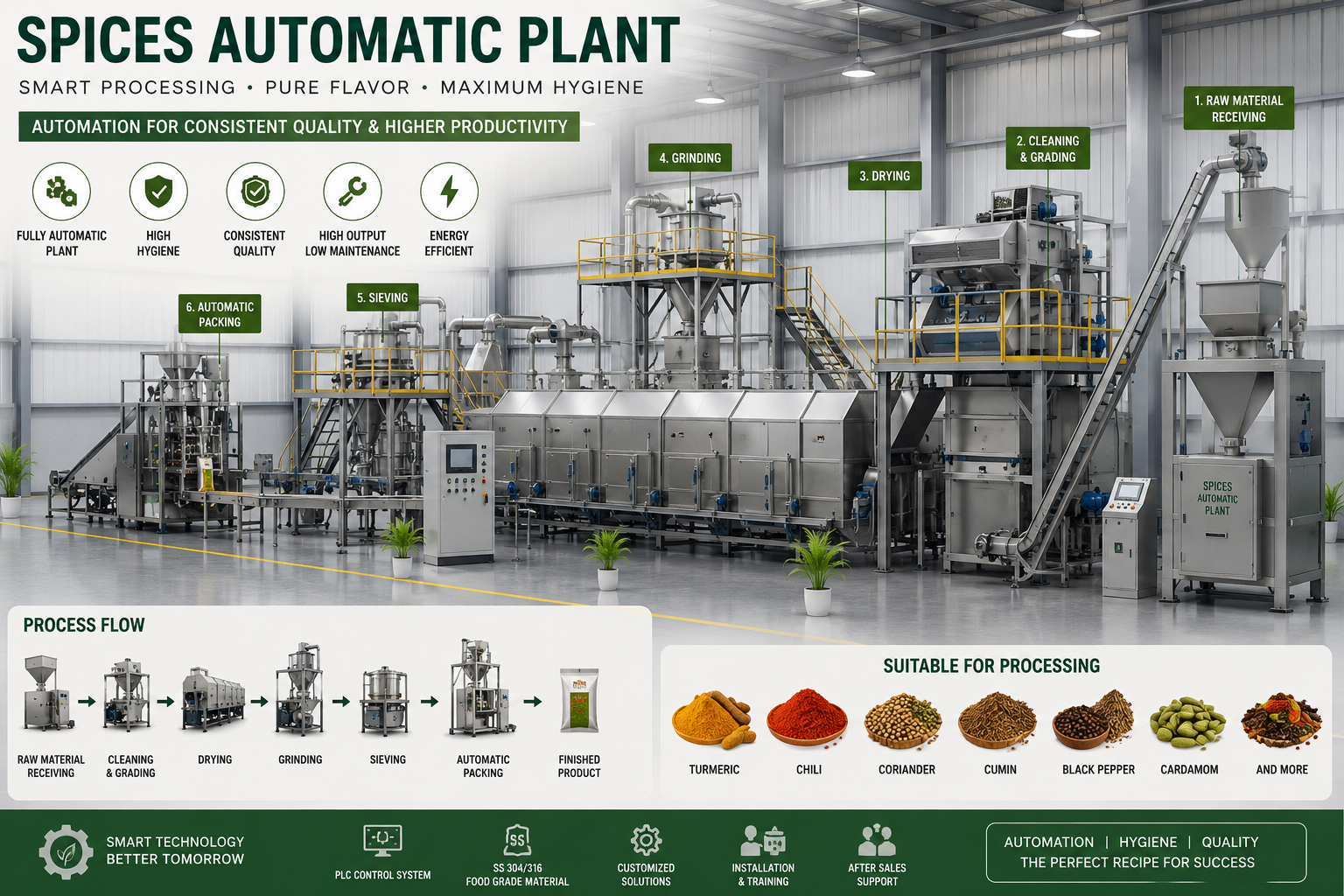 | Food Plant Spices Automatic Plant - A Spices Automatic Plant is a fully integrated processing system designed to clean, grind, blend, sieve, and pack a wide... View product → |
Frequently asked questions
Where does a screw conveyor fit in a spice plant?
It can transfer spices below a raw-material hopper, between grinding and sifting, beneath a blender discharge, or before packing. A dosing screw also regulates feed rate.
Which spices suit a screw conveyor?
Free-flowing powders, granules and many blended spices suit screw conveying when the screw, pitch and speed match the material. Cohesive, oily, moisture-sensitive or highly abrasive products require closer assessment.
What information is needed to specify a screw conveyor for spice processing?
Provide the spice type, bulk density, particle size, moisture, required capacity, conveying distance, elevation, inlet and outlet positions, operating hours and cleaning method.
What should a London quotation, FAT and handover package include?
Request a defined scope, GA drawing, materials and surface-finish details, motor and drive data, guards, dust-control provisions, factory acceptance test criteria, certificates, manuals and maintenance instructions.
Related products
 | Belt Conveyor Metasis Equipment Pvt. Ltd. is a leading belt conveyor manufacturer in India, providing high-performance conveyor systems for efficient and reliable... View product → |
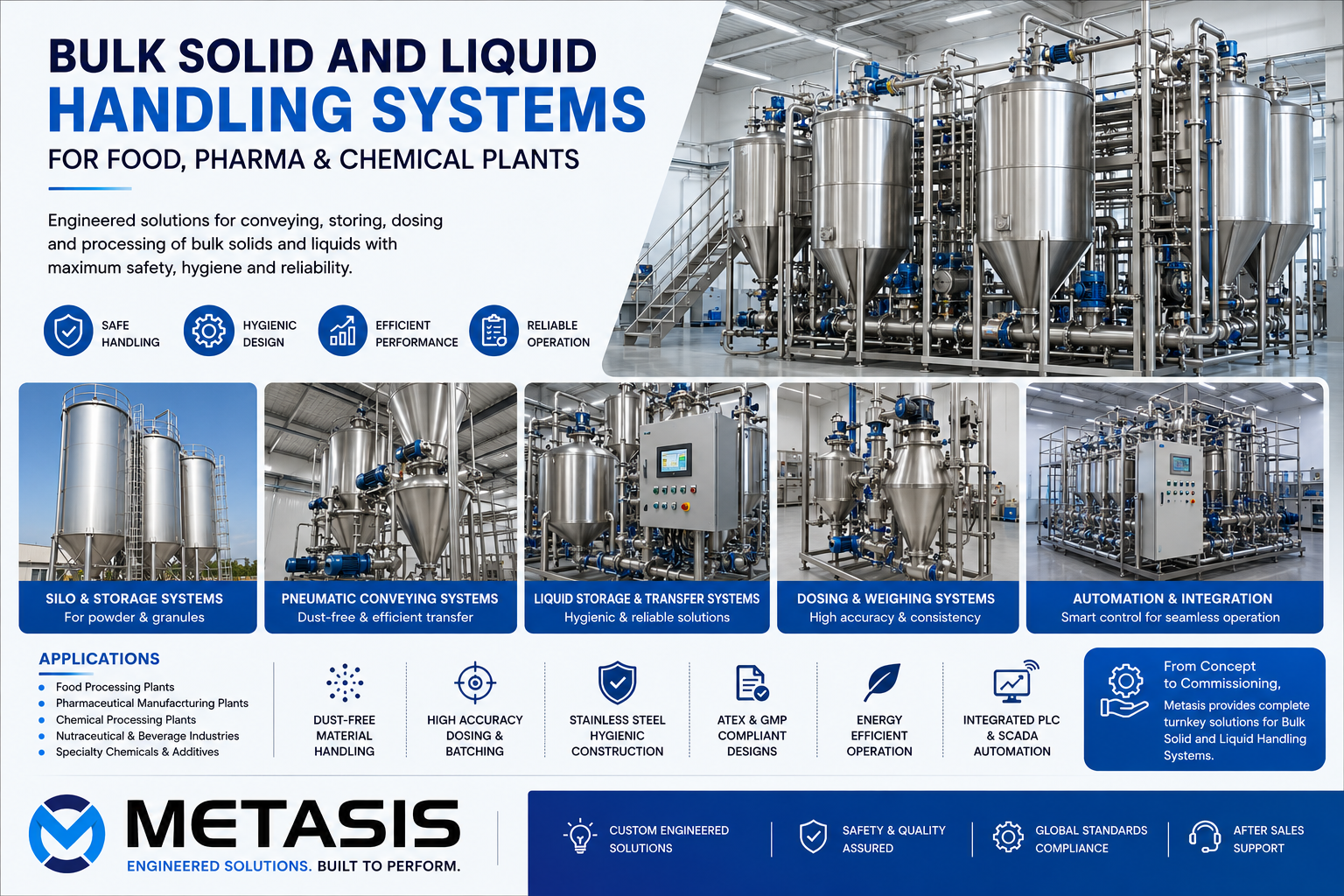 | Engineering Process System Bulk Solid and Liquid Handling Systems Bulk Solid and Liquid Handling Systems For Food, Pharma & Chemical Plants At Metasis Equipments Pvt. View product → |