
A screw conveyor is not selected from diameter and tonnes per hour alone: the flight profile, casing, speed, inlet, outlet, drive, seals and supports must suit the material and the plant layout. By the end, you will know how to define the duty, assess a quotation, follow fabrication from approved drawing to factory test, and verify what arrives at your site.
Key takeaways
- Calculate capacity from pitch, speed, fill and bulk density—not diameter alone.
- Give the manufacturer material, temperature, moisture, duty cycle and layout data.
- Request drawings, weld details, surface finish and factory test records before approval.
- Check rotation, clearances, guards, alignment and discharge performance at acceptance.
How the screw, casing and drive move bulk material
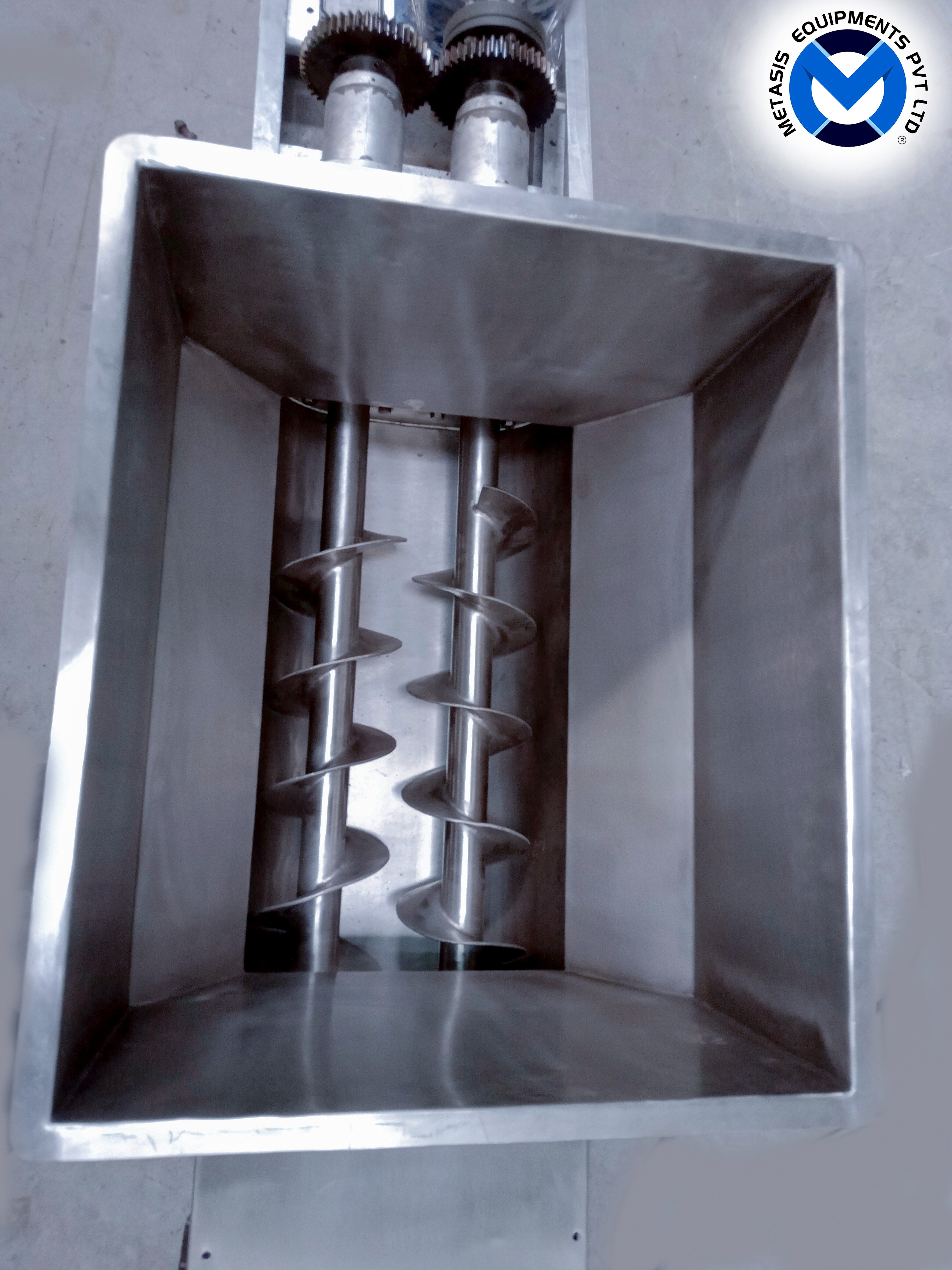
A screw conveyor moves bulk material when a motor and gearbox rotate helical flighting around a shaft, pushing material from the inlet to the outlet inside a trough or tubular casing.
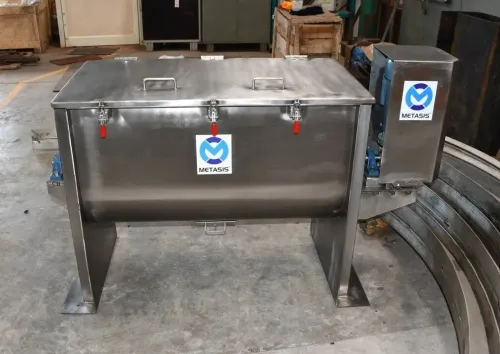
Shafts, bearings, hanger supports, end seals, covers, guards and a drive complete the assembly; poor sealing lets dust escape, while inadequate support causes flight contact and wear.
| Option | What it means | When it applies |
|---|---|---|
| Horizontal | Level transfer | Moving material between process stages |
| Inclined | Elevation at reduced loading | Raising material where space permits |
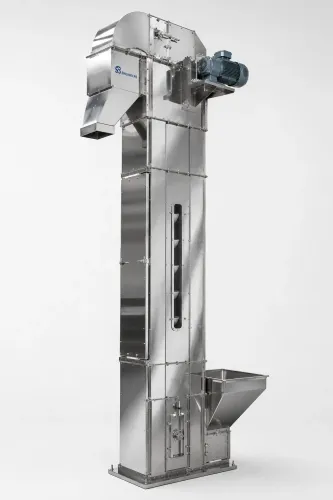
| Vertical | Compact lifting | Short, space-constrained elevation |
| Shafted | Flight fixed to a central shaft | Conventional dry solids |
| Shaftless | Flight supported by a liner | Sticky or stringy material |
| Tubular casing | Enclosed cylindrical flow path | Contained, low-dust transfer |
| U-trough | Openable accessible casing | Industrial inspection and cleaning |
| Live-bottom | Several screws discharge a wide hopper | Controlled drawdown without dead zones |
Ribbon flights suit mixing and reduce adhesion; cut-flight designs add agitation and reduce buildup; twin shafts handle mixing or difficult discharge. Hanger bearings interrupt flow and can contaminate product, so avoid them where uninterrupted or hygienic flow matters. A shaftless screw needs a suitable replaceable liner and careful checks of torque and deflection.
A transfer screw prioritises reliable movement. A dosing screw also requires controlled speed, calibration, stable head pressure and a stated accuracy over a defined operating range; a conveyor that transfers reliably is not automatically a feeder.
How to size capacity without trusting the nominal diameter
Size the conveyor from volumetric duty, not nominal diameter. State required capacity in cubic metres per hour, then calculate mass flow as: mass flow = volumetric flow × bulk density. Useful volume depends on screw diameter, pitch, rotational speed and fill percentage; inclination reduces effective capacity because material slips backward over the flighting.
1. Define the material: record particle-size distribution, moisture, cohesion, abrasiveness, temperature, corrosiveness and degradation risk. These determine flight profile, clearance, liner, construction material and acceptable speed.
2. Define the duty: state conveying length, angle, duty cycle, inlet condition, outlet rate and required accuracy. A dosing screw needs a controlled speed range, stable head pressure, calibration and stated accuracy; a transfer screw does not automatically meet those requirements.
3. Compare diameter, pitch and speed against the actual loading. A custom screw conveyor sized only for horizontal capacity can plug or underperform on an incline, particularly with cohesive or coarse solids.
Increasing rpm does not produce a proportional capacity increase. Slip, segregation, dusting, wear and power demand rise, while product degradation can worsen. Require the quotation to state fill factor, conveyor angle, screw speed and assumed bulk density, rather than quoting horizontal capacity alone.
Check inlet flooding, hopper bridging, poor venting, uncontrolled gate or feeder flow, downstream backpressure and inadequate outlet clearance; each can cause plugging and torque spikes. The sizing basis must state starting torque, running torque, overload protection, variable-frequency control, backstop requirements and gearbox service factor.
A screw that starts full needs more than its steady running-power calculation.
How a process brief becomes a buildable conveyor design
A technically meaningful quotation starts with a process brief, not a nominal diameter. Review the flow sheet, then convert it into a layout showing inlet and outlet elevations, conveying length, elevation change, inclination, access, cleaning space and interfaces with hoppers, feeders, controls and downstream equipment.
1. Send the material safety data, bulk density, particle-size distribution, feed rate, temperature, moisture, abrasiveness, corrosiveness, conveying length, elevation change, inclination, duty cycle, required accuracy, inlet geometry, outlet arrangement, electrical supply and hazardous-area classification.
2. State hygiene requirements: product-contact grade, surface roughness, weld treatment, drainability, gasket material, cleaning method and contact-part traceability. A polished surface alone does not make a hygienic conveyor.
3. For dust-risk service, provide dust properties, site zone, bonding and earthing approach, temperature limits, explosion isolation or venting requirements and the ignition-risk assessment. Do not accept a generic ATEX claim as a design basis.
4. The industrial screw conveyor supplier should select screw dimensions, speed, drive torque, gearbox, seals, liners and materials from those inputs, then issue a duty statement, calculation basis and interface schedule. Include a general-arrangement drawing, bill of materials, utilities, exclusions and installation boundaries.
5. Define custom in the quotation: non-standard length, incline, flight, liner, washdown arrangement, weighing system, control package or interface. This handoff reveals whether the supplier owns the design decisions or merely resells a standard shell.
What happens during screw conveyor fabrication and factory testing
1. Approve the general-arrangement drawing, duty statement, materials and interfaces before fabrication. The shop then prepares plate, flights and liners, cuts and machines the shaft, welds flights to the specified pitch, and records pitch and shaft run-out.
2. Fabricators form the trough or tubular casing, add covers, supports and clean-out points, then install bearings, seals and gearbox. Inspect weld quality, shaft-to-casing alignment, flight-to-casing clearance, seal material, bearing accessibility and the coating or polished finish. For hygienic service, check weld treatment, drainability and contact-part traceability.
3. Fit guards and complete dimensional inspection before surface treatment or final release. Record casing length, flange locations, inlet and outlet elevations, support positions, shaft alignment and accessible maintenance clearances.
4. Agree factory acceptance tests before fabrication: empty rotation, motor and gearbox verification, emergency-stop and interlock checks, dimensional records, and a material trial at the specified rate where practical. No-load rotation cannot prove conveying capacity, plugging resistance, dust containment or dosing accuracy.
5. Long conveyors can ship as separate trough, shaft, cover, liner, drive and support sections. The delivery plan must show transport dimensions, lifting points, field-bolt locations, assembly order and shaft alignment tolerances.
For screw conveyor fabrication in London, verify the actual fabrication site, subcontracted processes, inspection capability, installation responsibility and commissioning scope rather than relying on an address. Metasis Equipments Pvt Ltd should be assessed against those documents, not its location alone.
Related product
 | Screw Conveyor Global Leader in Custom Screw Conveyor Solutions Metasis Equipments Pvt. Ltd. View product → |
How to compare quotations and accept the delivered machine
Compare the quotation and general-arrangement drawing line by line, not the nominal diameter. A better specification names the duty, materials, dimensions, tolerances and interfaces; vague phrases such as “heavy duty” conceal cost and performance differences.
| Evidence | Better-specified quotation or drawing | Warning sign |
|---|---|---|
| Flight and shaft | Flight thickness and profile, shaft diameter, pitch, run-out and flight-to-casing clearance are stated | “Standard flight” with no dimensions |
| Drive and containment | Gearbox service factor, motor rating, rotation, bearing arrangement and seal type are identified | Motor size alone, with no torque or seal detail |
| Life and access | Wear liners, replaceable flight sections, finish, guarding and spare-parts access are shown | Liners, guards or access doors appear as exclusions |
Ask for inspection records, required material certificates, weld and surface-finish records, run-out results, test procedures, operating instructions, maintenance information and residual-risk information. Confirm that supports, guards, sensors, control panels, emergency stops, isolation points, covers, clean-out doors, installation and commissioning are included.
Check the electrical supply, rotation direction, drive location, inlet elevation, outlet clearance and downstream interface against the site interface schedule. Under UK PUWER duties, handover must address safe access, guarding, emergency stopping, isolation and maintenance.
A search for a screw conveyor manufacturer in london proves none of these responsibilities. Verify the fabrication site, design authority, subcontractors, delivery route, response arrangements and replacement flights, liners, bearings, seals and drives. Accept only against the agreed duty, test evidence and interface schedule—not price alone.
Frequently asked questions
How does a screw conveyor move bulk material?
A motor and gearbox rotate helical flighting around a shaft, pushing material through a trough or tubular casing from inlet to outlet.
What information does a manufacturer need to design a custom screw conveyor?
Provide material name, bulk density, particle size, moisture, temperature, required capacity, conveying distance, incline, duty cycle and discharge arrangement.
Why is nominal screw diameter insufficient for capacity calculations?
Capacity also depends on flight pitch, rotational speed, trough fill percentage, bulk density, material behaviour and conveyor inclination.
What should you check before accepting a delivered screw conveyor?
Compare the machine with approved drawings, then inspect alignment, welds, flight clearance, guards, rotation, lubrication, controls and test results.