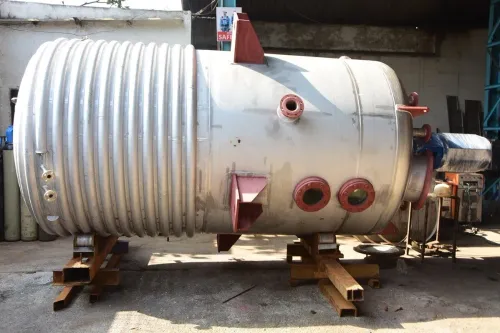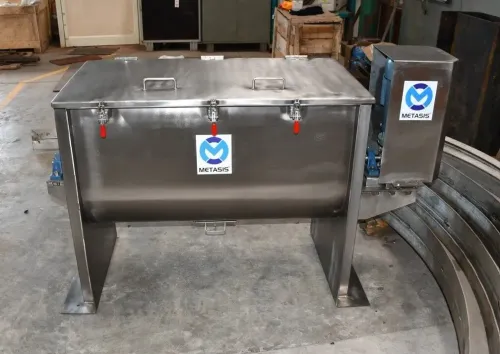

A chemical reactor manufacturer can supply food equipment, but the word “chemical” says nothing about hygienic design, food-contact compliance or cleanability. By the end, you will be able to match a food process to the right vessel, write a defensible specification and compare a London supplier on engineering evidence rather than price alone.
Key takeaways
- Specify a reactor when the product undergoes a controlled physical, chemical, enzymatic or biological change.
- Compare reactor duty against a mixing tank or kettle before requesting quotations.
- Require hygienic welds, drainability, clean-in-place access and compatible product-contact materials.
- Demand documented cleanability, pressure protection, testing and food-plant compliance evidence.
When does a food plant genuinely need a reactor?
A food plant needs a reactor when the product must undergo a controlled physical, chemical, enzymatic or biological change, not simply mixing or storage. A reactor for food processing controls variables such as temperature, pH, pressure or vacuum, residence time, heat-transfer duty, agitation and dosing accuracy.
Use this decision procedure:
1. Define the change: fermentation, hydrolysis, neutralisation, crystallisation, gelatinisation, emulsification, controlled cooking, concentration or enzymatic treatment. If the process only blends ingredients, choose a sanitary mixing tank, inline mixer or agitated holding vessel.
2. Identify the control that creates the product. A jacketed vessel suits a sauce requiring timed heating and cooling; a fermenter needs controlled temperature, aeration and pH; crystallisation needs managed cooling, supersaturation and agitation. A simple batch kettle is better when heating and holding are the only duties.
3. Match the equipment to production mode. Choose a continuous processing skid when steady flow and repeatable residence time matter more than batch flexibility. Choose a reactor when recipes require staged dosing, sampling, reaction time or tightly controlled conditions.
4. Qualify the supplier beyond its job title. A chemical reactor manufacturer for food plants in London is suitable only if it can demonstrate hygienic materials, food-contact compliance, cleanable internals, documented CIP performance and the required pressure, machinery and hazardous-area assessments.
Do not accept “reactor” as proof of suitability. Request evidence that the vessel, agitator, valves, transfer lines and nozzles achieve the specified cleaning flow, temperature, chemical concentration and exposure time. For pressure above 0.5 bar, assess the Pressure Equipment (Safety) Regulations 2016 requirements independently of the vessel’s name.
Industrial reactor applications involving alcohol, solvents or combustible powders also require DSEAR and explosion-risk review.
How is a reactor different from a mixing tank or kettle?
A reactor is not defined by its stainless-steel shell or agitator; it is defined by whether controlled conditions drive a physical, biochemical, or chemical change. A reactor for food processing therefore needs a target conversion or endpoint, not merely uniformity or storage.
1. Ask what the vessel must achieve. A standard mixing vessel or blending tank combines ingredients; an agitated holding tank keeps a product uniform before transfer. A batch kettle adds heating, boiling, or concentration, but it is not automatically a reactor.
If dosing sequence, residence time, pH, temperature profile, pressure or vacuum, and endpoint detection determine the result, specify reactor duty.
2. Match the special cases. A fermenter controls biological growth with aeration, temperature, pH, and often foam management. It is a specialised reactor. A scraped-surface heat exchanger transfers heat through a narrow product film while scrapers limit fouling; it suits viscous, heat-sensitive products, not every reaction or batch process.
3. Check the design evidence. Require the supplier to state batch or continuous mode, heat-up and cool-down rates, maximum temperature and pressure, impeller type and speed range, viscosity and solids limits, sampling points, dosing accuracy, interlocks, and CIP coverage. Volume alone cannot select agitation.
If the duty is only blending, holding, or straightforward heating, choose the simpler sanitary vessel or kettle. Industrial reactor applications justify added control when fermentation, enzymatic processing, hydrolysis, neutralisation, crystallisation, gelatinisation, emulsification, or controlled cooking depends on a measured process endpoint.
What hygienic construction details should you specify?
Specify 316L stainless steel for wetted parts unless the product chemistry demands another verified material. Require a documented food-contact compliance package under Regulation (EC) No. 1935/2004 and controlled manufacturing records under Regulation (EC) No. 2023/2006; a stainless-steel certificate alone is not enough.
| Feature | Specify | Failure avoided |
|---|---|---|
| Material and finish | 316L, product-compatible elastomers, and a smooth finish such as Ra ≤0.8 µm where the risk assessment requires it | Corrosion, product taint and microbial harbours |
| Welds | Full-penetration, continuously welded joints; inspect, pickle and passivate weld zones, then record the result | Crevices, rouging and weld-root residue |
| Seals | FDA or EU food-contact documentation for EPDM, PTFE or FKM, matched to temperature, fats, acids and cleaning chemicals | Swelling, leakage or chemical migration |
| Sight glasses | Flush hygienic windows with food-contact gaskets, protected faces and no recessed retaining cavities | Product traps and glass contamination |
| Agitator parts | A polished shaft, hygienic impeller, sealed bearing arrangement and no exposed threads or uncleanable keyways | Residue around rotating components |
| Geometry | Sloped, fully drainable bottoms; radiused internal corners; short hygienic nozzles; minimal baffles, pockets and internal coils | Standing product after CIP |
Ask the food plant reactor supplier to show how the shaft seal, probe pocket, valve cavity and sight-glass gasket clean in the installed position. Include access for inspection without dismantling food-contact parts unnecessarily. Document material heat numbers, seal batches, weld maps and surface-finish readings so a damaged component remains traceable.
How do you prove cleanability, pressure safety and food-plant compliance?
Do not treat the word “reactor” as proof of hygienic suitability. A chemical reactor manufacturer in London must demonstrate CIP coverage, sanitisation performance and drainage for your actual product, soil load and cleaning cycle. Request spray-device coverage records, validated flow and temperature data, cleaning chemical concentrations, rinse criteria, inspection access and cleaning-verification results.
Request this evidence from a food plant reactor supplier:
- Material certificates and a food-contact declaration covering every wetted metal, gasket, coating, lubricant and sight-glass component. Regulation (EC) No. 1935/2004 requires food-contact materials to avoid harmful migration or unacceptable changes to taste, odour or composition.
- Pressure and vacuum design calculations, relief-device sizing, weld records, material traceability, pressure-test results and the vessel’s maximum allowable pressure, temperature and vacuum. In Great Britain, the Pressure Equipment (Safety) Regulations 2016 apply above 0.5 bar; classification depends on pressure, volume, fluid group and state.
- Hazardous-area assessment covering dust or vapour zoning, ignition sources, earthing, motors, instruments and UKEX or ATEX certification where the installation requires it.
- FAT and SAT protocols, control-system backups, alarm tests, recipe permissions and operator-training records.
Your hazard analysis must connect controls to product risks: retained material, allergen cross-contact, microbial growth, foreign bodies and failed cleaning. Define responsibility for CIP, transfer piping, dosing, utilities, safety circuits, commissioning and validation; a supplier’s boundary at the reactor nozzles does not control the complete process.
How should you compare a London reactor supplier’s proposal?
Compare the proposal against your process duty, not the quoted vessel volume or purchase price. A chemical reactor manufacturer in London should show how the vessel achieves your batch size, working range, residence time, temperature profile, dosing accuracy and cleaning method.
| Dimension | Strong proposal | Warning sign |
|---|---|---|
| Vessel geometry and capacity | Drawings show diameter, height, head, working and maximum volume, usable heel, nozzles and drainability | “1,000-litre reactor” with no working-volume or retained-product figure |
| Agitation | Impeller type, speed range, torque, viscosity basis, shaft seal and mixing result are stated | Motor power is quoted without a mixing duty or viscosity |
| Heat transfer | Jacket or coil area, utility conditions, heat-up and cool-down duty are calculated | Jacket size is listed without target temperature or duty |
| Controls | PLC, instruments, recipe steps, alarms, interlocks, load cells and data records are defined | Controls stop at a local start/stop panel |
| Project boundary | Responsibility covers feeding, dosing pumps, utilities, transfer piping, CIP, safety circuits, commissioning and training | Supply ends at the reactor nozzles |
| Evidence and handover | GA drawings, P&IDs, material and food-contact records, pressure assessment, manuals, test packs and validation evidence are included | Documentation is promised after delivery |
For a chemical reactor manufacturer for food plants in London, require the proposal to identify allergen changeover, product retention, foreign-body controls and cleaning verification. Whether you assess Metasis Equipments Pvt Ltd or another supplier, ask for a commissioning plan with factory tests, site acceptance tests, operator training and named acceptance criteria.
A low purchase price is expensive if integration, validation or start-up remains yours.
Related products
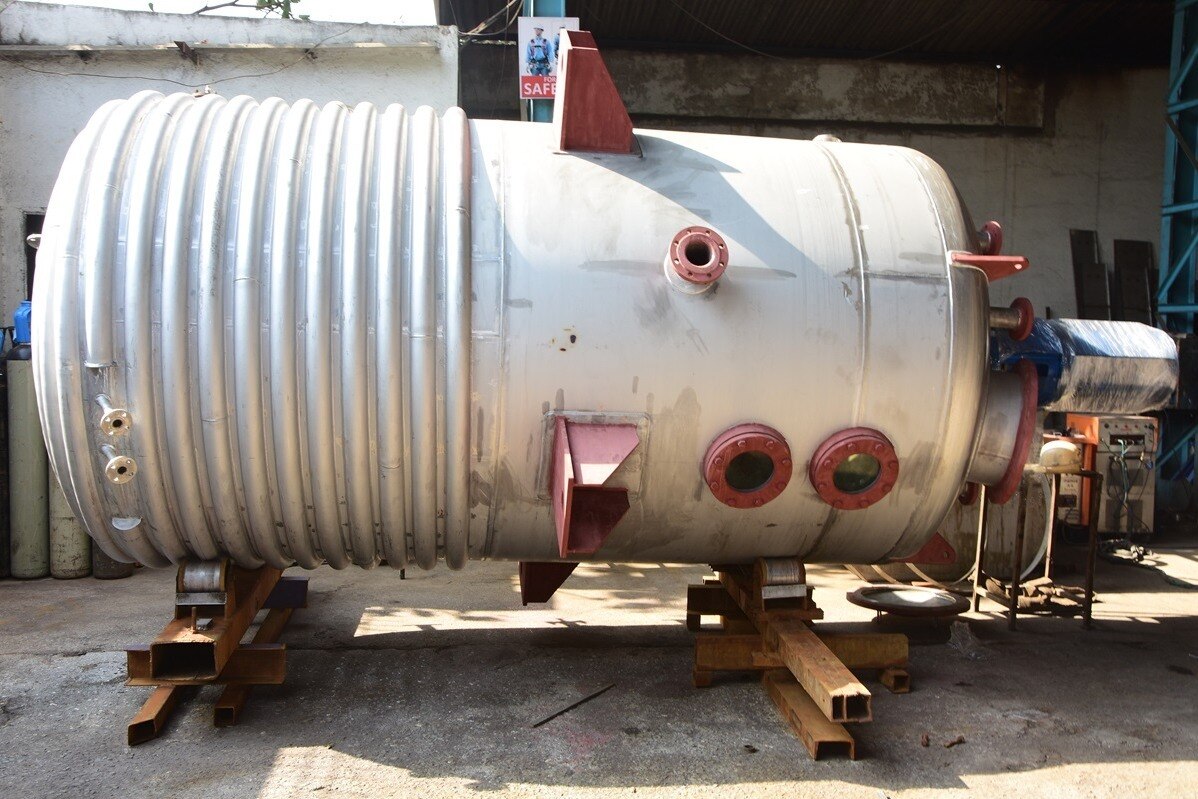
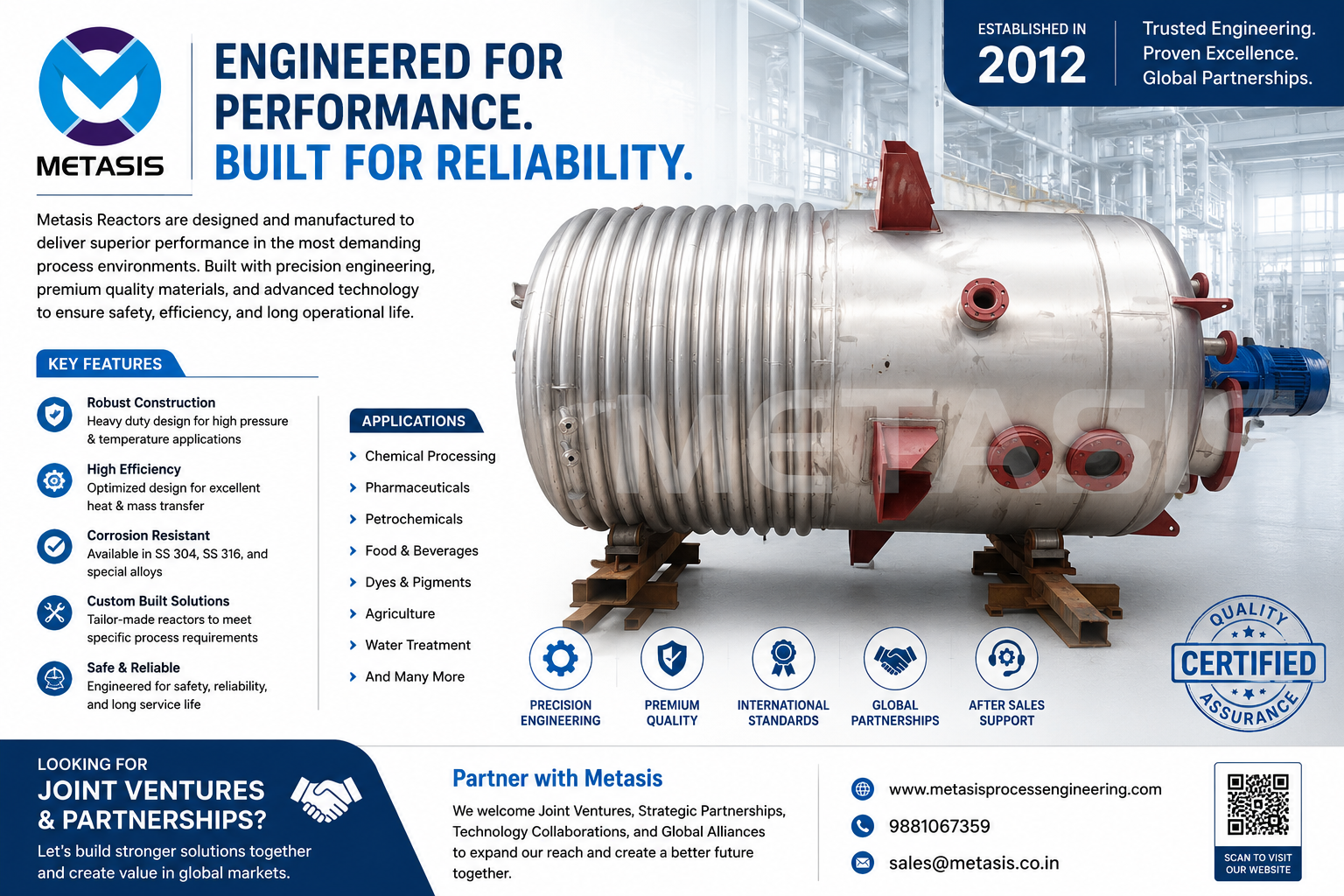 | Reactor Reactor Metasis Equipments Pvt. Ltd. is a leading manufacturer of high-quality industrial reactors for the Chemical, Pharmaceutical, Food, Specialty... |
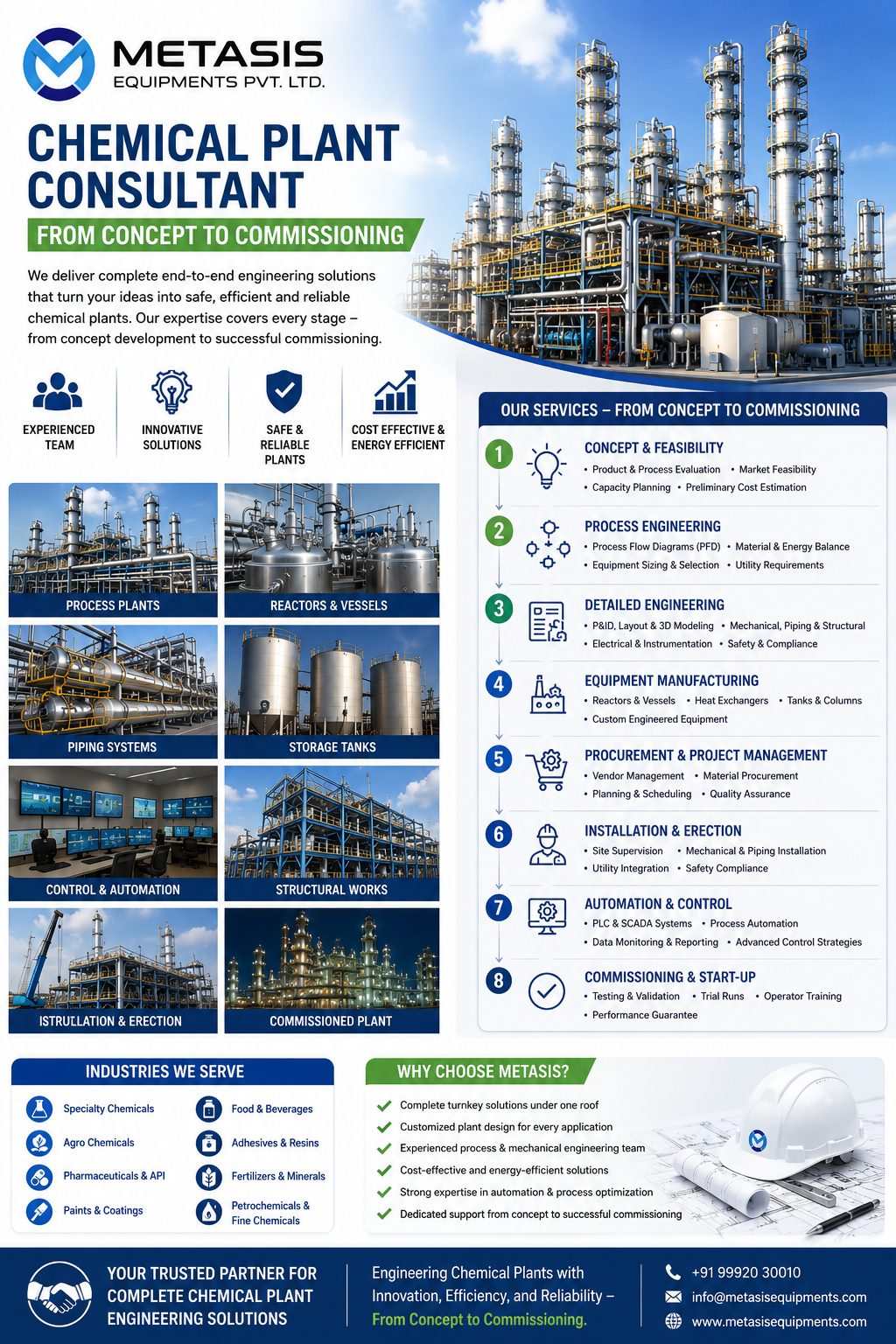 | Engineering Consultant Expert Chemical Plant Engineering & Process Consultancy Metasis Equipments Pvt. Ltd. is a trusted Chemical Plant Consultant offering comprehensive engineering, design, process optimization, and turnkey... View product → |
Frequently asked questions
When does a food plant genuinely need a reactor?
Use a reactor when the product needs controlled change involving variables such as temperature, pH, pressure, residence time, heat transfer, agitation or dosing.
How is a reactor different from a mixing tank or kettle?
A reactor is designed to control and document a process reaction or transformation; a mixing tank blends materials, while a kettle primarily heats or cooks them.
What hygienic construction details should you specify?
Specify suitable product-contact materials, hygienic welds, smooth internal surfaces, full drainability, clean-in-place access and an agitation design that avoids product traps.
How do you prove cleanability, pressure safety and food-plant compliance?
Request cleanability evidence, pressure and leak-test records, relief-device details, material certificates, drawings, operating limits and the compliance documents required for your installation.
How should you compare a London reactor supplier’s proposal?
Compare each proposal against your process duty, batch size, temperature and pressure limits, heat-transfer performance, cleaning method, documentation, delivery scope and commissioning support.
Related products
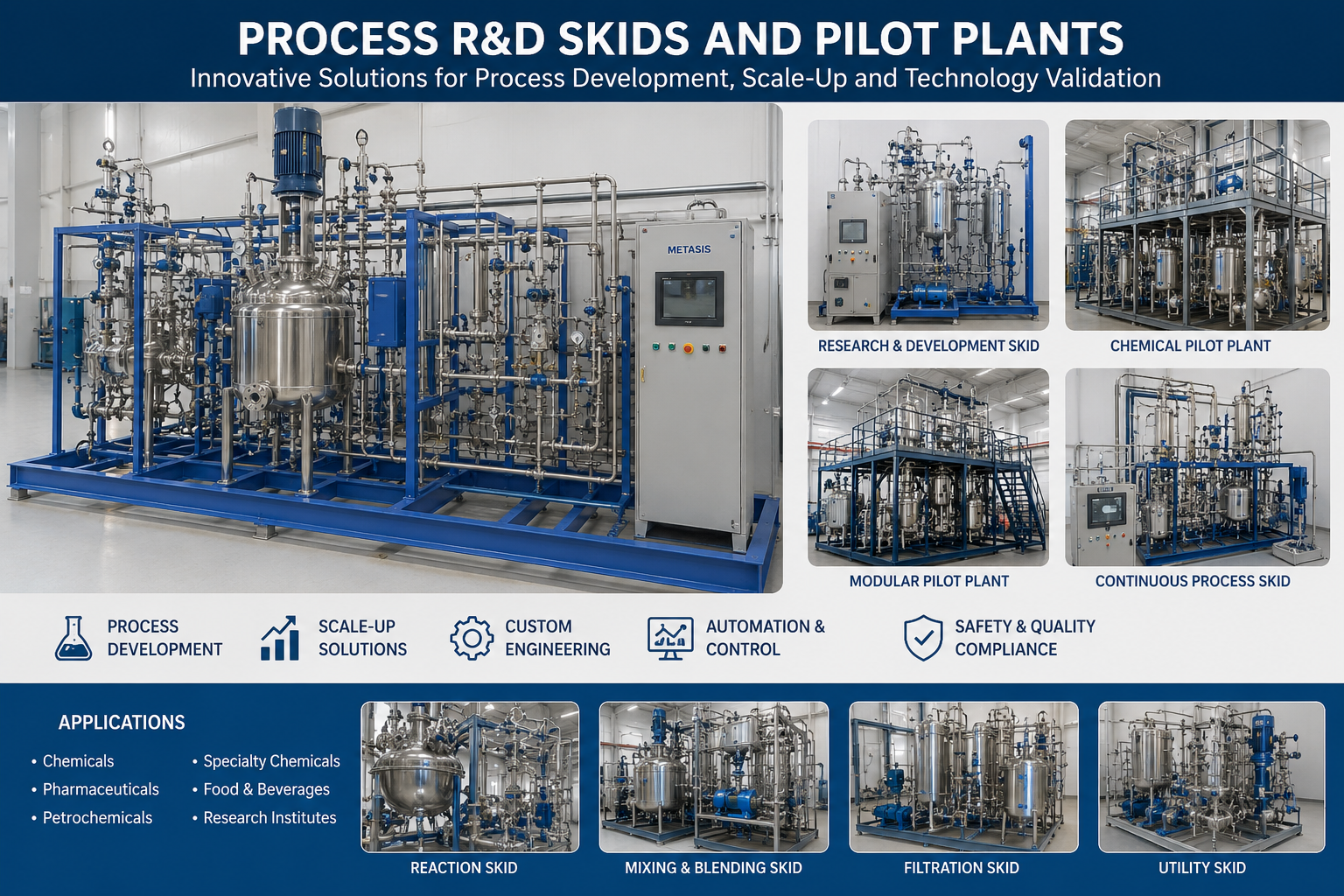 | Engineering Process System Process R&D Skids and Pilot Plants Innovative Process Development Solutions At Metasis Equipments Pvt. View product → |
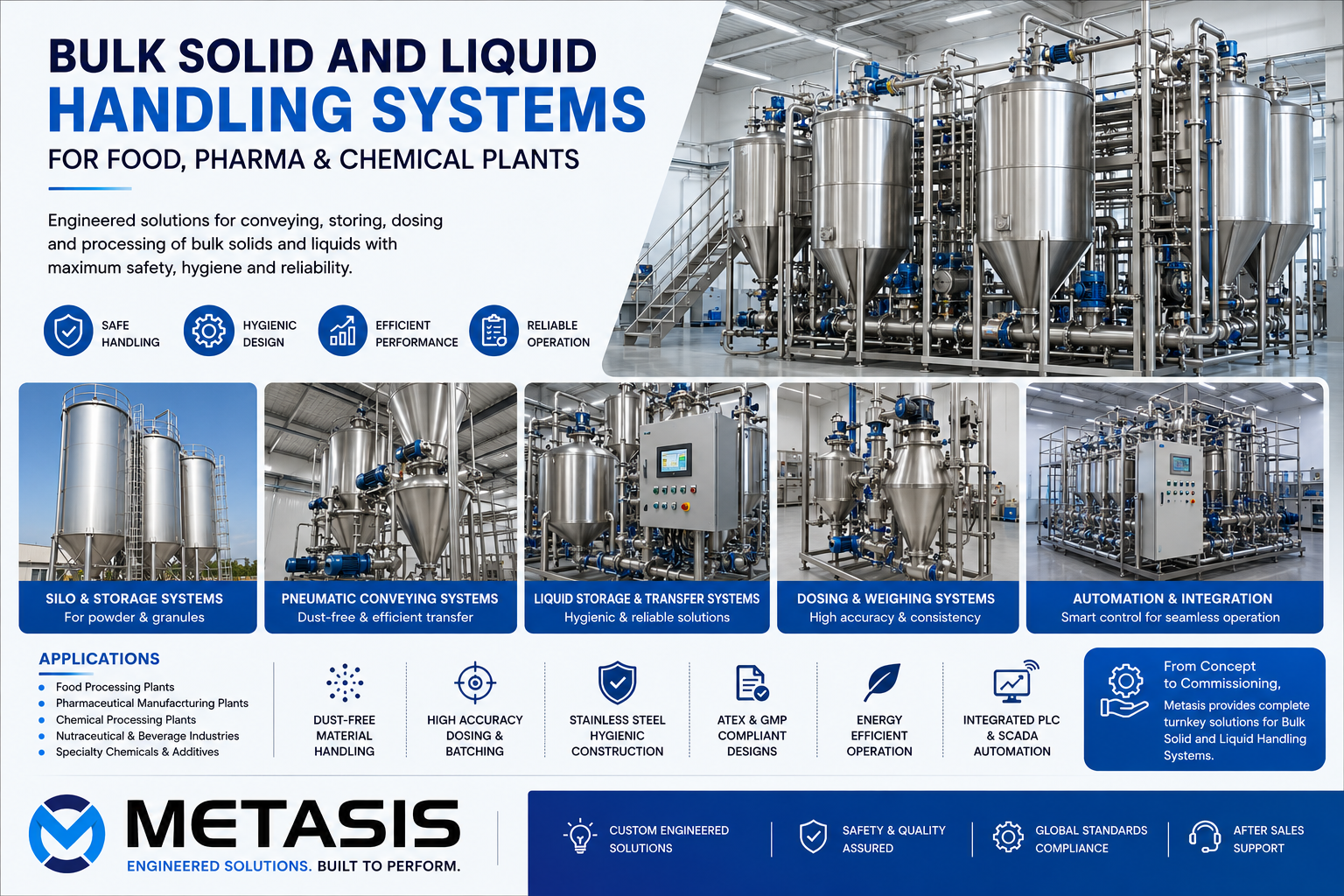 | Engineering Process System Bulk Solid and Liquid Handling Systems Bulk Solid and Liquid Handling Systems For Food, Pharma & Chemical Plants At Metasis Equipments Pvt. View product → |