
Unstable batches rarely prove that the vessel itself has failed. You will learn how to separate material, dosing, mixing, heat-transfer, instrumentation, maintenance, and scale-up faults before changing the recipe or reactor design.
Key takeaways
- Align batch records by elapsed process time before changing equipment.
- Use torque, temperature, and sampling data to separate mixing from heat-transfer faults.
- Inspect agitator, seals, jacket, sensors, and controls through a decision tree.
- Require scale-up evidence, runaway-risk review, and measurable acceptance criteria before approval.
Build the evidence chain before changing the reactor
Before changing the vessel, align two or more batch records by elapsed process time, not by clock time. Compare actual charge weights, raw-material lot numbers, moisture, particle size, feed temperatures, addition times, agitator speed, torque, jacket inlet and outlet temperatures, reactor temperature, pressure, vacuum, pH, sampling time, and final yield.
| Evidence stage | Compare | What it isolates |
|---|---|---|
| Material identity and quantity | Lot, moisture, particle size, actual charge weight | Raw-material or recipe variation |
| Instruments and utilities | Measured temperature, pressure, vacuum, pH, torque, jacket temperatures, utility conditions | Sensor, control, or utility drift |
| Transport and mixing | Addition rate, viscosity, pump behaviour, suspension, transfer-line losses | Dosing or equipment variation |
| Recipe change | Feed rate, temperature, speed, addition order, endpoint | Chemistry altered after evidence collection |
Reconcile every transfer: commanded dose, weighed dose, flowmeter total, receiver weight, line hold-up, and drain-back. Then check:
- Pump pulsation, changing feed viscosity, settled solids in day tanks, valve stiction, load-cell error, and liquid retained in transfer lines.
- Setpoints against measured values; an operator-entered speed of 120 rpm does not prove that the shaft maintained 120 rpm.
- Sampling time and method against the endpoint, because a late or poorly mixed sample can mimic a chemistry failure.
Use this evidence hierarchy for batch reactor problems: confirm identity and quantities first, verify instruments and utilities second, test transport conditions third, and alter chemistry or operating recipe last. Changing feed rate, temperature, agitator speed, and addition order together can produce one acceptable batch while destroying the evidence needed to identify the failure.
Use symptoms and targeted tests to separate mixing from heat transfer
Variable conversion, viscosity, hot spots, long batch times, foaming, poor phase separation, colour drift, pressure rise, and incomplete discharge need different tests. Chemical reactor troubleshooting starts by separating a temperature problem from a transport problem.
| Symptom or clue | Targeted test | What the result suggests |
|---|---|---|
| Variable conversion or colour drift | Conductivity or tracer response at actual working volume | Slow response indicates liquid blending limitation, not proven solids suspension or gas dispersion |
| Settling or incomplete discharge | Torque trend, circulation observation, minimum suspension speed, particle-size and slurry checks | Solids can accumulate below the impeller despite acceptable average torque |
| Hot spots or long heat-up | Independent probes at several locations; compare response time, immersion depth, fouling, and PLC agreement | A local temperature error or weak circulation can imitate poor heat transfer |
| Foaming, vortexing, or emulsion | Observe surface and gas entrainment while varying speed | Higher shear can worsen the fault without removing a feed dead zone |
Calculate heat duty from batch mass, temperature change, and elapsed time. Compare it with jacket flow, jacket inlet and outlet temperatures, vessel temperature, fill level, and estimated heat-transfer area; then check fouling, utility-temperature drift, gas blanketing, viscosity increase, and poor jacket-side flow.
When pressure rises or batch time changes, review condenser performance, vacuum level, pressure-control response, relief-path status, and alarm history. Do not treat rpm as the universal remedy: higher speed can increase seal loading and motor demand while leaving poor impeller geometry or bottom accumulation untouched.
Inspect the reactor system through a maintenance decision tree
Inspect rather than repeat a batch when a changed symptom points to equipment, utilities, instruments, or residue. Use this decision tree:
| Trigger | Inspect first | Evidence to collect |
|---|---|---|
| Torque, mixing time, vibration, leakage, or discharge change | Impeller, shaft, baffles, seals, bearings, impeller clearance | Torque trend, vibration, clearance, leakage path |
| Duty, pressure control, condensation, or heat-up/cool-down drift | Jacket, coils, valves, condenser, vacuum system | Flow, inlet/outlet temperatures, pressure and vacuum response |
| Weighed quantity differs from command | Load cells and charging lines | Load-cell forces, line hold-up, drain-back, flowmeter and receiver weight |
Do not treat calibration as proof of a usable installation. Review calibration status, sensor location, impulse lines, loop tuning, deadband, alarm history, local-versus-PLC readings, signal response time, and agreement with an independent measurement.
Make chemical reactor maintenance intervals explicit for seal and bearing condition, fouling removal, gasket replacement, welds, linings, pressure-relief devices, and calibration records. Verify cleaning at impeller hubs, bottom outlets, sample valves, dip pipes, transfer hoses, valve cavities, seal-flush lines, and poorly drained branches; include product-changeover risk.
For intermittent settling, test low-level operation and identify the minimum speed that suspends the specified particle-size distribution and solids loading. Record impeller-to-bottom geometry and slurry behaviour, because settled solids can release later as a concentration spike.
Check scale-up, runaway risk, and acceptance criteria before approving a fix
Approve a reactor change only after production-scale testing shows that it fixes the failure without creating a new hazard. Laboratory and production rpm are not equivalent: scale-up changes mixing time, power per volume, tip speed, Reynolds number, heat-transfer area per volume, gas dispersion, solids suspension, and addition-point location.
1. Set pass/fail limits before testing. Specify target mixing time, temperature-uniformity band, minimum suspension speed, maximum torque, feed-dispersion time, heat-up rate, and endpoint repeatability across the full working-volume range.
2. Test with representative viscosity, rheology, solids loading, gas rate, dosing rate, vacuum, and pressure. Water alone can confirm shaft rotation and gross leakage, but it cannot prove suspension, gas dispersion, heat removal, or reliable endpoint control.
3. For exothermic or self-accelerating chemistry, establish the maximum temperature of the synthesis reaction (MTSR), adiabatic temperature rise, and time to maximum rate under adiabatic conditions. Define the consequences of lost cooling or agitation before changing batch size or feed rate; a normal batch does not prove safe upset control.
4. Treat altered speeds, feed orders, temperature limits, alarm limits, and control logic as controlled changes. Update the hazard review, drawings, operating procedures, interlocks, and operator training, then repeat the tests after installation.
Use this evidence package to close chemical reactor troubleshooting and batch reactor problems, not a single successful batch. Acceptance belongs to measured performance under production conditions.
Choose a chemical reactor manufacturer that can prove the recovery
Require a chemical reactor manufacturer for unstable batch performance to produce a fault-isolation plan before proposing a larger vessel or faster agitator. The plan must name each measurement, test fluid or representative process material, working-volume range, dosing sequence, utility conditions, and pass/fail limits.
- Require factory and site acceptance tests using the purchaser’s sequence, viscosity or solids loading, dosing rates, vacuum or pressure, and interlocks. Test mixing time, solids suspension, feed dispersion, heat removal, pressure control, alarm response, and repeatable endpoint conditions—not only shaft rotation and gross leakage.
- Request reconciled batch data covering commanded and actual charges, line hold-up, instrument records, torque and temperature trends, jacket duty calculations, cleaning-verification points, and assumptions awaiting site confirmation.
- Ask for evidence that distinguishes recipe, raw-material, dosing, transport, instrumentation, and equipment variation before any controlled change.
A chemical reactor manufacturer should show how it will compare suppliers on the same decision points:
| Dimension | Evidence to compare | Failure exposed |
|---|---|---|
| Line hold-up | Charge reconciliation, drain-back test, dead-leg map | Wrong dose despite correct setpoint |
| Scale-up | Mixing time, suspension, tip speed, heat duty across volume | Water-test approval that fails in production |
| Relief and runaway | Maximum reaction temperature, adiabatic rise, cooling-loss case | Unsafe feed-rate or batch-size change |
| Maintainability and documentation | Access, cleaning points, drawings, calibration and change records | Unverifiable recovery |
Metasis Equipments Pvt Ltd can be considered alongside other suppliers only against this evidence, including controlled-change records and acceptance of the actual fix.
Related products
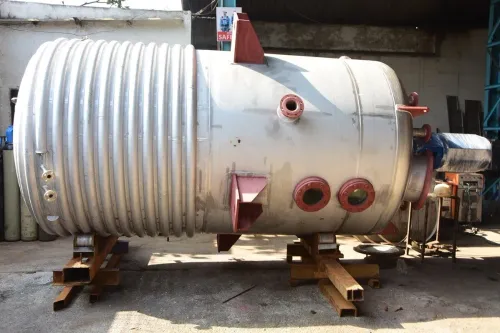
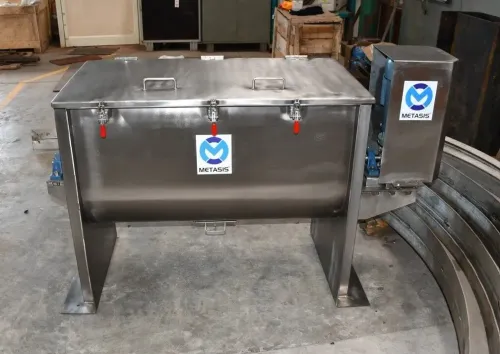
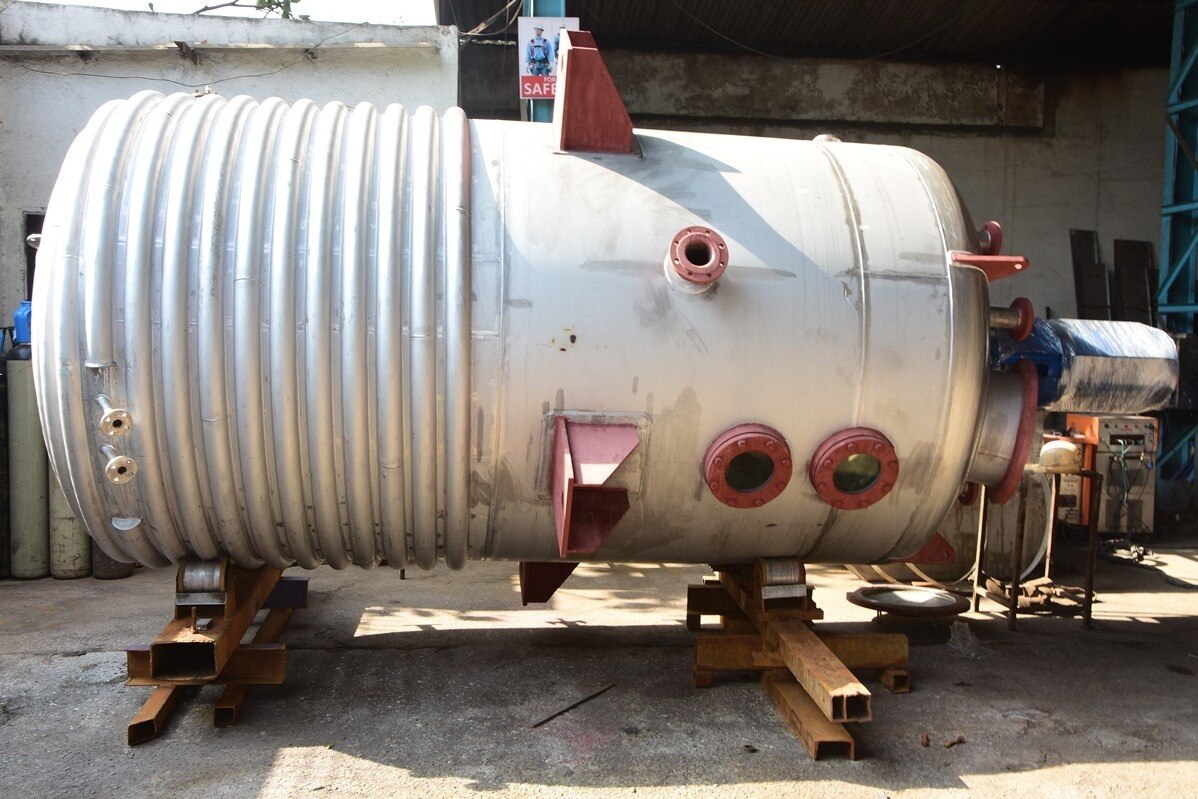
 | Reactor Reactor Metasis Equipments Pvt. Ltd. is a leading manufacturer of high-quality industrial reactors for the Chemical, Pharmaceutical, Food, Specialty... |
 | Engineering Consultant Expert Chemical Plant Engineering & Process Consultancy Metasis Equipments Pvt. Ltd. is a trusted Chemical Plant Consultant offering comprehensive engineering, design, process optimization, and turnkey... View product → |
Frequently asked questions
How do you build evidence before changing a chemical reactor?
Align at least two batch records by elapsed process time and compare charge weights, raw-material lots, moisture, particle size, feed temperatures, addition times, agitator speed, torque, jacket temperatures, reactor temperature, pressure, vacuum, pH, sampling time, and final yield.
How can you distinguish mixing problems from heat-transfer problems?
Compare agitator torque, temperature uniformity, jacket inlet and outlet temperatures, reactor temperature response, addition timing, and sample results. Torque or concentration variation points toward mixing; slow temperature response or a persistent jacket temperature difference points toward heat transfer.
What should a chemical reactor maintenance inspection include?
Inspect the impeller and shaft, baffles, mechanical seal, bearings, gearbox, jacket or coil, valves, temperature sensors, pressure instruments, vacuum equipment, control loops, and product-contact surfaces.
What must you verify before approving a reactor fix?
Check scale-up assumptions, heat-removal capacity, agitation performance, addition rates, runaway scenarios, relief protection, cleaning requirements, and documented acceptance criteria for temperature control, mixing time, yield, and batch consistency.
Related product
 | Engineering Consultant Reverse Engineering & Process Optimization Consultant Re-Engineer. Optimize. Improve Performance. Metasis Equipments Pvt. Ltd. View product → |