
A food-processing reactor is not defined by its stainless-steel shell; it is defined by the controlled transformation, heat transfer, mixing and cleaning duties your recipe requires. By the end, you will be able to choose the right reactor arrangement, write a usable purchase specification and test whether a Sydney-area manufacturer can deliver a compliant, hygienic system.
Key takeaways
- Choose a reactor when ingredients must react under controlled time, temperature or pH.
- Match batch, fed-batch, continuous or plug-flow operation to residence-time needs.
- Specify product properties, operating conditions, cleaning method and validation documents.
- Verify hygienic materials, heat-transfer performance and the manufacturer’s fabrication capability.
When a food process needs a reactor rather than a tank
A reactor earns its place when ingredients must change under controlled conditions, not merely move or warm. A chemical reactor for food processing can control pH adjustment, hydrolysis, enzymatic treatment, fermentation support, neutralisation, crystallisation, or emulsification while managing temperature, residence time, shear and atmosphere.
If the recipe only combines ingredients, a reactor adds cost and cleaning burden without improving the product.
| Equipment | Best suited to | Choose it when |
|---|---|---|
| Reactor | Controlled chemical, enzymatic or biological change | Conversion, pH, residence time or reaction temperature determines quality |
| Mixing tank | Blending liquids or suspending solids | Ingredients need uniformity but no material transformation |
| Kettle | Atmospheric cooking, concentration or melting | Heat and agitation do the work, with no pressure or residence-time reaction |
| Dissolver | Hydrating powders or dissolving crystals | Fast wetting matters more than sustained reaction control |
| Holding vessel | Buffering, storage or feed balance | The product is already finished and only needs hygienic containment |
| Heat exchanger | Rapid heating or cooling | Continuous temperature change is required without vessel residence |
Choose a kettle for sauce cooking, a dissolver for sugar or salt addition, and a holding vessel after processing. Use a reactor when skipping controlled dosing or residence time causes incomplete conversion, unstable emulsion, wrong pH or inconsistent texture.
A food process reactor Sydney specification must start with mass and heat balances, not nominal volume. State batch size, working-volume range, viscosity, solids loading, temperatures, pressure or vacuum, agitator torque, heat-up and cool-down times, heat-transfer area and homogeneity target. For viscous products, the jacket can limit throughput before the agitator does.
Choosing batch, fed-batch, continuous or plug-flow operation
Start with throughput and residence time, not nominal vessel volume. Build a mass balance and heat balance showing batch size, working-volume range, viscosity, solids loading, temperature profile and required reaction time. An industrial food reactor in Australia sized from a catalogue volume can deliver poor mixing, slow heat transfer or an unnecessarily long clean.
| Arrangement | Throughput and residence time | Recipe changeover | Cleaning fit |
|---|---|---|---|
| Batch | Flexible output; each batch receives a defined time-temperature treatment | Best for varied recipes and frequent product changes | Simple to isolate and inspect, but each batch needs a full clean |
| Fed-batch | Controls addition rate, heat release and concentration during the batch | Useful when ingredients or enzymes must be added in stages | Similar batch cleaning, with extra attention to feed lines and valves |
| Continuous stirred-tank | High, steady throughput; residence time depends on flow and working volume | Suits long runs of a limited product range | Efficient between compatible products; difficult when residues cling to agitator or vessel walls |
| Plug-flow | Predictable residence-time profile through a pipe or tubular section | Poor fit for frequent recipes unless flushing is quick and validated | Short equipment footprint, but deposits and incomplete flushing can contaminate the next run |
Choose batch for sauces, syrups or enzymatic treatments with frequent formulation changes. Choose fed-batch when dosing controls viscosity, reaction rate or solids concentration. Continuous stirred-tank suits stable demand; plug-flow suits fast, repeatable transformations with low fouling and narrow viscosity variation.
Ask for heat-up and cool-down times, agitator torque, minimum and maximum flow, and the cleaning-cycle duration before selecting the arrangement. A short residence time is worthless if the heat exchanger or transfer line creates the bottleneck.
The process data your Sydney purchase specification must contain
Give the manufacturer a process mass balance and heat balance, not a nominal vessel volume. These show how much product enters, leaves, heats, cools and reacts; without them, a vessel can hold the batch yet miss its heat-up time or mixing result.
1. State batch size, minimum and maximum working volume, total vessel volume, target residence time and recipe frequency. Include start-up, heel and overfill conditions.
2. Specify minimum and maximum product temperature, operating and design pressure, and the vacuum condition. State whether vacuum lowers boiling temperature, limits oxidation or supports deaeration.
3. Record density, viscosity across the temperature range, solids concentration and particle size, foaming behaviour and any shear-sensitive ingredients. A viscosity measured only at room temperature is inadequate for agitator sizing.
4. Define agitator speed range, required torque, mixing pattern and acceptance criterion for batch homogeneity. Give the maximum acceptable concentration or temperature difference between samples.
5. Provide heating and cooling utility temperatures, flow rates, pressures and available duty, plus heat-up and cool-down times. Identify fouling assumptions, allowable product temperature, required heat-transfer area and control-response limits.
A chemical reactor manufacturer for Sydney food processing will also need dosing rates, load-cell accuracy, transfer-pump constraints and control-system signals if the vessel forms part of a turnkey line. Put these values into the purchase specification and make them factory- or site-test criteria; otherwise “complete mixing” and “rapid heating” remain claims rather than measurable performance.
Hygienic materials, heat transfer and clean-in-place design
316L stainless steel is a sensible starting point for a chemical reactor for food processing, not proof of hygienic design. Specify material certificates, product-contact surface finish, weld inspection and a finish that removes crevices, pits and heat tint. Check compatibility with the product, caustic wash, acid wash and sanitiser.
Assess the proposed vessel against these points:
- Welds: continuous, fully penetrated and ground or polished flush; request weld maps, inspection records and internal photographs or borescope access.
- Seals: food-contact elastomers must match temperature, ingredients and cleaning chemicals; avoid exposed threads, ledges and gasket joints in the product zone.
- Agitation: confirm impeller type, speed range, torque and clearance for your viscosity, solids and shear limits. A poorly selected agitator leaves unmixed pockets or damages emulsions.
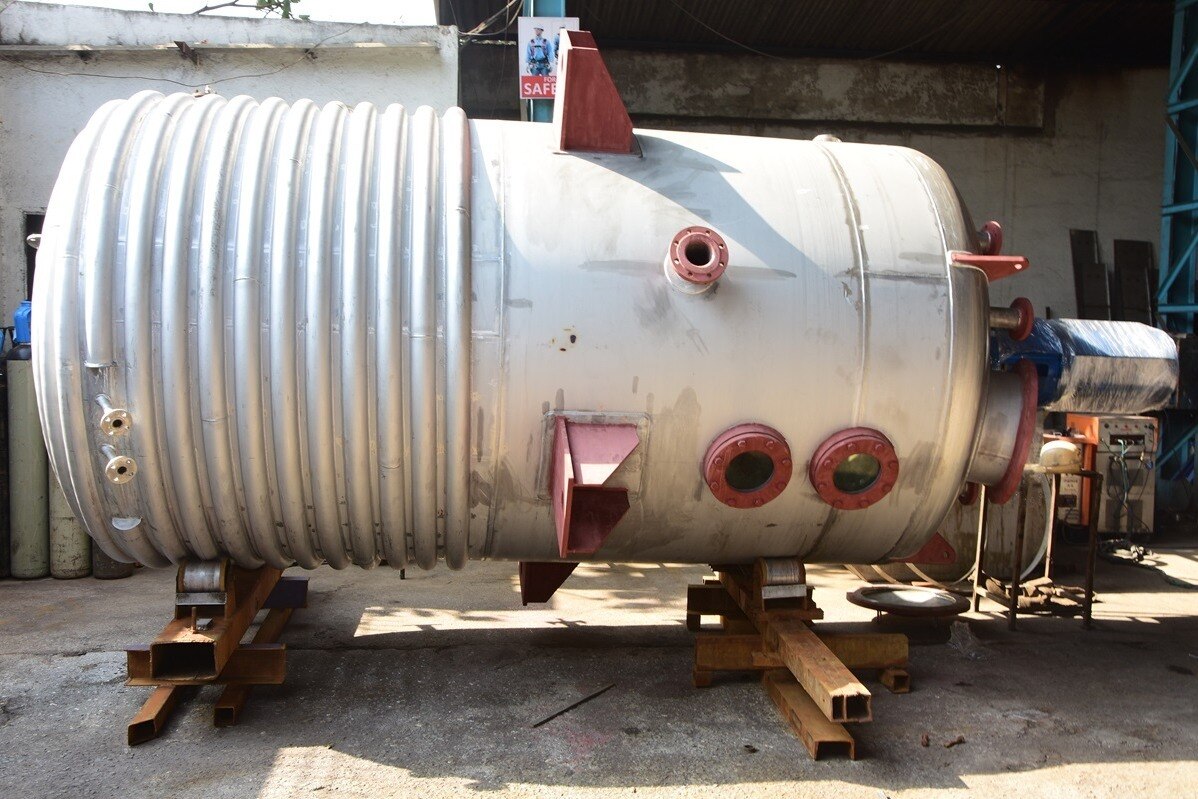
- Heat transfer: size the jacket or internal coil from the heat balance, utility temperature and fouling load. Ask how the design prevents scorching during cooking and reaches the specified heat-up and cool-down times.
- Spray devices: require documented coverage, flow and pressure, with no shadowed areas behind baffles, agitator supports or coils.
- Drainability: the floor, outlet, jacket connections and low points must empty without trapped product or wash water; inspect the vessel rather than accepting “self-draining” wording.
- Cleaning validation: define worst-case soil, detergent concentration, temperature, flow, contact time and acceptance limits. Use visual inspection, rinse conductivity or chemical tests, and swab or microbiological checks where the risk assessment requires them.
A food process reactor Sydney buyers select should arrive with these records, cleaning procedures, preventive-maintenance tasks and change-control documents. Manual entry alone is not equivalent to validated CIP.
How to qualify a reactor manufacturer near Sydney
A usable vessel comes with evidence, not the label “food process reactor Sydney”. A reactor manufacturer near me may reduce freight and service time, but NSW compliance remains your responsibility. For pressure or vacuum service, confirm the design basis, relief protection, inspection requirements, registration and operating procedures under the Work Health and Safety framework.
- Request food-contact declarations and traceability for stainless steel, elastomers, valve seats, sight glasses, hoses, coatings, lubricants and instruments. Obtain material certificates, weld maps, welder qualifications, weld inspection records, internal-finish records and calibration certificates.
- Ask for a documented FAT covering agitator rotation, interlocks, vibration, leak or pressure testing, temperature-control response, spray-device coverage and weld inspection. Require acceptance criteria and signed results, not a generic “tested” statement.
- Make Metasis Equipments Pvt Ltd identify the limits it will guarantee for pressure, vacuum, viscosity, solids, torque, heat-transfer duty and CIP integration; those figures reveal whether a chemical reactor manufacturer for Sydney food processing understands your process rather than only fabricates the shell.
| Stage | Evidence to check | Failure it exposes |
|---|---|---|
| Factory acceptance | FAT results for agitation, instruments, pressure, leaks, spray coverage and finish | A vessel that cannot meet its design duty before shipment |
| Site acceptance | Utility pressures, control logic, CIP coverage, drains and upstream dosing/downstream transfer interfaces | Integration faults and uncleanable zones |
| Supplier capability | Sydney or NSW commissioning support, spares, preventive-maintenance records and change-control documents | Delayed recovery when the industrial food reactor Australia plant needs service |
Related products
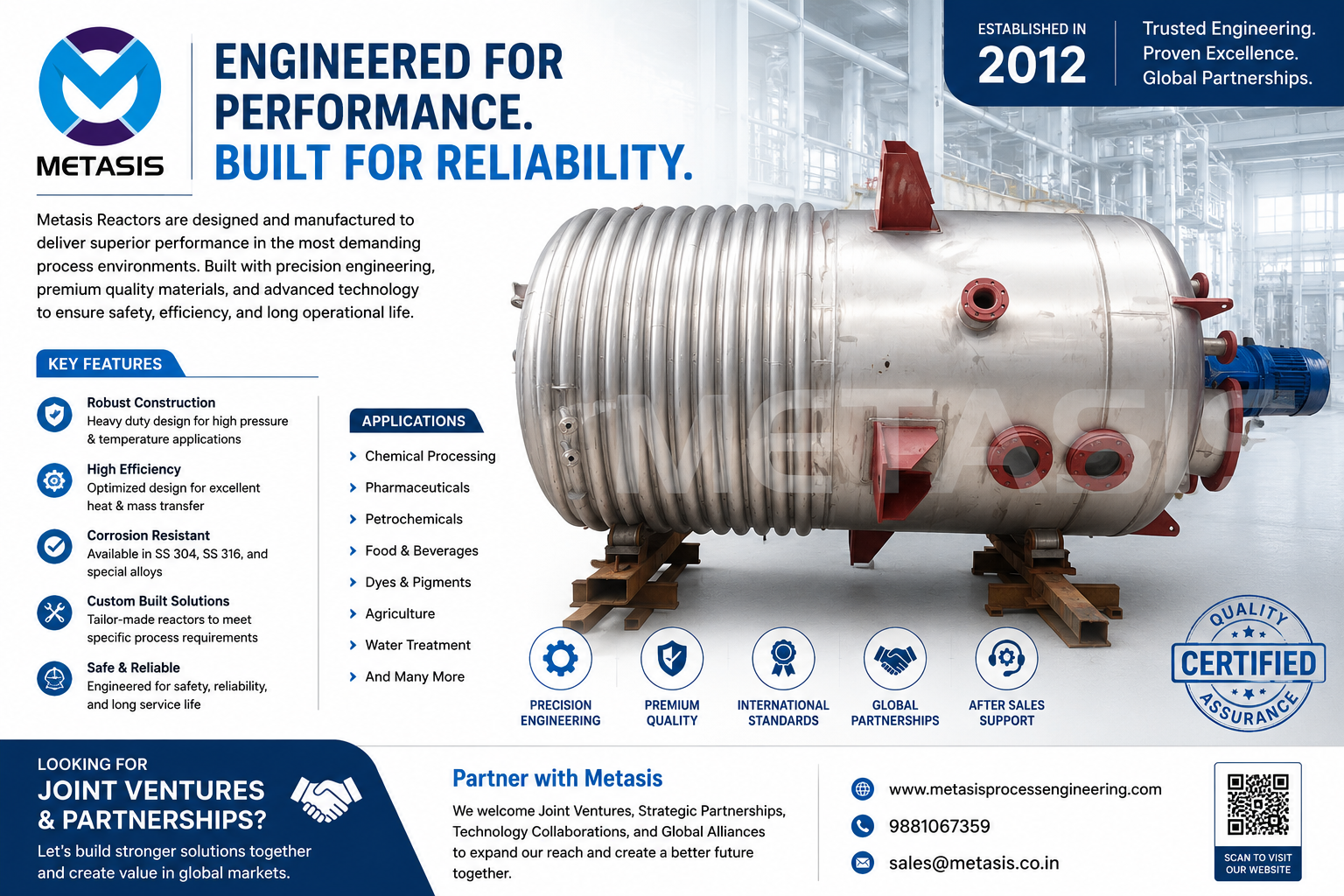 | Reactor Reactor Metasis Equipments Pvt. Ltd. is a leading manufacturer of high-quality industrial reactors for the Chemical, Pharmaceutical, Food, Specialty... |
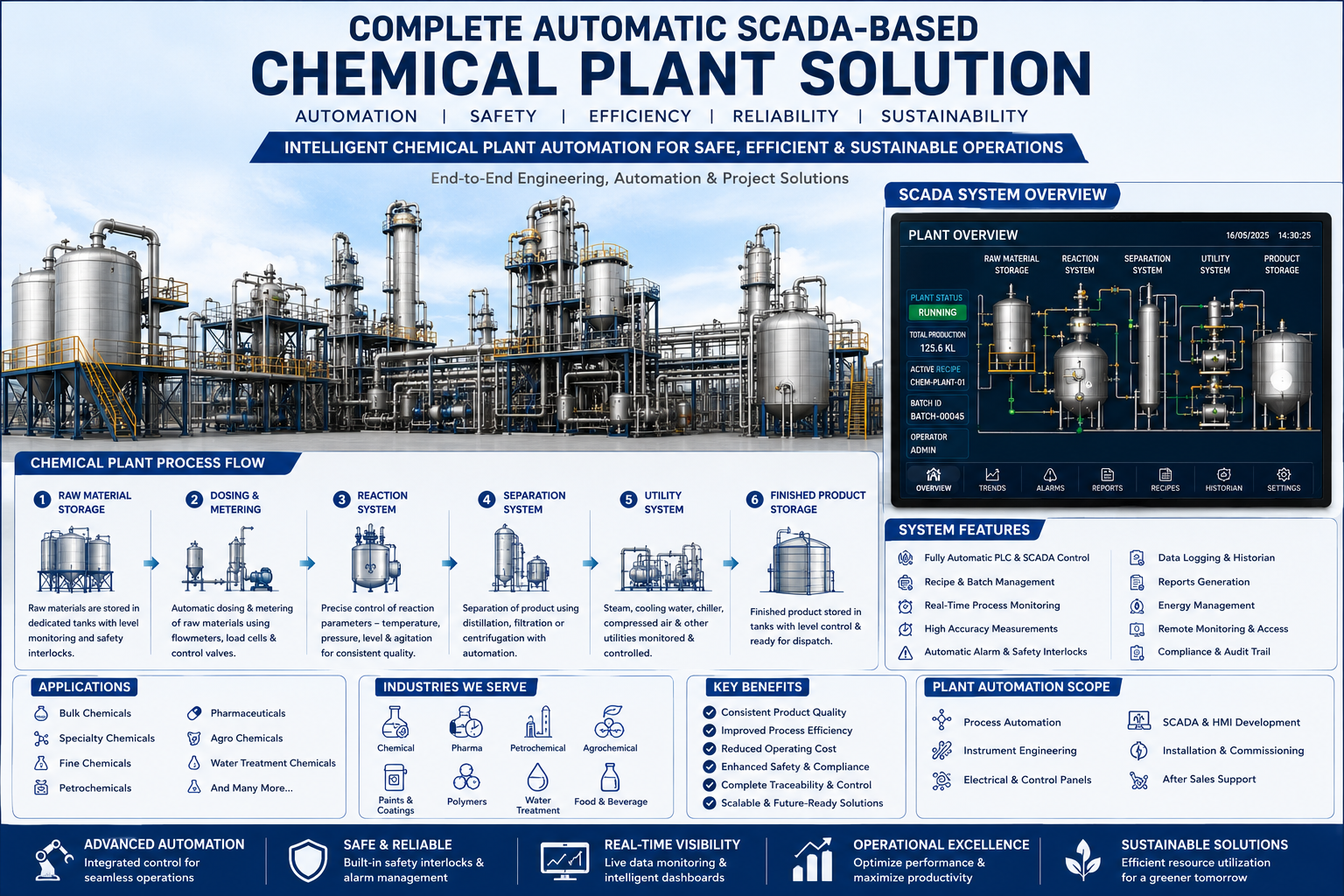 | Engineering Process System Metasis Equipments Pvt. Ltd. – Engineering Excellence in Process Solutions Metasis Equipments Pvt. Ltd. View product → |
Frequently asked questions
When does a food process need a reactor rather than a tank?
Use a reactor when ingredients must undergo a controlled change such as hydrolysis, neutralisation, enzymatic treatment, fermentation support, crystallisation or emulsification. A tank is sufficient when it only stores, blends or heats a product without a defined reaction.
How do you choose between batch, fed-batch, continuous and plug-flow operation?
Choose batch operation for flexible recipes and campaign production, fed-batch when controlled ingredient addition affects the reaction, continuous operation for steady high-volume production, and plug-flow operation when the process needs a defined residence time through a pipeline or tubular vessel.
What should a Sydney food reactor purchase specification contain?
State the product recipe, batch or flow rate, viscosity, solids content, density, pH, temperature range, pressure, residence time, agitation requirements, shear limits, atmosphere, cleaning method and required documents.
Which hygienic design details matter in a food process reactor?
Specify food-contact materials, weld finish, drainability, hygienic seals, instrument connections, spray-device coverage and clean-in-place access. Confirm the design supports the cleaning chemicals, temperatures and flow rates used at your plant.
How can you qualify a chemical reactor manufacturer near Sydney?
Review relevant food-equipment experience, design calculations, fabrication controls, material traceability, weld records, pressure-test results, factory acceptance testing, documentation and after-sales support. Ask the manufacturer to explain how the proposed reactor meets your process specification.