
A biomass plant design cannot be defined by a 3D model or a single tonnes-per-hour figure. The service must turn variable, abrasive, wet or combustible feedstock into coordinated equipment, drawings, calculations and installation information that fabricators and site teams can use. By the end, you will know what to request, which feedstock data matters, and how to test whether a design package is complete.
Key takeaways
- Demand checked calculations, fabrication drawings, and site-support scope.
- Give designers moisture, particle size, bulk density, and contaminant data.
- Require access clearances, guards, isolation points, and maintenance routes.
- Compare providers by drawing registers, interface control, and fabrication experience.
What the service covers from process brief to fabrication
A mechanical design service for biomass plants should convert the process brief into a buildable package, not stop at a 3D model. Its scope runs from duty definition and equipment selection to checked calculations, interfaces, fabrication drawings, and site support.
1. Design basis: Record feedstock, throughput, operating hours, moisture, bulk density, temperature, contamination, explosion hazards, product or gas target, and utility conditions. Review the process flow diagram and create equipment specifications, capacity and power calculations, design loads, and the battery-limit matrix.
2. Concept and arrangement: Select duty-appropriate conveyors, feeders, hoppers, storage vessels, chutes, dust-collection connections, fans, and drives. Issue the general arrangement, equipment layout, elevations, nozzle orientations, platforms, stairs, access routes, guarding, lifting paths, drainage, and maintenance clearances.
3. Detailed engineering: Calculate full and empty loads, eccentric filling, start-up and blocked-conveyor torque, plugging, wind, seismic, vibration, thermal expansion, pressure or vacuum, and maintenance loads. Identify classified areas and document ATEX equipment categories, ignition-protection concepts, and conformity responsibilities for items such as rotary valves, fans, conveyors, motors, and bearings.
4. Fabrication and delivery: Produce approved-for-fabrication drawings, weld details, tolerances, bills of materials, purchased-component schedules, inspection and test plans, coating requirements, and installation instructions. Include replacement routes for belts, screens, liners, seals, knives, and bearings; otherwise a plant can be fabricated correctly yet remain impossible to maintain.
Close the package with procurement clarifications, vendor drawing review, installation records, commissioning checks, and as-built documentation. Each issue must identify the responsible party for civil, steelwork, electrical, controls, utilities, and packaged biogas or upgrading equipment.
How feedstock data drives equipment selection and sizing
Start with a measured feedstock envelope, not a nominal tonnes-per-hour figure. A biomass equipment design service needs the material’s identity, blend, moisture range, temperature, bulk density, flow behaviour, particle size, fibre length, contamination and seasonal variation before equipment is sized.
- Record loose and compacted bulk density, angle of repose and tendency to bridge or rat-hole.
- Measure fines, oversize particles, stones, metal, abrasiveness and corrosiveness.
- Define average and peak throughput, operating hours, required availability and target product or gas yield.
- State dust explosibility, gas-zone classification and any temperature limits.
Shredders and mills are selected for fibre length, moisture, oversize material and required particle size; excessive fines increase power demand and screen loading. Screens need the target cut size, moisture and separation rate.
Conveyors and feeders require bulk density, incline, fill level and peak rate, while hoppers may need mass-flow geometry, live floors, agitators or multiple outlets instead of a flat-bottom bin. Digester sizing changes with total solids, volatile solids, biodegradability, loading rate, retention time and mixing requirements.
The bio cng mechanical design package needs representative raw-gas analysis for methane, carbon dioxide, hydrogen sulphide, water vapour, siloxanes and other contaminants. That data determines cooling and condensate removal, H2S treatment, upgrading, drying, compression, buffer storage, pressure regulation, gas-quality measurement, emergency shutdown and connection to fuelling or grid equipment.
Include sampling points and maintainable filter or media vessels; untreated contaminants damage compressors and shorten media life.
What mechanical detailing must show for safe operation and maintenance
A usable plant layout leaves a removal path, not just a footprint. Show the space needed to withdraw bearings, seals, screens, liners, knives, belts, valves and motors; include lifting beams or davits, equipment weights, centres of gravity, inspection doors, drains, wash-down points, guarded drives and lockout space.
If a wear liner cannot reach a maintenance opening, the model is incomplete.
Mechanical detailing for biomass plants must also match each conveyor to its duty:
| Equipment | Detailing that must be shown | Failure if omitted |
|---|---|---|
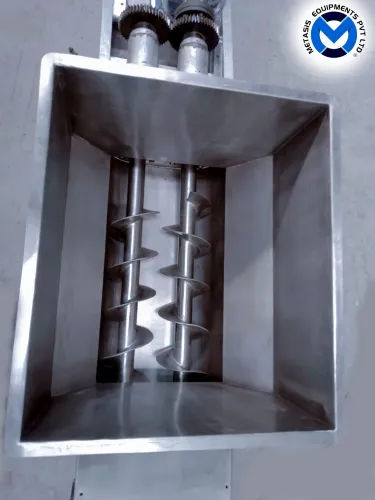
| Screw conveyor | Flight material, shaft seals, clean-out doors and withdrawal clearance | Plugging or seized flights become major strip-downs |
| Belt conveyor | Loading skirts, scrapers, take-up travel, guarding and belt-removal route | Spillage, dust release and impossible belt changes |
| Drag-chain conveyor | Chain access, sprocket inspection and bottom clean-out | Packed material damages the chain and casing |
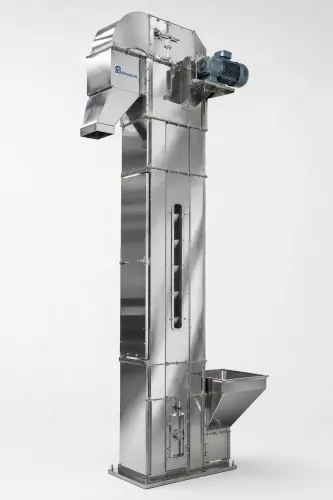
| Bucket elevator | Boot access, belt or chain tensioning and head inspection | Blockages remain inaccessible |
| Pneumatic line | Bend radius, access doors, wear sections and isolation points | Abrasion and plugs spread downtime |
Supports and platforms must account for empty and full vessels, eccentric filling, start-up and blocked-conveyor torque, vibration, wind, seismic loads, thermal expansion and maintenance loads. Hopper geometry must follow the specified bulk-solid flow pattern, not liquid-tank assumptions.
The drawings must identify dust-release points, collectors, bonding and earthing, ignition controls, explosion venting or suppression, and isolation between connected equipment. Include welds, materials, corrosion allowances, liners, tolerances, lifting weights, bills of materials and revision status so fabrication and maintenance teams can verify the design.
The drawing register and interfaces a purchaser should demand
Demand a battery-limit and deliverables matrix before approving fabrication. It must name each drawing, record, owner, revision and handover point. A mechanical design service for biomass plants should also issue equipment specifications, load calculations, nozzle schedules, bills of materials and installation requirements, not just a 3D model.
| Interface | Records to demand | Consequence if missing |
|---|---|---|
| Civil foundations | Equipment loads, anchor-bolt plan, baseplate dimensions, grout limits and foundation reactions | Foundations need rework after equipment arrives |
| Steelwork and access | Support loads, platform elevations, lifting zones, maintenance envelopes and chute or duct penetrations | Steel clashes with conveyors, covers or removed components |
| Motors and electrical | Motor list, power, speed, starting torque, mounting details, hazardous-area classification and cable-entry locations | The selected motor cannot start, fit or comply with the area classification |
| Instrumentation and utilities | Instrument index, nozzle schedule, connection sizes, pressure, temperature, flow, air quality, water quality and drain points | Controls and services remain unconnected at commissioning |
| Packaged biogas or upgrading equipment | Battery limits, gas composition, pressure, temperature, flow, condensate drains, flare route, shutdown signals and gas-quality measurement points | The digester, compressor or upgrading skid rejects the plant interface |
Request a controlled drawing register containing general arrangements, piping and instrumentation interface drawings, foundation plans, structural loads, motor data sheets, utility schedules and issued-for-fabrication status. For bio CNG mechanical design, add sampling points, filter or media-vessel access, pressure-vessel calculations and safety-device records.
Mark every item inside an explosive atmosphere zone with its equipment category, ignition-protection concept and conformity route.
How to evaluate a biomass mechanical design provider before fabrication
Reject any provider whose offer stops at a 3D model. Compare the biomass equipment design service against a signed scope and a battery-limit matrix, not a portfolio image.
| Check | Evidence to request | Warning sign |
|---|---|---|
| Deliverables | Calculations, equipment specifications, general arrangements, issued-for-fabrication drawings, bills of materials, inspection plans and ATEX records | “Drawings on completion” |
| Feedstock basis | Moisture, bulk density, particle size, abrasiveness, throughput, variability and design cases | One nominal tonnes-per-hour figure |
| Battery limits | Marked interfaces for civil, utilities, electrical, controls, packaged biogas equipment, nozzle loads and foundation reactions | “By others” without named ownership |
| Fabrication support | Shop drawings, weld details, tolerances, inspection-test plans, factory acceptance tests and nonconformance responses | Handover immediately after design issue |
| Commissioning | Alignment checks, dry runs, loaded trials, punch-list closure, training and performance acceptance | Start-up attendance only |
Ask whether mechanical detailing for biomass plants covers classified-area equipment, guarding, lifting routes and replacement clearances. A hopper that fits the layout but cannot release a jammed feeder is not a finished design.
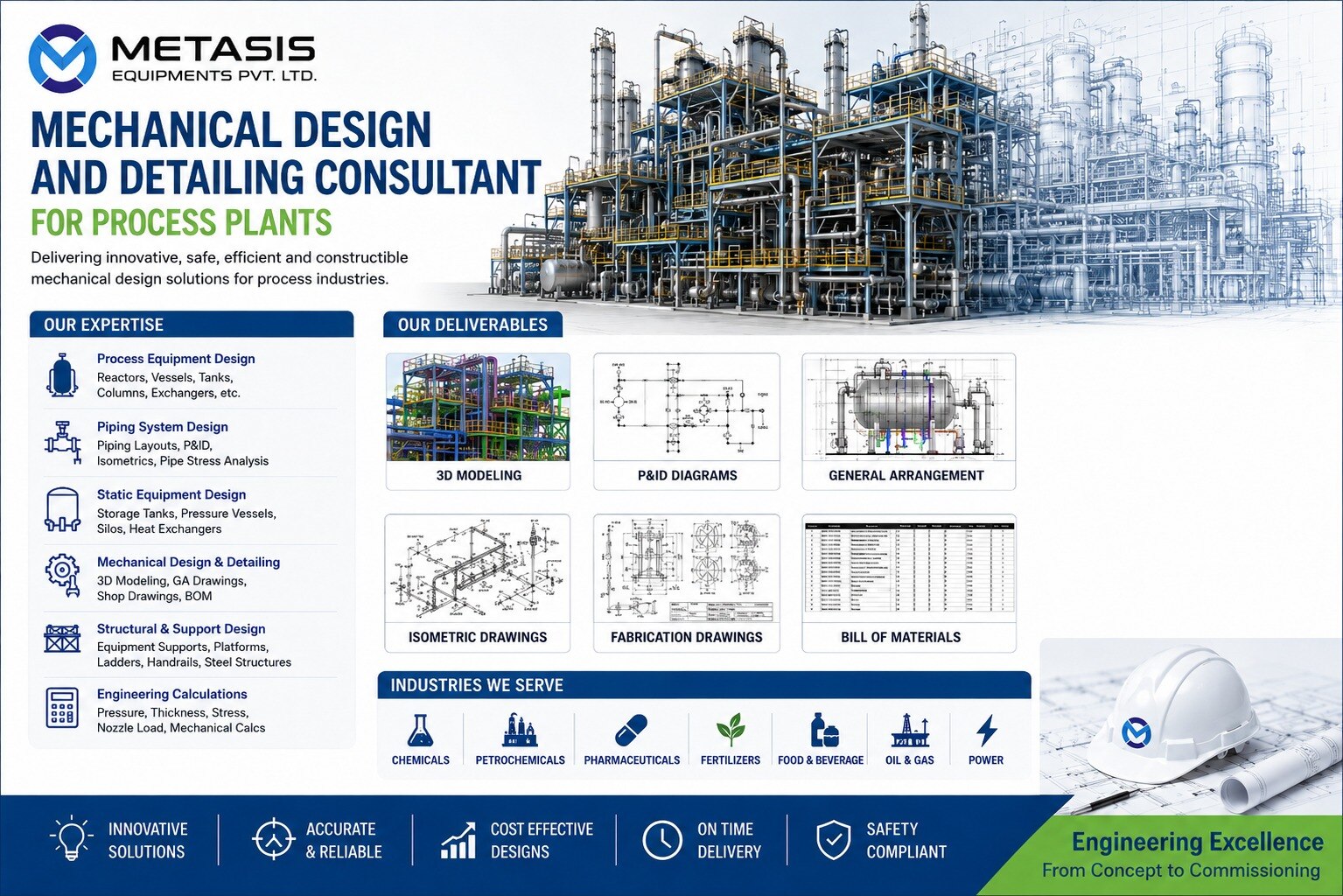
A firm such as Metasis Equipments Pvt Ltd could be evaluated on its ability to convert process data into fabrication-ready equipment, coordinate material-handling interfaces and remain accountable through installation and commissioning, rather than supplying drawings alone. Get each responsibility, document and acceptance test named before fabrication starts.
Related products
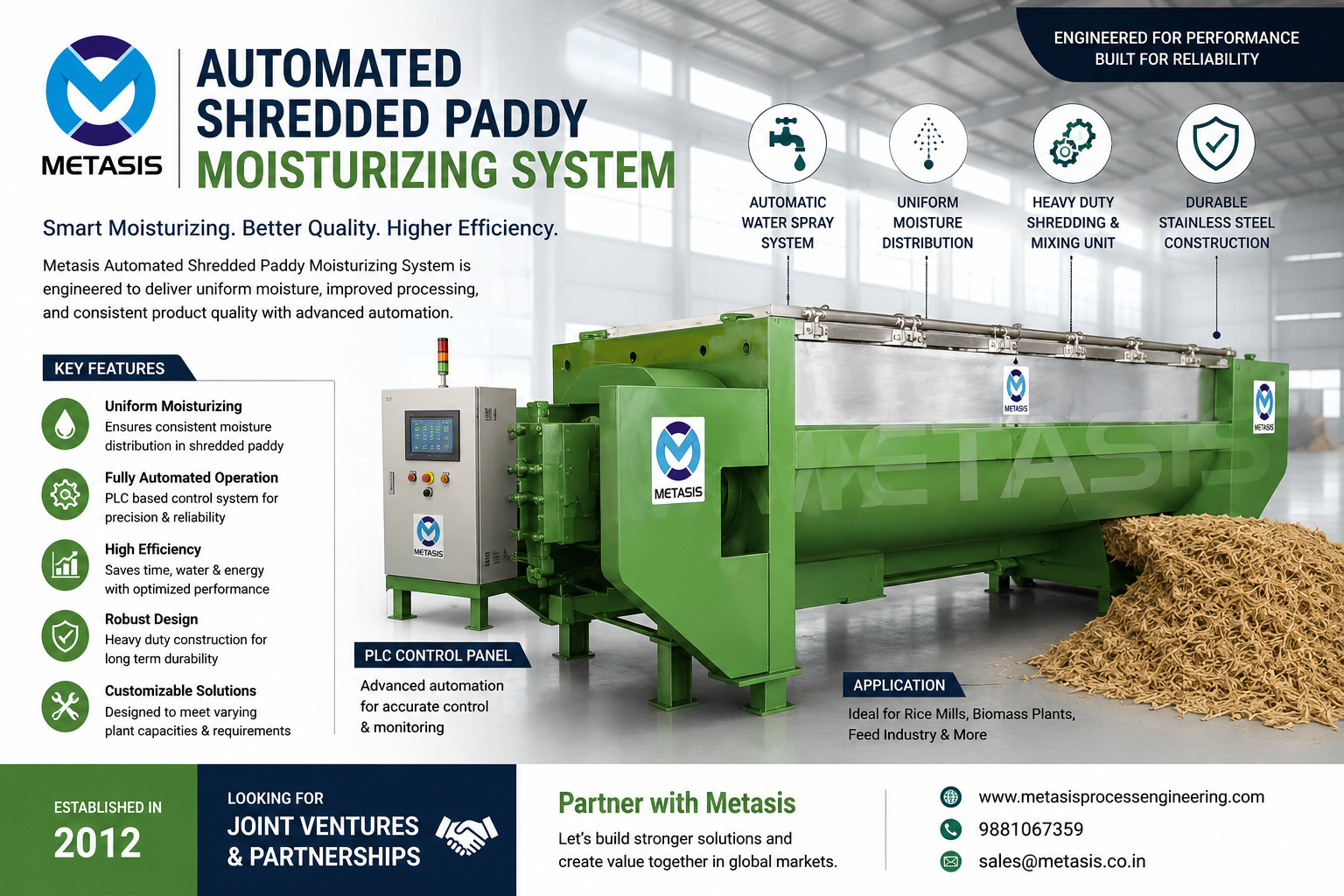 | Engineering Process System Automated Shredded Paddy Moisturizing System Automated Continuous Shredded Paddy Straw with Liquid Digestate Mixing & Supply System Advanced Feeding Solution for Bio-CNG and Biomass Extruder... View product → |
 | Engineering Consultant Mechanical & Detailing Consultant for Process Industry Precision Engineering. Detailed Design. Reliable Execution. Metasis Equipments Pvt. Ltd. View product → |
Frequently asked questions
What does a mechanical design service for biomass plants include?
It should cover the process brief, duty definition, equipment selection, sizing calculations, layouts, interfaces, fabrication drawings, document control, and site support.
How does feedstock data affect biomass equipment design?
Moisture content, particle size, bulk density, flowability, abrasiveness, contaminants, and heating value determine equipment capacity, power, wear protection, and storage requirements.
What should mechanical detailing for biomass plants show?
Drawings should show dimensions, materials, welds, guards, access platforms, lifting points, isolation locations, inspection openings, maintenance clearances, and replacement routes.
How can you evaluate a biomass mechanical design provider before fabrication?
Review sample drawing registers, calculation methods, interface ownership, revision control, fabrication support, site experience, and how the provider manages changes between process and mechanical design.