
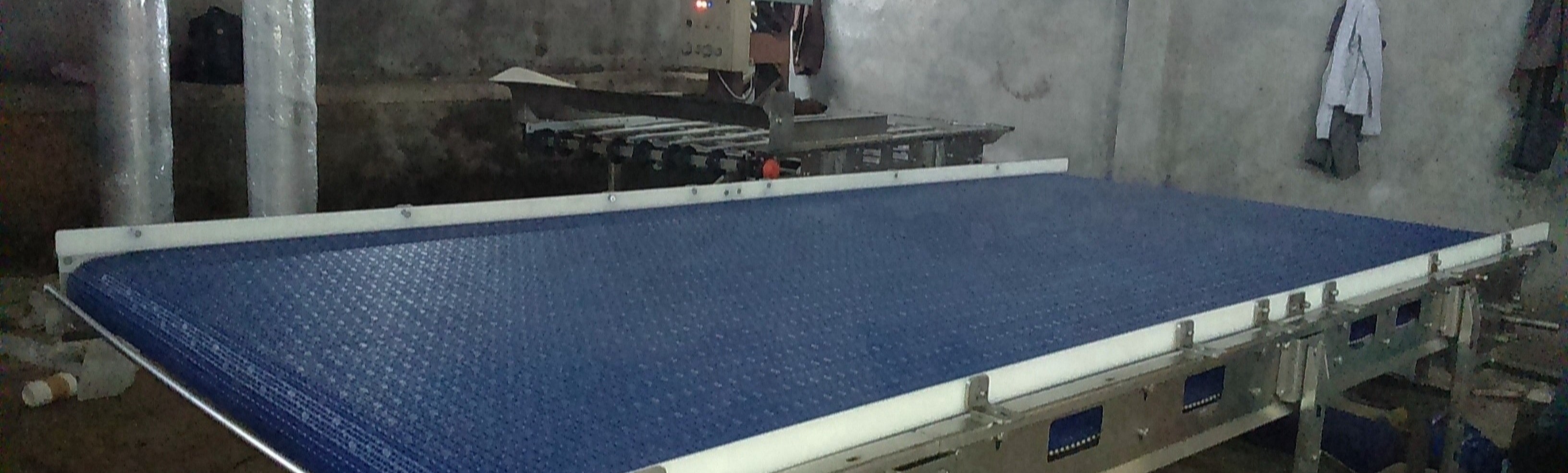
A belt conveyor manufacturer should be selected based on the application rather than conveyor dimensions alone. Belt conveyors may appear mechanically straightforward, but belt type, loading conditions, speed, structure, drive selection, and transfer points all influence performance.
The first question is what material or product will be conveyed.
Packaged products, food items, bulk solids, minerals, components, and industrial materials can require different belt surfaces and conveyor configurations. Product dimensions, weight, temperature, abrasiveness, and contamination requirements should therefore be documented.
Capacity is the next consideration. Conveyor width and speed need to support the required throughput without creating unstable product movement or excessive material loading.
Transfer points deserve particular attention. Poorly planned loading or discharge arrangements can contribute to material spillage, belt damage, dust, and uneven loading.
Before choosing a manufacturer, evaluate whether the proposed design considers:
Product or material characteristics
Required conveyor capacity
Belt width and speed
Conveyor length
Inclination
Loading arrangement
Discharge points
Drive and tensioning system
Supporting structure
Maintenance requirements
The working environment also matters. Conveyors operating outdoors, in dusty areas, around food products, or near corrosive materials can require different construction and protection measures.
In Pimpri-Chinchwad's diverse manufacturing environment, conveyors frequently need to integrate with processing machines, storage equipment, packaging lines, and existing material-handling systems. A manufacturer should therefore obtain accurate layout information before finalising the design.
Energy consumption and maintenance accessibility are also worth evaluating. Motors, bearings, rollers, belt tracking systems, and tensioning arrangements should be accessible for routine inspection.
A suitable conveyor should provide predictable movement while fitting naturally into the surrounding process.
Instead of evaluating manufacturers solely on initial equipment price, industrial buyers can examine engineering capability, fabrication quality, application understanding, installation requirements, and after-installation maintainability. These factors provide a more practical basis for selecting conveyor equipment intended for long-term industrial use.