
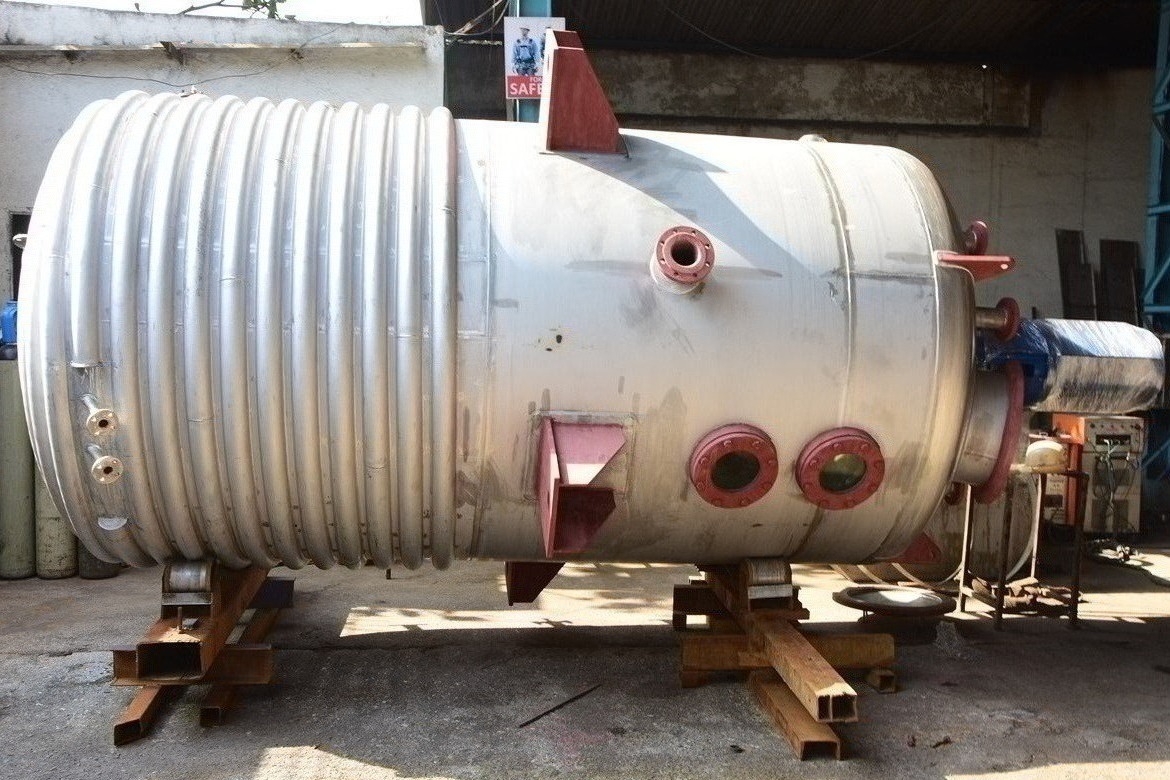
Choosing a chemical reactor manufacturer involves considerably more than specifying vessel capacity. A reactor operates under defined process conditions, and its design needs to account for chemical properties, pressure, temperature, mixing, heat transfer, construction material, and safety requirements.
The starting point should always be the process.
Engineers need accurate information about the reaction, raw materials, operating temperature, pressure, viscosity, corrosiveness, and expected batch or continuous processing requirements. These details influence vessel configuration and mechanical design.
Material selection is especially important. The reactor's product-contact surfaces must be compatible with the chemicals being processed. Incorrect selection can contribute to corrosion, contamination, premature equipment deterioration, or maintenance problems.
Agitation also needs careful evaluation. Different reactions may require blending, suspension of solids, heat transfer, dispersion, or other mixing duties. Agitator geometry and drive selection should therefore reflect actual process behaviour.
Industrial buyers should review:
Operating and design pressure
Operating and design temperature
Material compatibility
Reactor volume
Agitation requirements
Heating or cooling method
Nozzle requirements
Instrumentation
Cleaning provisions
Maintenance access
The surrounding process is equally important. Reactors rarely operate independently. They may connect with storage vessels, pumps, dosing systems, condensers, heat exchangers, filters, and downstream processing equipment.
For chemical manufacturing operations in Pimpri-Chinchwad and other Maharashtra industrial zones, available plant space and existing utility connections may influence the final equipment arrangement.
Documentation should also form part of the evaluation. Drawings, equipment specifications, material details, and relevant fabrication information help project teams understand what is being supplied.
Price alone should therefore not determine reactor selection.
A manufacturer that asks detailed questions about process conditions is generally better positioned to develop equipment around the intended application. Proper engineering at the specification stage can help reduce modifications later and ensure that the reactor integrates effectively with the overall chemical processing system.