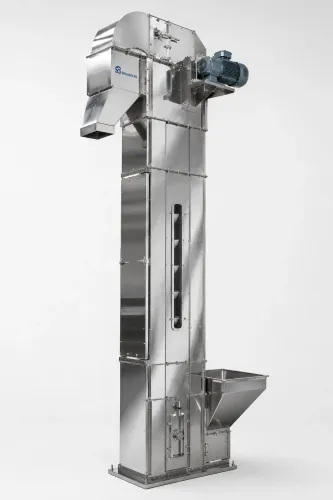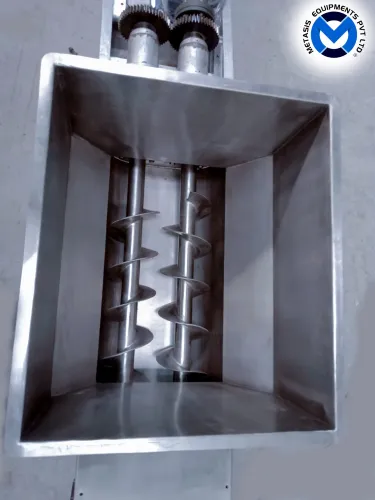

An ageing vessel, mixer, feeder, conveyor, skid, or support frame rarely fails for just one visible reason. By separating the installed machine from its original drawings, examining the failure, and checking the revised design against its actual duty, you can decide whether to repair, redesign, replace, or bypass the equipment safely.
Key takeaways
- Restore equipment when duty, safety, or documentation no longer supports reliable operation.
- Reverse-engineer dimensions, materials, loads, and interfaces before approving replacement parts.
- Check pressure, shaft, bearing, structural, thermal, and guarding requirements before restart.
- Choose repair, redesign, replacement, or bypass based on risk, downtime, and lifecycle cost.
When does existing process equipment need restoration design?
Existing process equipment needs restoration design when its safe, productive service is no longer assured—not only when it has stopped. Restoration returns a vessel, mixer, feeder, conveyor, skid, or support frame to its duty; it does not start with a blank-sheet machine.
Engage a mechanical design service after:
- Repeated shaft failure or excessive vibration
- Leakage, poor discharge, or unstable feeding
- Obsolete bearings, drives, or controls
- Missing manufacturer drawings
- Changed throughput or required production rate
- A plant modification that no longer matches the original equipment
Restoration starts as an engineering investigation, not a request to copy a damaged part. A process equipment design service needs this starting record:
- Equipment type; service fluid or bulk solid; capacity
- Operating temperature and pressure; speed and torque
- Material of construction and corrosion history
- Motor and gearbox data; bearing arrangement
- Failure records, available drawings, and required production rate
| Condition | What it records | Why it matters |
|---|---|---|
| As-designed | Original calculations and drawings | Shows intended duty |
| As-built | Machine fabricated and installed | Captures approved deviations |
| As-found | Current geometry and damage | Reveals wear, distortion, and unsafe changes |
These records can conflict. Installed nozzle positions, conveyor centrelines, shaft fits, foundation elevations, and gearbox mounts may differ from old drawings, so survey the machine and create a controlled dimensional record before releasing redesigned parts. Copying a worn shaft or distorted mount can reproduce the failure.
How is undocumented or damaged equipment reverse-engineered?
Reverse-engineering starts with a site inspection and ends with a controlled dimensional record, not a copy of the damaged part.
1. Capture the nameplate, serial and batch numbers, motor and gearbox data, service material, capacity, speed, temperature, pressure, and production rate. Photograph the complete machine, guards, drive, supports, nozzles, access points, damage, and identification marks.
2. Recover manufacturer drawings, manuals, bills of material, previous repair records, and failure history. Mark each condition as as-designed, as-built, or as-found; installed conveyor centrelines, nozzle orientation, gearbox mounts, and foundation elevations often differ from old drawings.
3. Measure unworn reference surfaces and surviving interfaces before measuring worn shafts, bores, flights, paddles, or screws. Record clearances, remaining wall or section thickness, bearing fits, keyways, seals, coupling alignment, shaft runout, drive mounting, and foundation levels.
4. Identify material grade through records or testing, then verify hardness and corrosion condition. Separate original geometry from wear, corrosion, distortion, and weld movement; ultrasonic thickness readings can expose a pressure shell that looks sound from outside.
5. Calculate operating loads, shaft torque, bending, bearing reactions, drive capacity, and alignment effects. Review the failure mechanism, including fatigue at keyways, overload, plugging, imbalance, poor sealing, and weld distortion.
6. Redesign the weak interface rather than restoring its nominal dimension alone. A new shaft, bore, flight, paddle, or screw can reproduce the original failure if fits, runout, hardness, section thickness, and load path remain wrong.
7. Issue revision-controlled fabrication drawings, tolerances, weld symbols, materials, heat treatment, inspection points, and bills of material. A mechanical detailing consultant should support inspection, trial assembly, installation, commissioning, and performance verification.
Which design checks determine whether restoration will work?
Restoration works only when measured geometry becomes a verified load path, not a replacement part that merely fits.
A mechanical design service should calculate shaft torsion and bending, fatigue at keyways and welded transitions, critical-speed risk, bearing reactions and life, seal arrangement, rotor balance, blade or impeller clearance, solids buildup, and product imbalance for mixers, agitators, and screw conveyors. A motor-power match alone proves little.
| Equipment type | Design checks that decide feasibility |
|---|---|
| Belt conveyor | Pulley or sprocket ratio, belt tension, take-up travel, chute-blockage loads, liner thickness, throughput, and plugging behaviour |
| Screw conveyor | Drive ratio, torque, flight clearance, liner thickness, throughput, plugging behaviour, and buildup loads |
| Vessel, hopper, frame, or skid | Pressure-boundary thickness, corrosion allowance, nozzle and support loads, frame stiffness, local stress, and fatigue at welded joints |
Recheck guarding, emergency-stop access, interlocks, stopping time, reverse torque, overload behaviour, and stored energy whenever the motor, gearbox, VFD, actuator, or controls change. The process equipment design service must treat the electrical and mechanical boundary together.
Finite-element analysis helps locate local stress, deflection, fatigue hot spots, and support loads. Document every load case, constraint, contact assumption, corrosion allowance, weld detail, mesh-sensitivity result, and comparison with hand calculations; validate critical findings through dimensional checks, strain measurement, load testing, or monitored commissioning.
Without that record, a polished model is not evidence that restoration is safe.
What documents and acceptance tests should a restoration provide?
A restoration package is acceptable only when another engineer can manufacture, inspect, install, and test the equipment without guessing. Ask the mechanical detailing consultant for these controlled documents:
1. A revision-controlled general-arrangement drawing showing interfaces, centre lines, elevations, nozzle positions, guards, and drive locations.
2. Assembly and part drawings with bills of material, weld maps and symbols, machining tolerances, fits, surface-finish notes, material grades, and heat-treatment specifications.
3. Inspection points, measurement methods, material certificates required, hold points, and installation instructions covering alignment, anchoring, lubrication, clearances, and commissioning checks.
4. A test protocol with measurable limits for shaft runout, rotor balance, bearing temperature, vibration, leakage, and pressure-test results where applicable. For conveyors and feeders, include conveyor capacity and feeder repeatability; for drives, record motor current and emergency-stop response.
5. No-load and full-load trial durations, operating conditions, recorded readings, pass/fail limits, witness responsibilities, and a signed test report.
After installation, require as-built drawings that record site deviations from the approved design, including changed foundation elevations, shaft fits, gearbox mounts, nozzle locations, and conveyor centrelines.
A visually similar CAD model is not a manufacturing-controlled package. A mechanical design consultant in Pimpri Chinchwad earns confidence by linking site measurement and failure diagnosis to detailing, fabrication support, dimensional inspection, trial assembly, commissioning feedback, and documented performance verification.
Metasis Equipments Pvt Ltd is relevant when its responsibility covers that complete evidence trail rather than CAD delivery alone.
Related product
 | Engineering Consultant Reverse Engineering & Process Optimization Consultant Re-Engineer. Optimize. Improve Performance. Metasis Equipments Pvt. Ltd. View product → |
When should you repair, redesign, replace, or bypass the equipment?
Repair is the right investment when the pressure boundary, material condition, drive, safety functions, and original design envelope remain demonstrably sound, and the defect is local. A mechanical design service should reject a repair plan if inspection cannot prove those conditions.
| Option | What it means | When it applies |
|---|---|---|
| Repair | Correct a local defect | Sound pressure boundary, materials, drive, safety functions, and original duty |
| Redesign | Recalculate and modify the machine | Structure remains usable, but throughput, material, speed, discharge, or plant interfaces changed |
| Replace | Install equipment with a new design basis | Cracked pressure boundary, unknown material condition, unserviceable drive, obsolete safety system, or duty beyond the original envelope |
| Temporary bypass | Maintain limited production during controlled recovery | Engineering, procurement, and testing are underway under a documented risk assessment |
Redesign the complete load path, including shafts, bearings, couplings, supports, drives, fasteners, discharge points, and foundations. Modifying one part to handle a higher rate or new material can transfer failure into the next component.
Treat pressure-containing restoration as a code-controlled activity, not ordinary fabrication. Confirm material traceability, qualified welding, non-destructive examination, wall-thickness assessment, pressure testing, and review against a code such as the ASME Boiler and Pressure Vessel Code.
Reassess machine safety under ISO 12100, ISO 13849-1, and IEC 60204-1 when guards, interlocks, emergency stops, motors, VFDs, or actuators change. A mechanical design service for process equipment in Pimpri-Chinchwad should document the risk assessment, calculations, test results, and responsibility boundaries before commissioning.
Frequently asked questions
When does existing process equipment need restoration design?
Use restoration design when equipment still exists but its safe duty, output, structural condition, or maintainability is no longer assured. Triggers include repeated failures, obsolete components, undocumented modifications, corrosion, damaged supports, and unavailable fabrication drawings.
How is undocumented or damaged equipment reverse-engineered?
Record dimensions, materials, interfaces, loads, clearances, operating conditions, and damage using site measurements, photographs, material checks, and operating records. Create controlled drawings and a bill of materials before designing replacement or modified parts.
Which design checks determine whether restoration will work?
Verify pressure containment, shaft torque and deflection, bearing life, frame strength, weld details, thermal effects, flow capacity, guarding, access, alignment, and compatibility with connected equipment. Check the restored design against its actual process duty and operating limits.
What documents and acceptance tests should a restoration provide?
Request approved general-arrangement and fabrication drawings, calculations, material specifications, weld records, inspection reports, spare-parts lists, operating limits, and revision history. Define dimensional, pressure, leak, no-load, loaded, vibration, temperature, and performance tests before handover.
When should you repair, redesign, replace, or bypass equipment?
Repair when the original design remains suitable and damage is local. Redesign when duty or interfaces have changed. Replace when fatigue, corrosion, obsolete parts, or poor lifecycle economics undermine reliability. Bypass when continued operation presents unacceptable risk or delays production.