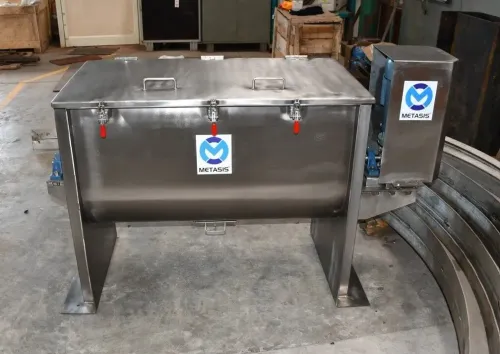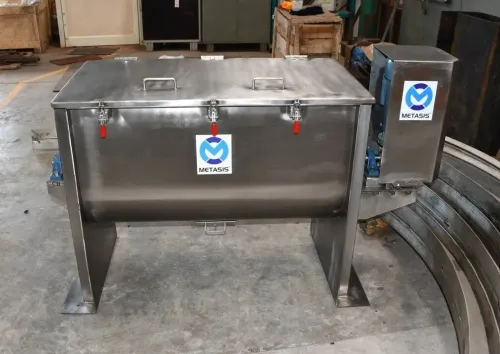

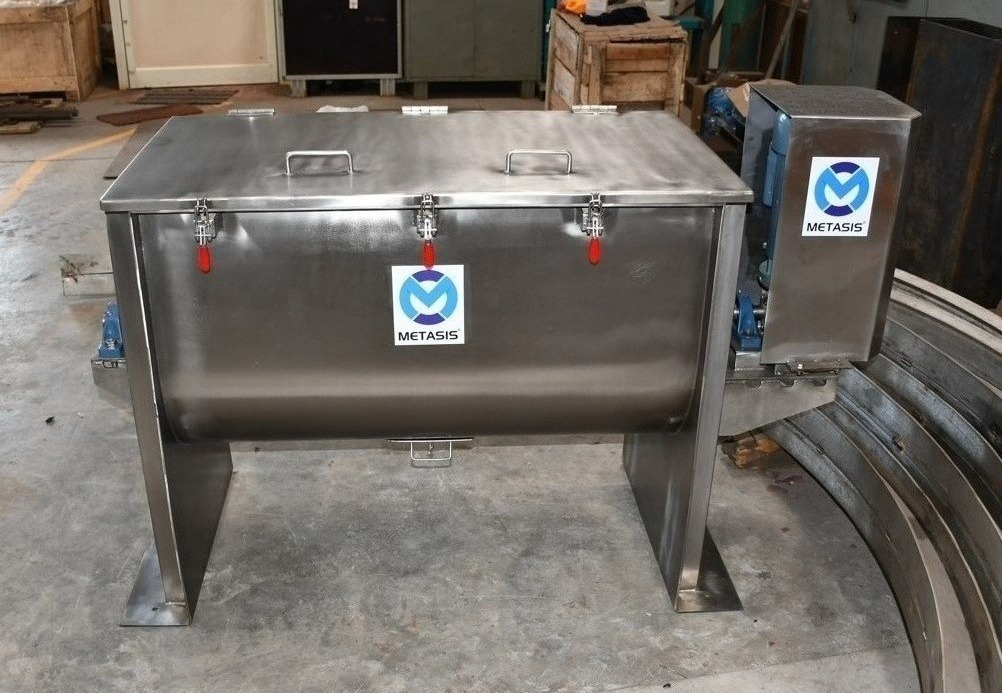
Achieving a consistent dry mixture can be challenging when ingredients differ in particle size, density or proportion. Ribbon blenders are widely used to address this requirement by creating controlled movement of bulk material within a horizontal mixing chamber.
The basic principle is relatively straightforward. A central shaft carries inner and outer ribbon elements arranged to move material in different directions. This circulation helps distribute ingredients throughout the mixing chamber instead of allowing material to remain concentrated in one area.
The quality of the final mixture, however, depends on much more than the presence of ribbon elements.
Material characteristics play an important role. Free-flowing powders may behave differently from cohesive materials, while ingredients with significant density differences can require careful evaluation to reduce segregation. Batch size, fill level and mixing time also influence performance.
For food, chemical, pharmaceutical and other processing businesses in the United Kingdom, several questions should be answered before selecting a blender:
What materials will be mixed?
What is the required batch capacity?
How different are the ingredient densities?
Is controlled ingredient addition necessary?
How will the finished mixture be discharged?
What level of cleaning access is required?
Does the process require stainless-steel construction?
Will the blender operate independently or within an automated line?
Discharge design is particularly important. A blender may achieve an acceptable mixture but still create operational difficulties if the discharge arrangement causes excessive residue, slow emptying or inconvenient transfer to the next processing stage.
Maintenance accessibility also matters. Bearings, seals, drive components and internal mixing elements should be considered during equipment planning because these areas influence long-term serviceability.
Metasis Equipments Pvt Ltd provides ribbon blenders designed for powders, granules, flakes and dry bulk materials, alongside wider powder handling and automated mixing solutions.
A ribbon blender should ultimately be selected as part of the complete production process. Upstream feeding, ingredient weighing, mixing, discharge and downstream transfer need to work together.
For UK manufacturers planning a new powder mixing line or reviewing an existing process, clearly defining material behaviour and batch requirements before equipment selection can prevent unnecessary compromises later. A properly engineered mixing system supports repeatable production while making operation, cleaning and material transfer easier to manage.