
Start with the feedstock design envelope and plant battery limits, not a catalogue of conveyors, digesters, or gas-upgrading packages. By comparing evidence, guarantees, safety design, interfaces, lifecycle cost, and commissioning obligations, you can rank suppliers by project risk rather than by the lowest quoted equipment price.
Key takeaways
- Issue every bidder the same feedstock design envelope and operating cases.
- Ask for proven biomass references, not only chemical-plant project lists.
- Put throughput, moisture limits, uptime, and product quality in the contract.
- Score controls, commissioning support, interfaces, and lifecycle operating cost.
Define the Scope and Feedstock Design Envelope Before Comparing Bids
Before asking process engineering companies for biomass facilities to quote, issue one identical basis of design. An equipment list is not enough: a supplier can price a conveyor for average material and still fail when wet, fibrous feedstock bridges or overloads it.
1. Define the feedstock envelope: moisture content, bulk density, particle-size distribution, ash, fibrous or stringy content, tramp metal, temperature, seasonal variation, and minimum and maximum throughput. State whether each value is typical, guaranteed, or a design limit.
2. Define the process scope, including feedstock assessment, reception, storage, extraction, metering, pretreatment, anaerobic digestion, gas cleaning and upgrading, compression, digestate handling, utilities, civil works, electrical and instrumentation, commissioning, and operations support. For bio-CNG, include gas quality, methane-slip measurement, flare or emergency disposal, storage, dispensing or grid interface.
3. Issue an interface schedule naming the owner of each battery limit. Cover dust collection, magnets and metal detection, controls, fire and explosion protection, civil loads, utilities, product quality, and commissioning. Explosion venting, suppression, and isolation are separate from fire detection, extinguishing, hot-bearing monitoring, and safe shutdown.
4. Require a solids-handling test plan using representative worst-case material. Specify test quantity, duration, start-stop cycles, feeder turndown, bridging, dust generation, and acceptance measurements; a short run with dry, free-flowing biomass proves little. Require each bidder to price deviations from this scope separately.
Test Whether the Company Has Biomass Experience, Not Just Chemical-Plant Experience
Require evidence from plants processing your actual feedstock range, not a reference list of chemical facilities. A biomass process engineering company must show operating data, including material type, moisture, bulk density, fibre content, throughput, operating hours, uptime, and corrective actions after commissioning.
1. Request a solids-handling test plan using representative worst-case material. It must state test quantity, duration, start-stop cycles, feeder turndown, bridging and rat-holing observations, dust generation, and acceptance measurements. A short run with dry, free-flowing material proves little about wet, fibrous biomass in continuous service.
2. Check commissioning records for dry commissioning, wet or material commissioning, ramp-up across the specified throughput range, operator training, spares verification, instrument calibration, as-built drawings, and a defined reliability run. No-load motor rotation is not proof of continuous handling.
3. Separate equipment evidence from plant results. Require measured feeder capacity, mixer homogeneity, conveyor availability, gas recovery, product quality, electrical consumption, dust emissions, and total throughput, each tied to test conditions, duration, tolerance, remedy, and retest or liquidated-damages provisions.
4. Ask to see controls documentation covering blocked-chute trips, feeder-loss and belt-slip detection, bearing-temperature alarms, fire shutdowns, restart sequences, historian tags, and manual recovery. Biomass systems fail at transfers and shutdowns when material remains inside the line.
Compare Engineering Documents, Interfaces, and Safety Responsibility
A complete proposal names every deliverable, interface, and acceptance test. Request the basis of design, mass and energy balance, process flow diagrams, piping and instrumentation diagrams, equipment list, utility summary, control philosophy, cause-and-effect matrix, hazardous-area drawings, commissioning plan, and as-built document schedule. Missing documents usually signal missing scope.
| Document | What it must show | Gap it exposes |
|---|---|---|
| Interface schedule | Battery limits, tie-in points, owner and contractor responsibility | Unpriced handoffs |
| Solids-handling test plan | Worst-case biomass, test quantity, duration, feeder turndown, bridging, dust, and acceptance measurements | Dry-material testing disguised as proof |
| Safety concept | Explosion venting, suppression, isolation, fire detection, extinguishing, hot-bearing and spark detection, and safe shutdown logic | Certified components without a protection strategy |
| Commissioning plan | Dry and wet commissioning, ramp-up range, training, calibration records, spares verification, and reliability run | No evidence of continuous operation |
In a process engineering company comparison, require the interface schedule to assign responsibility for:
- Feedstock reception, storage, extraction, metering, magnets, metal detection, dust collection, and civil loads.
- Utilities, electrical and instrumentation, controls, product-quality measurements, and plant data.
- Fire and explosion protection, including who supplies the design, cause-and-effect logic, testing, and permits.
- Material commissioning, performance testing, retesting, and remedies when battery-limit performance fails.
Make Process Guarantees Measurable and Contractually Comparable
A guarantee is comparable only when both bids use the same feedstock, operating point, measurement method, test duration, tolerance, and remedy. Ask bio CNG engineering consultants to cover the complete gas and digestate system, including upgrading, compression, methane-slip measurement, digestate handling, and flare or emergency disposal.
| Guarantee | Define in the contract | Acceptance measure and remedy |
|---|---|---|
| Methane | Recovery and slip basis, feed-gas contaminants, turndown range | Dry or wet gas analysis, off-gas methane measurement, retest and damages |
| Gas quality | Methane, H2S, CO2, moisture, oxygen, pressure, and delivery temperature | Continuous or witnessed sampling against the grid, vehicle-fuel, or dispensing specification |
| Solids handling | Wet and fibrous feedstock rate, feeder turndown, bridging limit, dosing accuracy | Worst-case material test with start-stop cycles; repair, replacement, or liquidated damages |
| Dosing | Additive concentration, flow accuracy, calibration interval, and minimum stable rate | Calibrated weighment or flowmeter results across the operating range |
| Energy | Plant boundary, imported electricity, compression load, and gas basis | kWh per Nm3 of product gas at stated quality and throughput |
| Availability | Included equipment, planned outages, excluded events, and reliability-run duration | Operating hours divided by scheduled hours; service credits or extended testing |
Do not accept “designed for” or “up to” capacity as a continuous guarantee. Attach the interface schedule: reception, storage, dust control, utilities, controls, civil loads, commissioning, and product-quality responsibility. Undefined limits transfer cost and failure risk between contractors.
Evaluate Controls, Commissioning, and Lifetime Operating Cost
A design can meet a mass balance and still fail at the hopper. Continuous operation is proven by controls evidence, representative material trials, and a contractually defined reliability run—not by no-load motor rotation.
In a process engineering company comparison, ask the biomass process engineering company to demonstrate control functions under feedstock variation:
- Historian trends for moisture, throughput, motor load, temperature, and energy use.
- Alarm rationalization, permissives, interlocks, and cause-and-effect shutdown logic.
- Manual fallback, restart sequences, operator screens, and remote diagnostic records.
Commissioning evidence must cover the whole material path, not just energized motors:
- Run dry commissioning, then wet or material commissioning with representative worst-case biomass; test start-stop cycles, feeder turndown, bridging, dust generation, and continuous handling.
- Require ramp-up tests across the specified range, operator training, spares verification, instrument calibration records, as-built documents, and a defined reliability run with pass/fail data.
Price the plant over its operating life, including hidden maintenance and production losses. Daily intervention can erase a low purchase price.
- Build a five-year model covering electrical consumption, cleaning labor, wear parts, planned downtime, rejected material, and specialist service.
- Compare critical-spares lead times, maintenance access, washdown effort, and local support.
- Contract remedies for failed reliability-run results.
Score the Shortlist by Total Project Risk and Execution Capability
Score each bidder from 0 to 5 against weighted criteria, multiply each score by its percentage, and rank the 100-point total. For process engineering companies for biomass facilities, score documented evidence—not presentation quality—and apply a zero for any disqualifying gap in safety responsibility, product-gas compliance, or commissioning ownership.
- Feedstock and process-fit evidence: 20 points
- Measurable plant and equipment guarantees: 20 points
- Integration across digestion, upgrading, digestate, utilities, and controls: 15 points
- Safety engineering and shutdown philosophy: 15 points
- Local execution capacity and commissioning resources: 10 points
- Lifecycle support, spares, and operator training: 10 points
- Residual project risk, including interfaces and schedule exposure: 10 points
Require each bidder to attach the calculation, evidence source, responsible party, and unresolved assumption behind every score. A polished bid with weak battery-limit ownership should lose to a lower-priced proposal that closes interfaces and carries testable responsibility.
For bio CNG engineering consultants, an integrated engineering and equipment manufacturer adds value by aligning feeders, storage, dosing, controls, gas systems, and commissioning around one operating sequence. Metasis Equipments Pvt Ltd is worth assessing on that basis when its equipment scope includes the interfaces that otherwise fall between package suppliers.
Related products
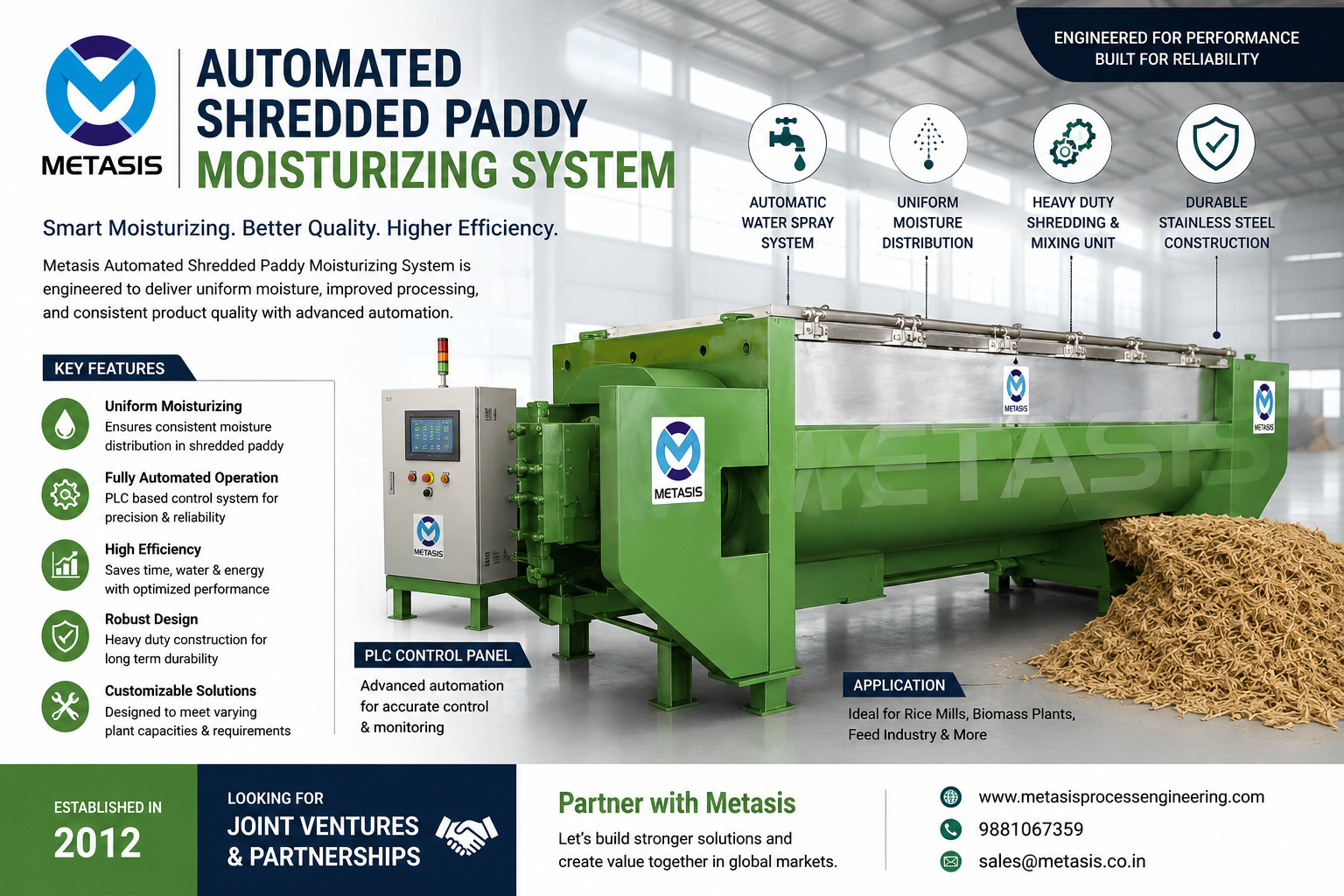 | Engineering Process System Automated Shredded Paddy Moisturizing System Automated Continuous Shredded Paddy Straw with Liquid Digestate Mixing & Supply System Advanced Feeding Solution for Bio-CNG and Biomass Extruder... View product → |
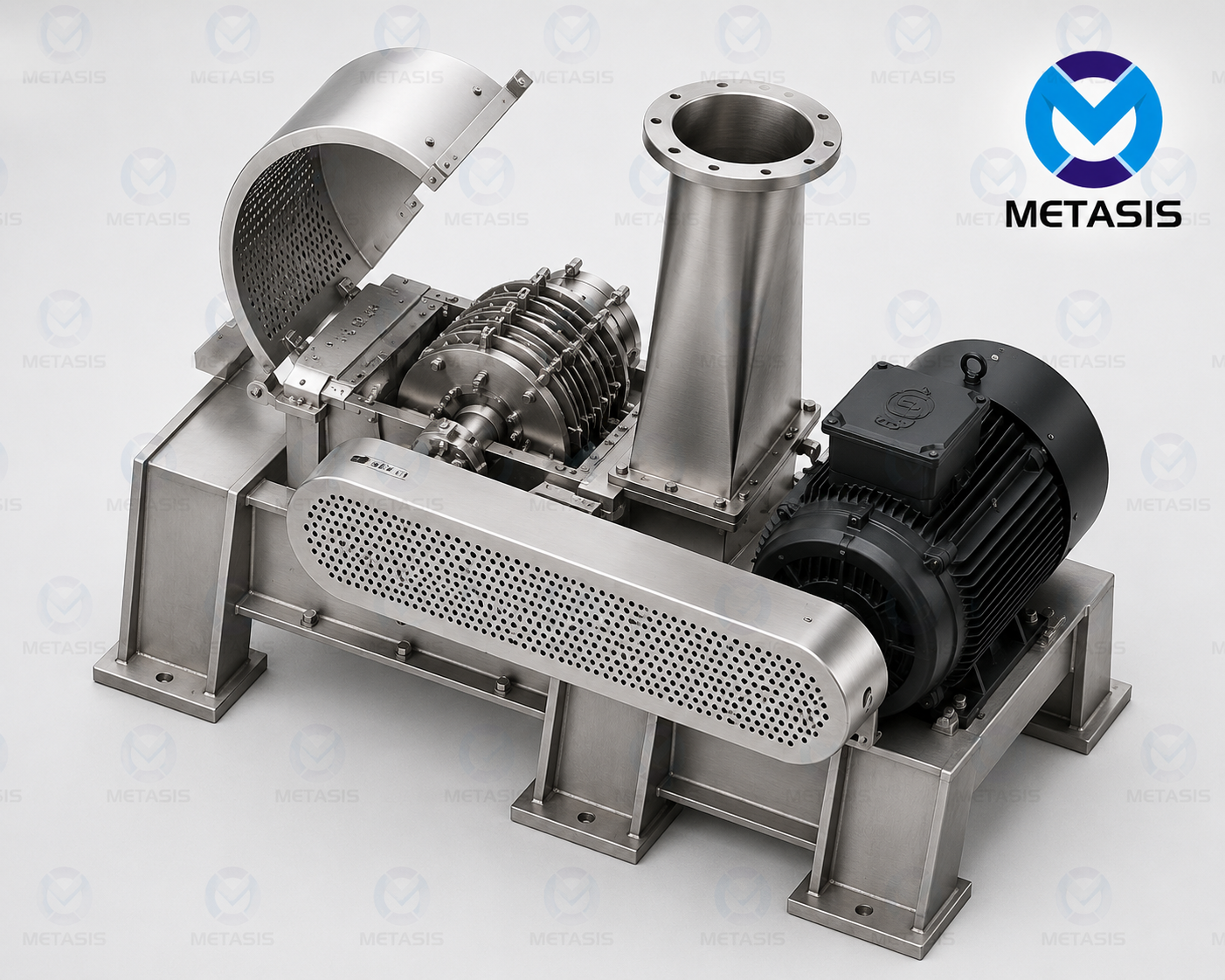 | Hammer Mills High-Performance Industrial Hammer Mills by Metasis Equipments Pvt. Ltd. Metasis Equipments Pvt. Ltd. View product → |
Frequently asked questions
What should you define before comparing process engineering companies for biomass facilities?
Define the feedstock design envelope, including material type, moisture range, particle size, bulk density, contamination, seasonal variation, throughput, storage time, and operating cases.
How can you verify a biomass process engineering company’s experience?
Request references for comparable biomass plants and verify the feedstock, throughput, equipment scope, commissioning outcome, operating duration, and unresolved performance issues.
Which engineering documents and safety responsibilities should you compare?
Compare process flow diagrams, mass and energy balances, equipment datasheets, layouts, control narratives, utility lists, interface registers, HAZOP records, and clearly assigned machine and process safety duties.
How do you make biomass process guarantees comparable?
Specify the test method, feedstock condition, measurement points, acceptance period, throughput, moisture limits, product-quality targets, energy use, emissions criteria, remedies, and consequences for missed guarantees.