
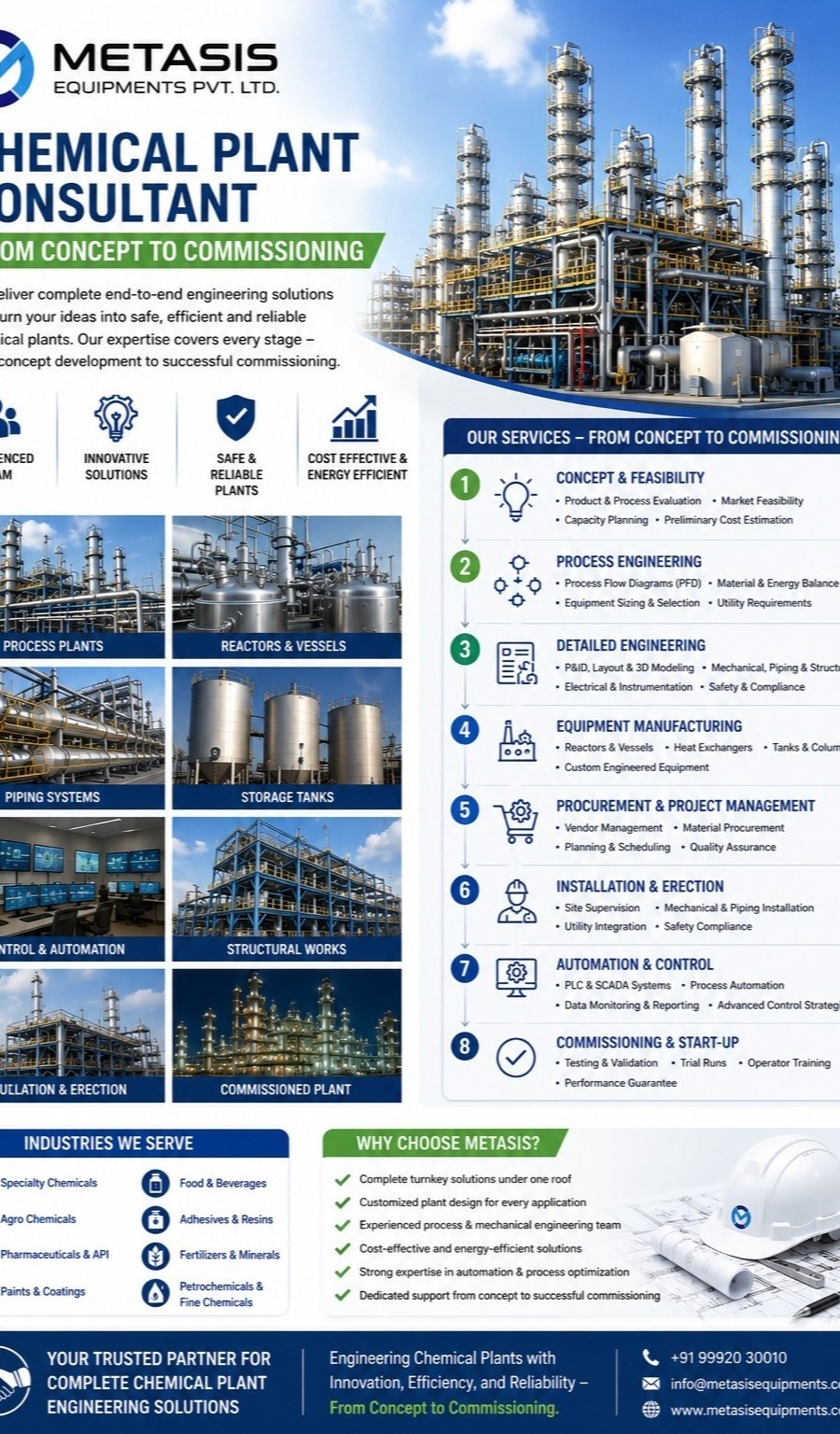
Industrial projects often involve multiple stages, from initial concept development and equipment selection to plant installation and process optimization. Managing these activities requires technical expertise, practical experience, and a clear understanding of how different systems work together. This is where a process engineering consultant plays an important role in helping industries design efficient and reliable operations.
Companies involved in chemical processing, pharmaceuticals, food manufacturing, and other industrial sectors often face challenges while expanding production capacity or developing new facilities. A well-planned engineering approach helps reduce operational issues, improve resource utilization, and create systems that support long-term business goals.
A process engineering consultant studies the complete production requirement before recommending suitable solutions. This includes understanding raw material characteristics, production volume, process flow, equipment requirements, safety considerations, and future expansion possibilities.
Key responsibilities of process engineering consultants include:
Developing process flow diagrams and system layouts
Evaluating equipment requirements
Improving production efficiency
Supporting plant scale-up activities
Identifying process bottlenecks
Planning automation and material handling requirements
Ensuring compatibility between different plant systems
For industries in Pimpri-Chinchwad, Maharashtra, where manufacturing, engineering, automotive, pharmaceutical, and chemical businesses operate at a large scale, process planning becomes an essential part of successful industrial development.
A well-designed process system can help industries avoid common issues such as inefficient material movement, unnecessary energy consumption, production delays, and frequent equipment modifications.
Role Of Process Engineering In Plant Scale-Up
Plant expansion is not simply about adding more machines. Increasing production capacity requires detailed evaluation of existing systems, utilities, process limitations, and equipment performance.
A plant scale-up consultant analyzes whether current infrastructure can support higher production volumes. The evaluation may include:
Equipment capacity assessment
Storage requirements
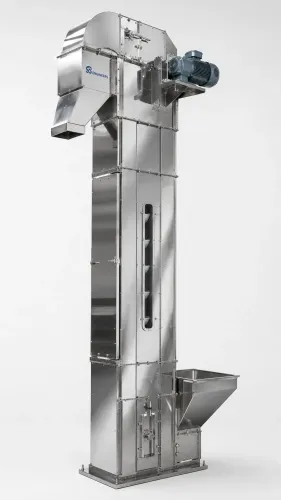
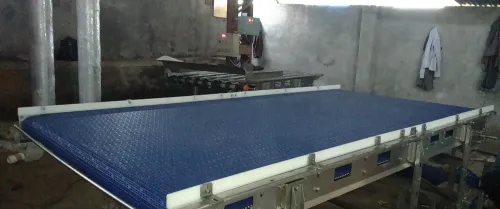
Material transfer systems
Mixing and reaction processes
Heat transfer requirements
Production workflow improvements
Without proper engineering analysis, industries may invest in additional equipment but still experience production limitations.
Importance Of Integrated Equipment Planning
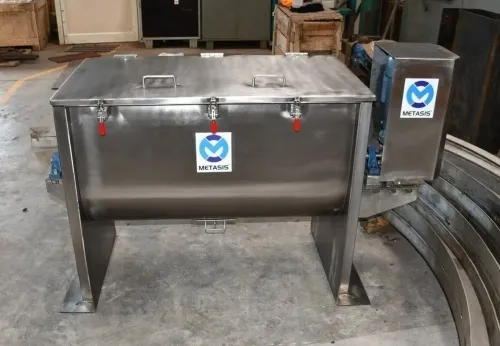
Modern industrial plants depend on multiple interconnected systems. A chemical reactor, conveyor system, storage unit, mixer, or dosing system must function together to maintain consistent production.
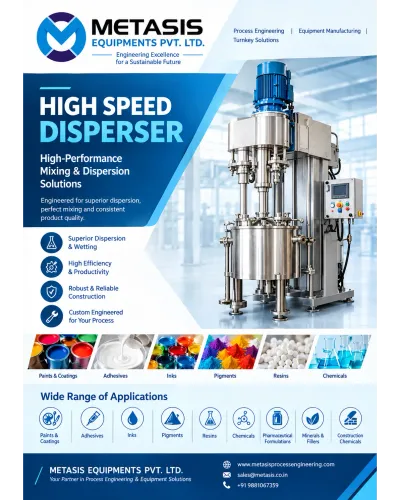
Metasis Equipments Pvt Ltd works on engineering-driven industrial solutions where equipment design and process requirements are considered together. This approach helps industries evaluate technical requirements before implementing manufacturing systems.
Integrated planning becomes especially important for sectors handling powders, chemicals, food ingredients, pharmaceuticals, and bulk materials.
How Consultants Improve Industrial Efficiency
Professional engineering support helps industries make informed decisions regarding:
Equipment selection
Production layout
Maintenance planning
Safety requirements
Future scalability
Instead of focusing only on individual machines, consultants evaluate the complete process environment. This helps create systems that are easier to operate, maintain, and upgrade.
For businesses in Pimpri-Chinchwad looking to establish new industrial facilities or improve existing production lines, process engineering consultation provides a structured approach to solving complex manufacturing challenges.
A strong engineering foundation allows industries to develop plants that are technically efficient, operationally reliable, and prepared for future growth.